
When you pick up a generic pill, you expect it to work just like the brand-name version. You’re not just saving money-you’re trusting the system to keep you safe. But what if the ad on TV told you otherwise? What if it whispered that generics are less effective, less safe, or even dangerous? That’s not just misleading-it’s illegal. And the consequences aren’t just fines. They’re real people skipping their meds because they were scared off by a lie.
What Counts as False Advertising in Generic Drugs?
False advertising in generic pharmaceuticals isn’t about accidental wording. It’s when companies make claims that aren’t backed by science or that mislead consumers about how the drug compares to the brand-name version. The FDA requires generics to prove they’re bioequivalent-meaning they deliver the same amount of active ingredient into the bloodstream at the same rate as the original drug. That’s the only standard that matters.
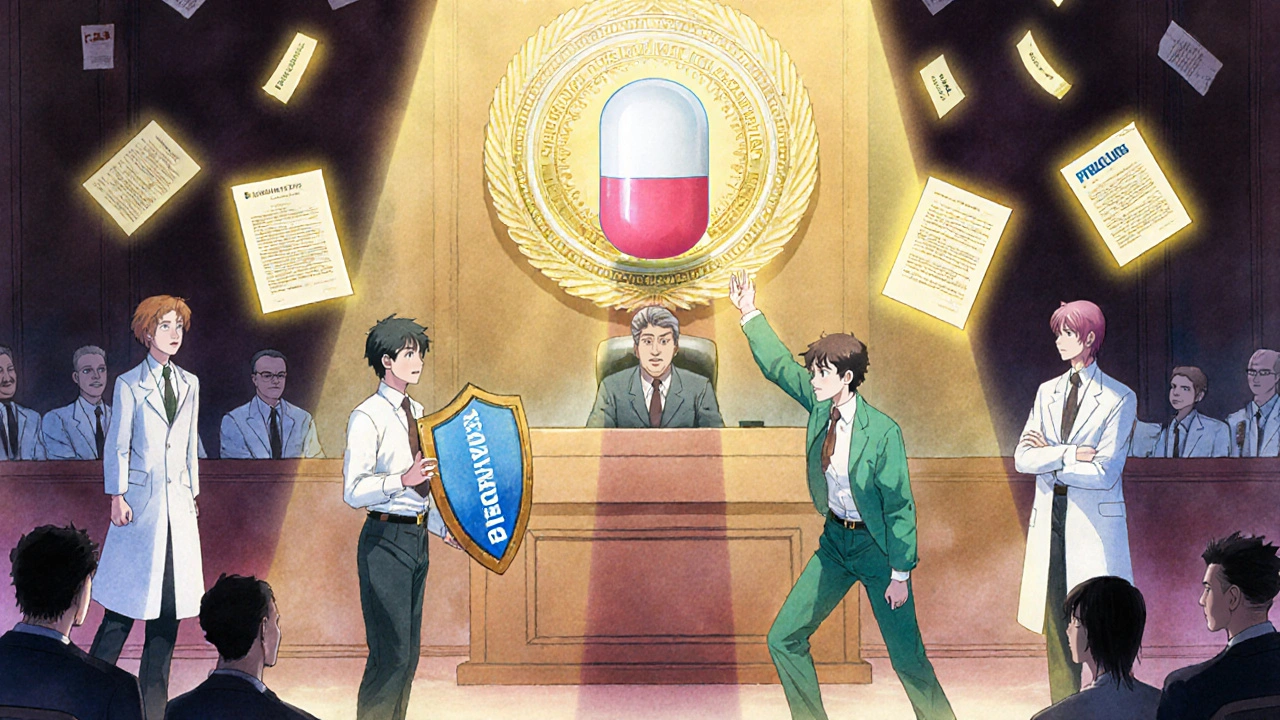
But ads sometimes say things like: "Our brand is clinically proven to work better," or "Many patients report better results with the name-brand version." Those aren’t just opinions-they’re violations. The FDA doesn’t allow generic manufacturers to claim superiority unless they’ve run head-to-head clinical trials proving it. And even then, they can’t imply that the brand is inferior.
Another common trick? Using visual cues to confuse patients. An ad might show a branded pill with a sleek logo, then show the generic as a dull, generic-looking tablet with no branding. That’s not neutral-it’s psychological manipulation. The FDA says advertising must be clear, conspicuous, and neutral. No sneaky imagery. No implied hierarchy.
Then there’s the language trap. Saying a drug is "FDA Approved" is fine for generics-because they are. But some ads say "FDA Approved" for products that are only "FDA Cleared," which is a totally different category. That’s not a typo. That’s fraud. And it’s led to lawsuits under the Lanham Act, where competitors can sue for damages when misleading ads cause consumer confusion and lost sales.
The Legal Framework: What Laws Are You Breaking?
The rules aren’t suggestions. They’re federal law. The main ones are the Federal Food, Drug, and Cosmetic Act (FD&C Act) and the Lanham Act. The FD&C Act gives the FDA authority over drug labeling and advertising. The Lanham Act lets competitors sue each other for false or misleading commercial claims.
Here’s how it works in practice: If a generic drug maker runs an ad suggesting their product is less effective than the brand, the brand-name company can sue. They don’t need to prove patients got hurt. They just need to show the ad misled people and caused them to choose the brand over the generic. That’s enough for a court to award treble damages-three times the actual loss.
State laws add another layer. New York’s General Business Law § 349 lets consumers sue for deceptive practices and get up to $1,000 per violation. California’s Unfair Competition Law is even stricter. Florida bans using government logos or phrases like "health alert" in pharma ads. And if you’re marketing across state lines? You’ve got to comply with all of them. One misstep in one state can trigger a chain reaction of lawsuits.
The FDA doesn’t police every ad. They focus on the worst offenders. But in September 2025, the White House issued a presidential memorandum directing the Department of Health and Human Services to crack down hard on deceptive direct-to-consumer ads. The goal? Stop ads that "advantage expensive drugs over cheaper generics" and "mislead the public about risks and benefits."
That’s not just policy. It’s a signal. The FDA has already sent out 100 cease-and-desist letters targeting misleading generic drug ads in 2025 alone. Warning letters are up 18% since 2023. This isn’t a quiet cleanup. It’s a full-scale enforcement surge.
What Happens When Patients Believe the Lies?
Behind every false ad is a real person who stopped taking their medicine.
In 2024, the FDA reviewed 1,247 patient complaints tied to misleading generic drug ads. Thirty-two percent of those patients stopped taking their meds because they were told generics were unsafe. Many of them had conditions like epilepsy, thyroid disease, or depression-conditions where even small changes in drug levels can cause serious harm.
One Reddit thread from March 2025 details how a patient with hypothyroidism refused to refill their levothyroxine generic after watching a YouTube ad that claimed "generic thyroid meds are dangerous." The patient ended up in the ER with extreme fatigue and heart palpitations. The FDA has confirmed that levothyroxine generics are bioequivalent. But the fear stuck.
Consumer surveys show 41% of patients are confused about whether generics work the same as brand-name drugs after seeing DTC ads. Meanwhile, seniors who’ve seen compliant, factual ads report 78% cost savings awareness-and better adherence. The difference isn’t just financial. It’s health outcomes.
When people stop taking their meds because of a lie, hospitals get busier. Emergency visits go up. Complications rise. The cost to the system? Millions. The cost to individuals? Sometimes, their lives.
What Must Generic Drug Ads Actually Say?
Compliant ads follow a strict playbook. Here’s what they must include:
- Clear statement: "This is a generic drug" or "This is the generic version of [Brand Name]."
- Disclosure of the reference listed drug (the brand-name version).
- Full risk disclosure: All major side effects and contraindications must be clearly stated-not hinted at, not buried in a footnote.
- No claims of superiority unless backed by clinical trials.
- No visual mimicry of brand-name packaging.
- No use of "FDA Approved" for non-approved products.
The FDA’s 2024 "clear, conspicuous, and neutral" rule requires risk information to appear in at least 14-point font with 50% contrast against the background. That’s not a suggestion. That’s a technical requirement for digital and broadcast ads. If your ad uses a tiny, faded disclaimer at the bottom of a 30-second video? It’s not compliant.
And here’s the big change: The "adequate provision" loophole is gone. Before 2025, ads could say "For complete risk information, visit [website]." Now, all major risks must be included directly in the ad. No more hiding behind links. No more "see our website" excuses. If you’re running a TV or YouTube ad, you have to say it all-right there, in the spot.
Who’s Responsible for Making Sure Ads Are Legal?
It’s not just the marketing team. It’s a whole system.
Major generic manufacturers have dedicated regulatory affairs teams of 15 to 25 people. Their job? Review every word, every image, every claim before it goes live. They cross-check with FDA guidance documents, FTC rules, and state laws. They consult legal counsel. They run simulations to test how consumers interpret the message.
Smaller companies? They’re struggling. Only 47% of smaller generic manufacturers meet compliance standards, according to FDA data from October 2025. Many don’t have the budget for full legal teams. They outsource to agencies that don’t specialize in pharma. That’s a recipe for disaster.
Training is another issue. The Regulatory Affairs Professionals Society says it takes new compliance officers an average of 18 months to become proficient. That’s a long time to be making costly mistakes.
And it’s not just the U.S. Companies selling globally have to juggle FDA rules, EU regulations, and local advertising laws. One campaign that works in Canada might violate California law. That’s why global pharma companies spend an average of $2.1 million per year just on advertising compliance.

What’s Next? The Future of Generic Drug Advertising
The crackdown isn’t slowing down. The FDA and FTC are moving toward tighter coordination. Draft legislation called the "Transparency in Drug Advertising Act" (H.R. 4582) proposes standardized risk disclosure rules across all media-TV, radio, social, print. If passed, it would make compliance more predictable but also more rigid.
Industry analysts predict enforcement actions will rise 35% annually through 2027. Generic manufacturers are under the microscope. The days of pushing the envelope are over. Companies that invested early-like Pfizer, which spent $45 million building an internal ad review system in 2024-are already ahead. Those waiting to react? They’re playing Russian roulette with lawsuits, penalties, and reputational damage.
The market is worth $140 billion. 90% of all prescriptions are filled with generics. That’s not a niche. It’s the backbone of American healthcare. If false advertising keeps people from using affordable, safe meds, the whole system suffers. The regulators know it. The courts know it. And patients? They’re starting to notice.
Frequently Asked Questions
Can generic drug ads claim they’re cheaper than brand-name drugs?
Yes, but only if they can prove it. Generic manufacturers can say they’re "lower cost" or "more affordable," but they can’t claim a specific percentage savings-like "70% cheaper"-without hard data from pharmacy benefit managers or retail pricing records. The FTC requires all cost claims to be substantiated. Vague statements like "save money" are allowed. Specific numbers are not, unless verified.
What’s the difference between "FDA Approved" and "FDA Cleared" for generics?
All generic drugs are "FDA Approved" through the Abbreviated New Drug Application (ANDA) process. "FDA Cleared" applies to medical devices or over-the-counter drugs under the OTC monograph system. Using "Cleared" for a generic drug is false and has triggered multiple Lanham Act lawsuits. The distinction is critical: only "Approved" means the drug has met the FDA’s standards for safety, effectiveness, and bioequivalence.
Can a generic drug ad show the brand-name drug side-by-side?
Only if it’s done neutrally. You can show the brand-name drug as a reference point, but you can’t make it look more premium-brighter colors, better lighting, fancier packaging. The FDA requires visual neutrality. Any image that implies the brand is superior, more trustworthy, or more effective is considered misleading and will be flagged.
Are there any exceptions for narrow therapeutic index drugs like levothyroxine?
No. Even for drugs with narrow therapeutic windows, the FDA has confirmed that approved generics are bioequivalent. However, advertising must still avoid implying that substitution is always safe without a doctor’s approval. Ads should not discourage patients from switching unless they’re directed to consult their provider. The issue isn’t the drug’s equivalence-it’s the ad’s tone. Suggesting generics are riskier for these drugs is false and dangerous.
What happens if a generic drug ad is found to be false?
The FDA can issue a warning letter or a cease-and-desist order. Competitors can sue under the Lanham Act for damages, including treble damages. States can impose fines-up to $1,000 per violation in New York. In extreme cases, companies face class-action lawsuits from consumers. The 2012 GlaxoSmithKline case set a precedent: they paid $3 billion for misleading claims. While that was for a brand-name drug, the same legal logic applies to generics. The penalties are real, and they’re growing.

Matthew Higgins
November 29, 2025 AT 22:41Man, I saw a YouTube ad last week for some generic blood pressure med that showed the brand-name pill glowing like it was from the future and the generic looking like a dusty tablet from 1998. I almost didn’t refill mine. Then I read this post. Holy crap. That’s not marketing-that’s psychological warfare.
Mary Kate Powers
November 30, 2025 AT 15:33As a pharmacist, I’ve seen patients cry because they thought their generic thyroid med was ‘poison.’ They don’t understand bioequivalence. They just see slick ads and panic. This post is a public service. Share it with your grandma.
Richard Thomas
December 1, 2025 AT 02:08It is an incontrovertible fact that the regulatory architecture governing pharmaceutical advertising in the United States is both antiquated and insufficiently enforced. The Lanham Act, while theoretically robust, suffers from procedural inertia, and the FDA’s reactive posture-rather than proactive surveillance-permits systemic misinformation to propagate with alarming frequency. The absence of mandatory real-time ad monitoring platforms represents a critical failure of governance.
Andrew Keh
December 2, 2025 AT 19:38I get why companies do it. Money. But it’s wrong. People die because they’re scared of a pill that costs a third as much. We need better education, not just punishment.
Sara Shumaker
December 3, 2025 AT 16:55It’s not just about the law-it’s about trust. When you grow up hearing that generics are ‘inferior,’ you carry that into adulthood. Even when science says otherwise. That’s the real cost of these ads: they warp our relationship with medicine itself. We’re not just losing money-we’re losing faith in the system that’s supposed to protect us.
jamie sigler
December 5, 2025 AT 11:50So what? I still won’t take generics. I’ve had bad experiences. Maybe the science says they’re the same, but my body says otherwise. Who are you to tell me what I should trust?
Steven Howell
December 7, 2025 AT 06:10The FDA’s 2025 memorandum is a watershed moment. The directive to dismantle deceptive comparative advertising targeting generics aligns with public health imperatives. The statistical rise in cease-and-desist letters (18% since 2023) confirms a systemic shift from tolerance to enforcement. This is not regulatory overreach-it is corrective justice.
Brandy Johnson
December 8, 2025 AT 11:40Let me be blunt: American healthcare is collapsing because we let foreign manufacturers and lazy regulators dilute our standards. These ‘generics’ are often made in facilities with substandard sanitation. The FDA is asleep at the wheel. This post is propaganda for corporate greed disguised as consumer protection.
Scott Collard
December 8, 2025 AT 14:11They can’t even get the font size right. That’s how bad it is.
Latika Gupta
December 8, 2025 AT 15:33In India, we don’t have brand-name ads like this. Generics are just… medicine. No drama. No fear. Maybe the real problem isn’t the pills-it’s the culture that makes us afraid of cheap things.