
When a brand-name drug’s patent expires, you’d expect generic versions to flood the market right away-lowering prices, increasing access, and saving patients money. But that’s not how it usually works. Instead, there’s a legal gray zone: one company gets a 180-day exclusivity period to be the only generic on the market. Everyone else waits. Even if the patent is weak or broken. Even if the first generic doesn’t launch for years. This isn’t a glitch. It’s the system.
How the 180-Day Clock Starts
The 180-day exclusivity rule comes from the Hatch-Waxman Act of 1984. Congress wanted to encourage generic drug makers to challenge weak or overreaching patents. So they offered a reward: if you’re the first to file an Abbreviated New Drug Application (ANDA) with a Paragraph IV certification-meaning you claim the brand’s patent is invalid or won’t be infringed-you get six months of market monopoly. No other generic can enter until that clock runs out. But here’s the catch: the clock doesn’t start when the FDA approves your drug. It starts when you either:- Begin selling the generic version to the public, or
- Win a court case saying the brand’s patent is invalid or not infringed.
Why the First Applicant Gets Everything
This is a winner-takes-all system. Only the first company to file a qualifying ANDA gets the 180 days. Even if three companies file on the same day, the FDA has rules to pick one. Sometimes it’s who submitted first by minutes. Sometimes it’s who had the most complete paperwork. There’s no shared prize. No fairness. Just one company gets the chance to corner the market. That’s why generic manufacturers spend millions on legal teams just to be first. They hire patent lawyers, comb through patent filings, and race to submit ANDAs the moment a patent becomes vulnerable. Some even wait for a brand to announce a patent expiration, then scramble to file within hours. It’s a high-stakes game where the prize is often over $1 billion in sales. The FDA has tried to clarify the rules. In 2018, they issued a letter about buprenorphine/naloxone sublingual film that made it clear: if you don’t start selling within a reasonable time after winning a court case, you can lose your exclusivity. But enforcement is messy. Many companies exploit delays. And the FDA doesn’t have the resources to police every case.What Happens When the First Generic Doesn’t Launch
Here’s the real problem: the 180-day exclusivity can become a tool for delay, not competition. Imagine a blockbuster drug with $2 billion in annual sales. A generic company files a Paragraph IV challenge. The brand sues. The case goes to court. The generic wins. But instead of launching immediately, the generic company waits. Why? Because they’re negotiating a deal with the brand. Maybe they get paid not to compete. Maybe they get a cut of the brand’s sales. Maybe they’re waiting for a better price point. This is called a “pay-for-delay” settlement. And it’s legal under current law. The brand pays the generic not to enter the market. The consumer pays more. The system fails. In some cases, the first generic never launches at all. The exclusivity period just sits there, blocking everyone else. The FDA can’t approve other generics because the law says they can’t until the 180 days are up. Even if the first applicant is sitting idle. Even if patients are still paying $500 a month for a drug that could cost $5.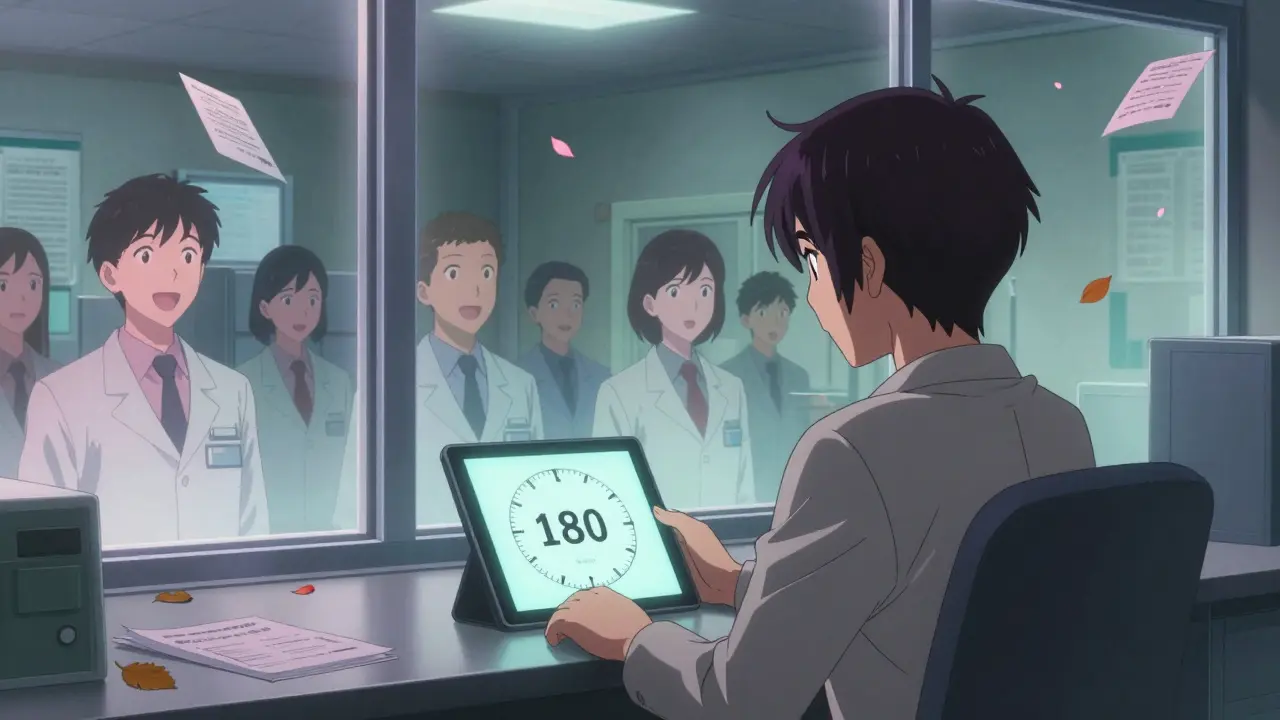
How the System Was Meant to Work vs. How It Actually Works
The Hatch-Waxman Act was designed to balance two things: protecting innovation and speeding up generic access. The 180-day exclusivity was supposed to be the carrot that got generics to challenge bad patents. And it worked-for a while. In 1984, generics made up just 19% of prescriptions. Today, they’re over 90%. That’s thanks to Hatch-Waxman. But the 180-day rule has become a loophole. The original idea: generic companies challenge patents → win → launch fast → prices drop → everyone wins. Reality: generic companies challenge patents → win → wait → negotiate with brand → launch months or years later → prices stay high → patients suffer. The Congressional Research Service has called this a “structural flaw.” The FDA admitted it in 2022, proposing a fix: make the exclusivity period start only when the generic is actually sold. No more clock sitting idle during lawsuits. That would mean the 180 days only run from the day the drug hits shelves. But the proposed change isn’t simple. The FDA also suggested extending exclusivity to 270 days if a generic launches more than five years before the patent expires. That’s a trade-off: more incentive to challenge early, but even longer monopolies.Who Loses When the System Fails
Patients. Pharmacies. Insurers. Taxpayers. When a generic doesn’t launch, the brand keeps charging high prices. A single drug like Humira, which faced multiple patent challenges, cost patients over $10,000 a year before generics arrived. Even after the first generic entered, it took years for prices to drop because of exclusivity delays. Generic manufacturers who aren’t first lose out too. They can’t enter the market, even if they’re ready. They’re stuck waiting. That kills competition. And competition is what drives prices down. The FDA estimates that if exclusivity were properly timed, billions in savings could flow to the healthcare system every year. Instead, the system rewards legal maneuvering over patient access.What’s Changing Now
The FDA’s 2022 proposal is the biggest shift in decades. If passed, it would end the practice of “parking” exclusivity. Companies would no longer be able to sit on their rights for years while litigation drags on. Exclusivity would only apply during actual sales. There’s also growing pressure from Congress. Lawmakers have introduced bills to ban pay-for-delay deals. The FTC has sued several pharmaceutical companies for these agreements. Courts are starting to rule against them more often. But change moves slowly. The pharmaceutical lobby is powerful. And the current rules are buried in thousands of pages of legal text. Most patients don’t know this system exists. Most doctors don’t understand it. But everyone feels its effect-in their co-pays, their insurance premiums, their monthly drug bills.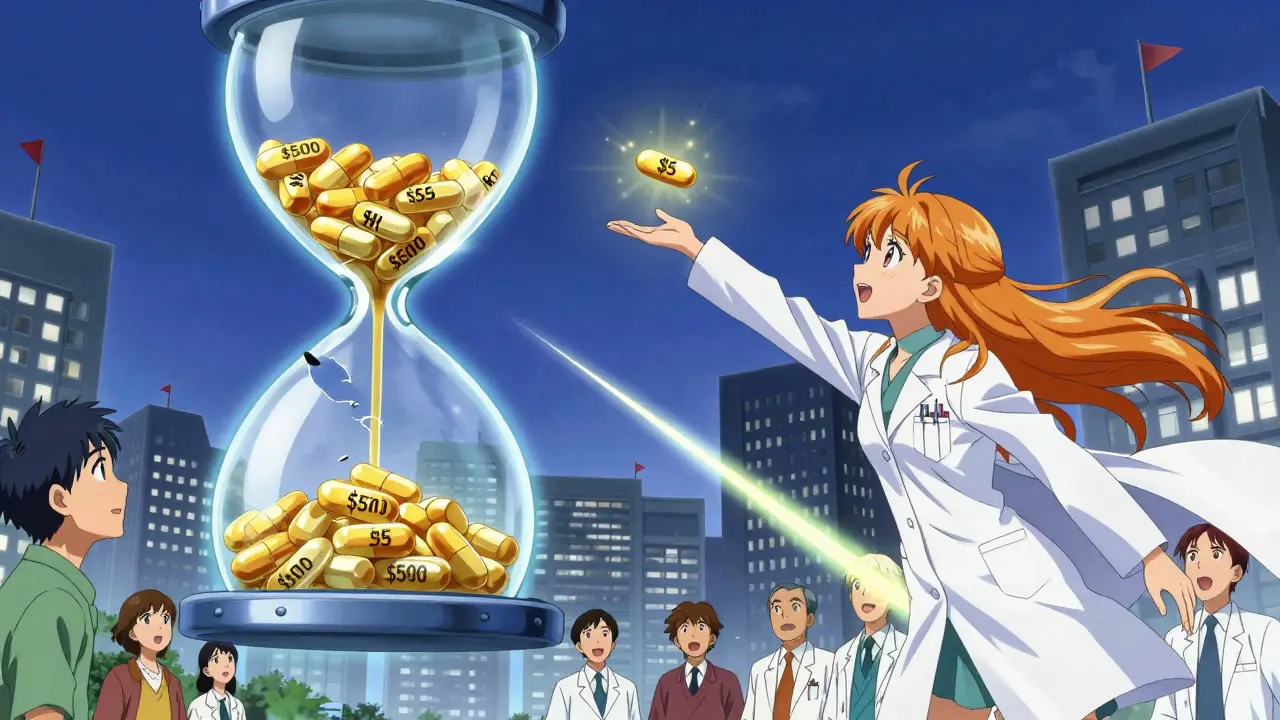
What Generic Manufacturers Need to Know
If you’re a generic company considering a Paragraph IV challenge:- Don’t just file an ANDA. Make sure it’s substantially complete. The FDA can reject it if it’s missing data or has errors. That could cost you first-applicant status.
- Track the patent list in the Orange Book. Missing one patent means you don’t qualify for exclusivity.
- Plan for litigation. The average patent case takes 2-4 years. Budget for legal fees, expert witnesses, and delays.
- Know the forfeiture rules. If you don’t market within 75 days after a court decision, or 180 days after approval (whichever comes first), you lose your exclusivity.
- Don’t assume you’ll win. Even if you file first, you could still lose in court. And if you do, you get nothing.
What Patients and Providers Should Watch For
If your prescription suddenly has no generic option-even after the patent expired-ask why. Is it because the first generic hasn’t launched? Is there a settlement blocking others? Is the brand still charging full price? Pharmacists can check the FDA’s list of approved generics with exclusivity status. If a drug has a 180-day exclusivity period still active, that’s why you can’t get the cheaper version. Doctors: if your patient can’t afford their medication, consider asking if a generic has been blocked by exclusivity. It’s not always about cost-it’s about legal barriers.What Comes Next
The 180-day exclusivity rule is a relic of a 1984 compromise. It was meant to speed up access. Now it often slows it down. The FDA’s proposed fix is a step forward. But real change needs Congress to act. Until then, the system will keep favoring lawyers over patients. The first applicant will still get the prize. Everyone else will still wait. And the cost? Billions in extra spending every year. For a system designed to save money, that’s a bitter irony.Generic drugs saved the U.S. healthcare system $1.7 trillion over the last decade. But if the 180-day exclusivity loophole stays open, that number could shrink. Because when exclusivity becomes a weapon, not an incentive, no one wins-except the companies that know how to play the game.
What is the 180-day exclusivity period for generic drugs?
The 180-day exclusivity period is a legal incentive under the Hatch-Waxman Act that gives the first generic drug manufacturer to successfully challenge a brand-name patent the exclusive right to sell its version of the drug for six months, blocking all other generics from entering the market during that time.
When does the 180-day exclusivity clock start?
The clock starts on the earliest of two dates: either the day the first generic drug is commercially marketed to the public, or the day a court rules that the challenged patent is invalid or not infringed. It does not start when the FDA approves the drug.
Can a generic company lose its 180-day exclusivity?
Yes. A company can forfeit its exclusivity if it fails to market the drug within 75 days after a court decision or 180 days after FDA approval-whichever comes first. The FDA can also strip exclusivity if the application was not substantially complete at submission or if the company engages in anti-competitive behavior.
Why do some generic drugs take years to appear after a patent expires?
Because the first generic applicant may delay commercialization while patent litigation continues. Even after winning the case, they might wait months or years to launch-sometimes due to settlement deals with the brand-name company-blocking other generics from entering the market until the exclusivity period finally begins.
How does 180-day exclusivity differ from other types of drug exclusivity?
Unlike regulatory exclusivities like 5-year new chemical entity protection or 3-year clinical data exclusivity-which prevent ANDA submissions altogether-the 180-day exclusivity only blocks other generics after a patent challenge is successful. It’s tied to litigation, not data submission, and only applies to the first challenger, not all applicants.
What is a pay-for-delay agreement?
A pay-for-delay agreement is a deal where a brand-name drug company pays a generic manufacturer to delay launching its cheaper version. This keeps prices high and blocks competition. While controversial and increasingly challenged in court, these deals are still legal under current interpretations of patent and antitrust law.
Joie Cregin
January 16, 2026 AT 11:11Wow. I had no idea this was even a thing. I just thought generics were supposed to be cheap and fast. Turns out we’re all just pawns in a legal chess game where the only winners are the ones with the deepest pockets. 🤦♀️
brooke wright
January 18, 2026 AT 06:29So let me get this straight - a company can sit on a patent win for three years, collect billions in brand-name drug profits, and then finally drop the generic like it’s a hot potato? That’s not capitalism. That’s extortion with a law degree.
Nick Cole
January 19, 2026 AT 20:32This isn’t a loophole - it’s a backdoor monopoly. The FDA’s proposal to tie exclusivity to actual sales is the bare minimum. If Congress doesn’t act, we’re just gonna keep watching patients get robbed while lawyers cash in. No more band-aids. Fix this now.
Riya Katyal
January 21, 2026 AT 00:04Ohhh so that’s why my insulin still costs $500 even though the patent expired in 2021? 😂 The generic company must’ve been busy meditating on when to ‘launch’… or maybe they were just counting their bribe money.
Henry Ip
January 21, 2026 AT 21:39People don’t realize how much this affects real lives. My mom’s on a drug that should’ve been generic five years ago. She’s on a payment plan. I’m on a rage plan. This system is broken and we’re all paying for it
waneta rozwan
January 22, 2026 AT 00:27Let me be clear - this isn’t capitalism. This is a cartel with a law license. The Hatch-Waxman Act was supposed to be a hero. Now it’s a villain in a tweed jacket sipping bourbon while patients cry over pill bottles. I’m not mad. I’m just… profoundly disappointed.
Nicholas Gabriel
January 23, 2026 AT 01:21And let’s not forget - the FDA’s own data says that if exclusivity were tied to actual sales, we’d save billions per year. Billions. That’s enough to cover free insulin for every diabetic in America. But nope - we’d rather let lawyers win.
Cheryl Griffith
January 23, 2026 AT 20:08I work in a pharmacy. People ask me every day why their meds aren’t cheaper. I don’t have a good answer anymore. I just say ‘the system’s broken’ and hand them the coupon for the brand-name version. It’s heartbreaking.
swarnima singh
January 24, 2026 AT 21:28its not even about money anymore its about the soul of healthcare. we sold it to the highest bidder and now we wonder why we feel so empty. the generics are supposed to be the people’s medicine… but the people arent even allowed to have them. sigh.
Isabella Reid
January 26, 2026 AT 21:11Canada’s system isn’t perfect, but we don’t have this 180-day mess. Generics hit the market fast. Prices drop fast. Patients win. Maybe we should stop pretending the U.S. is the gold standard for everything.
Allen Davidson
January 27, 2026 AT 17:35It’s wild how the system rewards delay. The more you wait, the more you profit. That’s not innovation. That’s sabotage dressed up as legal strategy. We need to reframe this as a public health emergency, not a corporate negotiation
Samyak Shertok
January 27, 2026 AT 23:18Wait - so the guy who files first gets a 6-month monopoly… but if he’s lazy, everyone else gets stuck? So the system rewards the slowest person? That’s not a carrot - that’s a trap. I’m starting to think the whole system was designed by someone who hates competition.
Chelsea Harton
January 28, 2026 AT 00:22so the first one to file gets to be the gatekeeper? that’s so dumb
Corey Chrisinger
January 29, 2026 AT 22:19the real tragedy? we all know this is wrong… but we keep scrolling. 😔