
When a pharmacist pulls a prescription off the system, they don’t just see lisinopril-they see 17 different versions of it. Some are generic. Some are branded generics. A few are authorized generics that look exactly like the brand but cost half as much. And if the system doesn’t tell them which is which, a patient might get the wrong one. It’s not a hypothetical risk. In 2021, the Institute for Safe Medication Practices documented 147 adverse events linked to incorrect generic substitutions of warfarin alone. The problem isn’t that generics are unsafe-it’s that pharmacy systems often don’t know how to tell them apart properly.
How Generic and Brand Drugs Are Officially Classified
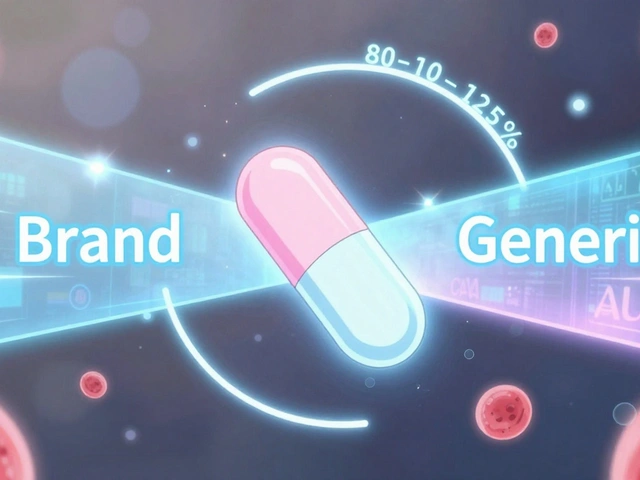
The U.S. Food and Drug Administration (FDA) doesn’t treat generic drugs as second-rate. According to their official definition, a generic drug must match the brand-name version in dosage, strength, safety, quality, and performance. The only difference allowed is in inactive ingredients-fillers, dyes, or coatings-that don’t affect how the drug works. This isn’t opinion. It’s science. The FDA requires generics to show bioequivalence: their blood concentration levels must fall within 80% to 125% of the brand’s, proven through rigorous testing.
The legal backbone of this system is the 1984 Hatch-Waxman Act. Before this law, generic manufacturers had to run full clinical trials just to prove a drug worked. That made generics too expensive to produce. Hatch-Waxman changed that by creating the Abbreviated New Drug Application (ANDA) pathway. Now, generics only need to prove they’re bioequivalent to the original brand-no repeat of animal or human trials. This is why generics save the U.S. healthcare system nearly $2 trillion every decade.
But here’s the catch: the FDA doesn’t just approve generics. It rates them. The Orange Book-officially titled Approved Drug Products with Therapeutic Equivalence Evaluations-assigns each drug a two-letter TE code. If it starts with an A (like AB, AO, AN), it’s considered therapeutically equivalent to the brand. That means pharmacists can legally substitute it without a doctor’s permission in 49 states. If it’s an R or a B, it’s not interchangeable. The system isn’t perfect, but it’s the most reliable map we have.
The Role of NDC Codes and Pharmacy Software
Every single drug product in the U.S. has a National Drug Code (NDC). It’s a 10- or 11-digit number that acts like a barcode for medications. But here’s what most people don’t realize: each version of a drug has its own NDC. That means the 10 mg brand-name lisinopril, the 10 mg generic, the 20 mg generic, and the 20 mg authorized generic? All have different NDCs. Pharmacy systems use these codes to track inventory, billing, and substitution rules.
But NDCs alone aren’t enough. A system might show you two different NDCs for lisinopril-one from a generic maker, one from the brand. Without knowing which one is therapeutically equivalent, a pharmacist could accidentally pick a non-interchangeable version. That’s why modern pharmacy systems integrate the Orange Book’s TE codes directly into their databases. Systems like Epic, Cerner, and Rx30 pull this data monthly from the FDA’s official API. If a drug’s TE code is AB, the system flags it as substitutable. If it’s not, it locks the option unless overridden by a prescriber.
Even then, complications arise. Authorized generics are the brand’s own product sold under a generic label. They’re identical in every way-same factory, same ingredients, same packaging. But because they’re marketed as generics, they get a different NDC and TE code. Pharmacy systems that don’t cross-reference the NDA (New Drug Application) number can’t tell the difference. One pharmacist on Reddit noted their system showed 17 different lisinopril options but didn’t say which were authorized generics. That’s not a glitch-it’s a design flaw.
Branded Generics and the Confusion They Cause
Then there are branded generics. These are drugs that went through the ANDA process but carry a brand name anyway. Think of oral contraceptives like Errin, Jolivette, or Cryselle. They’re not the original brand (like Ortho Tri-Cyclen), but they’re not plain generics either. They’re still chemically identical to the brand, but the packaging, marketing, and even pill color might be different. Patients often assume these are “better” or “stronger” because of the name. Pharmacists, too, can get confused-especially when the same drug is sold under multiple names across different chains.
A 2022 survey found that 78% of pharmacists reported confusion between branded generics like Sprintec and Tri-Sprintec and their generic equivalents. Why? Because the names sound similar, and pharmacy systems don’t always link them in their databases. One patient might get Sprintec from Walgreens and Cryselle from CVS, thinking they’re different pills. They’re not. Both are generic versions of the same brand. Without clear labeling and system alerts, patients are left guessing-and that’s dangerous.
High-Risk Drugs and the Need for Special Handling
Not all drugs are created equal. Some have a narrow therapeutic index (NTI). That means even tiny changes in blood levels can cause serious harm. Warfarin, phenytoin, levothyroxine, and lithium fall into this category. A 5% difference in absorption might mean the difference between a clot and a stroke-or a seizure and a coma.
That’s why top-tier pharmacy systems don’t just allow substitution for NTI drugs. They block it. Epic’s Beacon Oncology module, for example, automatically flags NTI medications and prevents automatic generic substitution unless a prescriber explicitly overrides it. Humana’s system goes further: it sends a notification to the doctor whenever a generic is substituted for a high-risk drug, giving them a chance to say no. These aren’t optional features. They’re life-saving protocols.
But here’s the problem: 63% of independent pharmacies still use outdated systems that don’t integrate NTI alerts. And even in big chains, staff might turn off alerts to speed up workflow. A 2022 ASHP survey found that nearly 40% of pharmacy technicians admitted to disabling non-critical alerts to reduce “notification fatigue.” That’s a recipe for error.
What Makes a Good Pharmacy Identification System?
The best systems don’t just identify drugs-they guide decisions. Here’s what works:
- Default to generics-unless there’s a clinical reason not to. Kaiser Permanente’s system automatically selects the generic version of every drug. If a doctor wants the brand, they have to type it in manually. Result? 92.7% of prescriptions filled were generics in 2022, with zero increase in adverse events.
- Integrate the Orange Book API-in real time. The FDA now updates its Orange Book monthly, but many systems still rely on quarterly updates. That means a newly approved generic might not show up for weeks. Systems using live API feeds can flag new generics within 24 hours of approval.
- Display therapeutic equivalence clearly-not just as a code. The best systems show a green checkmark next to AB-rated drugs and a red X next to non-interchangeable ones. Some even show a side-by-side comparison: “This generic is equivalent to Brand X. It’s 60% cheaper.”
- Track authorized generics-by linking NDCs to NDA numbers. If the brand’s manufacturer also sells a generic version, the system should flag it as “Same as Brand, Lower Cost.”
- Warn about excipients-even if it’s not perfect. A 2019 study found that 0.8% of patients switching from brand to generic antiepileptic drugs had issues due to different fillers. Systems should at least note: “This generic contains dyes not found in the brand. May affect patients with allergies.”
State Laws and the Patchwork of Rules
Pharmacy laws vary wildly from state to state. In California, if a patient gets a brand-name drug when a generic is available, the pharmacist must document why. In Texas, they can swap without telling anyone. In New York, pharmacists must inform patients before substituting. The federal government doesn’t set a uniform rule. That means a pharmacist in Chicago might have a different workflow than one in Miami-even if they’re using the same software.
That’s why CMS mandates that all Medicare Part D pharmacies must have their systems configured to follow state substitution laws with 99.5% accuracy. But many smaller pharmacies still use manual workarounds. They print out state law sheets and tape them to their screens. It’s 2025. We shouldn’t be relying on paper.
Patients Are Confused-And That’s a Problem
Even if the system works perfectly, patients still don’t understand what’s happening. A 2020 U.S. Pharmacist study found that 68% of patients didn’t know generics contain the same active ingredients as brands. Many think “generic” means “weaker.” Others worry about side effects. When they get a different-looking pill, they assume something’s wrong.
Kaiser Permanente solved this with a simple tool: their member portal includes a “Medication Comparison” feature. It shows the brand name, the generic name, the price difference, and a note: “These are the same medicine. The generic works just as well.” After launching it, they saw a 37% drop in patients asking to switch back to brand names.
Education isn’t optional. It’s part of the workflow. Every time a generic is dispensed, the system should prompt the pharmacist to say: “This is the generic version of your usual pill. It’s cheaper and just as safe.” That’s not extra work-it’s better care.
The Future: AI, Real-Time Data, and Personalized Medicine
The next wave of pharmacy systems won’t just identify drugs-they’ll predict problems. A 2023 study in the Journal of the American Medical Informatics Association tested an AI system that analyzed prescription patterns and flagged potential therapeutic issues with 87.3% accuracy. It noticed that patients who switched from brand to generic levothyroxine and then had abnormal TSH levels were more likely to be on a specific generic manufacturer. That’s not coincidence-it’s data-driven insight.
Future systems will integrate pharmacogenomics. If a patient has a gene variant that affects how they metabolize a drug, the system might recommend sticking with a specific brand-even if a generic is available. The FDA is already exploring this in its Precision Medicine Initiative.
By 2028, the market for pharmacy identification software will hit $2.8 billion. The demand isn’t just for cost savings. It’s for safety, precision, and trust. The tools exist. The data is there. The question is: are we using them right?
Are generic drugs really as effective as brand-name drugs?
Yes, when properly approved by the FDA. Generic drugs must contain the same active ingredients, in the same strength and dosage form, and must be bioequivalent to the brand-name version. The FDA requires that generic drugs deliver the same therapeutic effect within an 80%-125% confidence range. Studies show no meaningful difference in outcomes for the vast majority of patients. The only exceptions are narrow therapeutic index drugs, where small variations matter-these require extra caution.
What’s the difference between a generic and an authorized generic?
An authorized generic is the exact same drug as the brand-name product, made by the same manufacturer, in the same facility, with the same ingredients. The only difference is the label-it’s sold under a generic name and at a lower price. The brand company does this to compete with other generics. Pharmacy systems often don’t distinguish them unless they’re linked to the original New Drug Application (NDA) number. That’s why some systems show them as separate products even though they’re identical.
Why do some pharmacy systems block generic substitution for certain drugs?
Drugs with a narrow therapeutic index (NTI)-like warfarin, phenytoin, levothyroxine, and lithium-require very precise dosing. Even small changes in how the body absorbs the drug can lead to serious side effects. Systems block automatic substitution for these drugs to prevent harm. Pharmacists can still override the block, but only after reviewing the patient’s history and confirming with the prescriber.
Can I ask my pharmacist to give me the brand instead of the generic?
Yes, you can always request the brand-name version. But your pharmacist must tell you if a generic is available and approved as equivalent. In most states, they’re required to substitute unless the prescriber writes “Dispense as Written” or “Do Not Substitute.” If you have concerns about switching, talk to your pharmacist or doctor. They can help you decide what’s best based on your medical history.
Why do generic pills look different from the brand?
By law, generic drugs can’t look exactly like the brand because of trademark rules. That means the color, shape, size, or markings might be different. But the active ingredient-the part that makes the drug work-is the same. The differences are in inactive ingredients like dyes or fillers, which don’t affect how the drug works. If you notice a change in how you feel after switching, tell your pharmacist. It’s rare, but sometimes people react to a new filler.
How often are pharmacy systems updated with new generic approvals?
The FDA updates its Orange Book monthly, and the most advanced pharmacy systems sync with this data in real time through APIs. Older systems might only update quarterly or manually, which can cause delays of weeks or even months. A newly approved generic might not appear in your pharmacy’s system until it’s manually added. That’s why systems using live FDA feeds are safer and more accurate.
Matt Dean
December 2, 2025 AT 13:29Wow, another post pretending pharmacists are just dumb robots who can’t read. The real problem? Lazy prescribers who don’t specify ‘Dispense as Written’ and pharmacies that outsource their tech to some 2012-era software vendor. I’ve seen pharmacies give people the wrong pill because their system didn’t update the TE code in six months. This isn’t a tech issue-it’s a culture of neglect.
Walker Alvey
December 2, 2025 AT 18:10Generic drugs are fine until you realize the FDA lets companies cheat by tweaking fillers just enough to avoid bioequivalence failure but still make you feel like shit. I took a generic levothyroxine and turned into a zombie. The brand? Perfect. The system? Didn’t care. Welcome to American healthcare where profit > precision.
James Steele
December 2, 2025 AT 20:10Let’s deconstruct the epistemological fallacy embedded in the FDA’s therapeutic equivalence paradigm. The 80-125% bioequivalence window is not a scientific consensus-it’s a regulatory compromise born of economic expediency. When we conflate pharmacokinetic similarity with clinical equivalence, we’re engaging in a form of reductionist hubris. The Orange Book isn’t a map-it’s a mirage. Authorized generics are the only true ontological anchors in this chaotic pharmacopeia, yet even they are rendered invisible by NDC silos. We’re not managing drugs-we’re managing symbols.
And don’t get me started on branded generics: semantic sleight-of-hand disguised as market innovation. Sprintec isn’t a drug-it’s a brand identity engineered to exploit patient anxiety. The system doesn’t fail because it’s broken-it fails because it was designed to obscure, not clarify.
The real tragedy? We’ve outsourced therapeutic judgment to algorithms trained on outdated data. AI won’t fix this. Only a radical recentering of clinical autonomy-back into the hands of pharmacists who understand that pills aren’t commodities, but physiological interventions-can salvage this mess.
Louise Girvan
December 3, 2025 AT 08:23THEY’RE HIDING THE FACT THAT THE SAME COMPANY MAKES THE BRAND AND THE ‘GENERIC’!!! AND THE SYSTEMS DON’T TELL YOU!!! THIS IS A CONSPIRACY!!! THEY WANT YOU TO THINK YOU’RE SAVING MONEY BUT YOU’RE JUST GETTING THE SAME PILLS IN A DULLER BOX!!! AND THE FDA IS IN ON IT!!!
Dennis Jesuyon Balogun
December 3, 2025 AT 20:00Look, I work in a pharmacy in Lagos, and we don’t have fancy systems. But we have something better: trust. We talk to patients. We write down the manufacturer. We check the pill imprint. We don’t need AI to tell us what’s what-we need trained humans who care. This post is brilliant, but the solution isn’t more tech. It’s better training, better pay for pharmacists, and respect for their expertise. Tech without empathy is just another barrier.
Grant Hurley
December 5, 2025 AT 04:10so like… if i get my lisinopril from cvs and then get it from walmart and they look different, i should just chill? like… its the same stuff? kinda wild. also why do they even make the pills different colors if its the same medicine? just to confuse us? lol
Nnaemeka Kingsley
December 6, 2025 AT 20:01bro this is why i always ask my pharmacist to show me the bottle label. i dont trust the screen. i seen a guy get the wrong pill because the system said ‘AB’ but the bottle was wrong. paper still beats algorithm. also, if your doc writes ‘dispense as written’ they can’t swap it. ask for it. its your right.
Jaswinder Singh
December 7, 2025 AT 16:43Man, I’ve seen patients cry because they got a blue pill instead of white. They think it’s a different drug. We need a simple sticker on the bottle: ‘Same medicine, cheaper.’ No jargon. No codes. Just plain words. This isn’t rocket science. It’s basic human communication. Why are we making it so damn hard?