
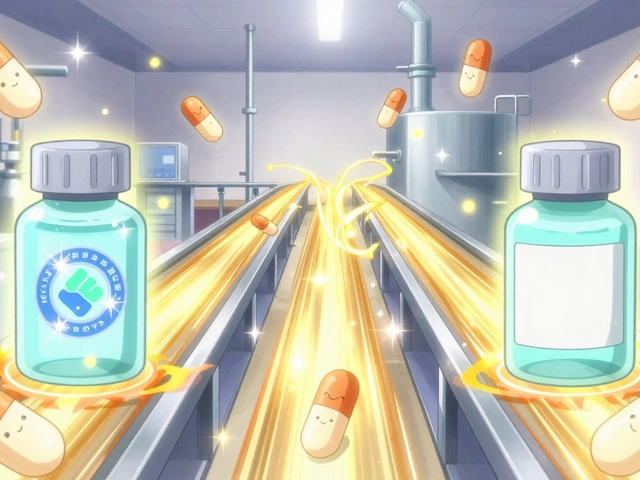
When a brand-name drug loses its patent, the market doesn’t just flip to cheaper generics overnight. Instead, something unusual happens: the same company that made the expensive brand-name version starts selling the exact same drug under a generic label. This is an authorized generic. It’s not a copycat. It’s the real thing-same factory, same formula, same packaging, just a different name and a much lower price. And in the years ahead, this strategy will play a bigger, more complex role in shaping drug prices, competition, and patient access.
What Exactly Is an Authorized Generic?
An authorized generic is a version of a brand-name drug produced by the original manufacturer and sold as a generic. Unlike traditional generics made by other companies after filing an Abbreviated New Drug Application (ANDA), authorized generics are launched directly by the brand company. They don’t need FDA approval as a new drug-they’re listed under the original brand’s NDA. The FDA has tracked these since 1999, and between 2010 and 2019, over 850 were launched. Most were oral tablets and capsules, because those are easier and cheaper to produce at scale.
Why do companies do this? It’s not charity. It’s strategy. When a patent expires, a brand manufacturer faces a sudden drop in revenue. If a generic competitor enters first, they can capture up to 80% of the market in months. By launching their own authorized generic, the brand company can still sell the drug-just under a cheaper label-and keep a slice of the pie. It’s like opening a discount store next to your own boutique.
How Authorized Generics Change the Game
Here’s the twist: brand manufacturers don’t always launch authorized generics right away. In fact, from 2010 to 2019, three out of four authorized generics launched after the first traditional generic entered the market. Why wait? Because if they launch too early, they risk cannibalizing their own brand sales. They wait until the generic competitor gains traction, then drop their version at a slightly lower price to undercut them.
This timing matters. In markets where the first generic gets 180 days of exclusivity, about 70% of authorized generics launched before or during that window. That’s not accidental. It’s a calculated move to squeeze out the competition before they fully build their customer base. The result? Patients get lower prices, but the brand company still controls the supply chain and profits.
For example, when the brand drug imatinib (Gleevec) lost patent protection, the manufacturer launched an authorized generic just as the first competitor was ramping up. Within six months, the authorized generic captured 40% of the market. The original brand’s sales dropped-but not as hard as they would have without the authorized version.
The Market Is Growing-Fast
The U.S. generic drug market is expected to hit $196.9 billion by 2034, up from $138.2 billion in 2024. That’s a 3.6% annual growth rate. But the real driver isn’t just more generics-it’s more expensive drugs going generic. Between 2025 and 2030, drugs generating $217 billion to $236 billion in annual sales will lose patent protection. That includes blockbuster drugs for diabetes, heart disease, and autoimmune conditions.
And it’s not just pills. Biologics-complex drugs made from living cells-are next. Drugs like ustekinumab and vedolizumab, which treat psoriasis and Crohn’s disease, will lose exclusivity starting in 2025. While these will mostly face biosimilar competition, the same logic applies: brand companies may launch authorized versions to retain control. Analysts estimate the oncology and immunology biosimilar market alone could hit $25 billion by 2029.
Meanwhile, the global generic drug contract research organization (CRO) market-companies that help develop these drugs-is growing too, from $8.45 billion in 2024 to an estimated $11.73 billion by 2034. That’s a sign that both traditional and authorized generics are becoming more central to how pharma operates.
Regulation Is Shifting the Rules
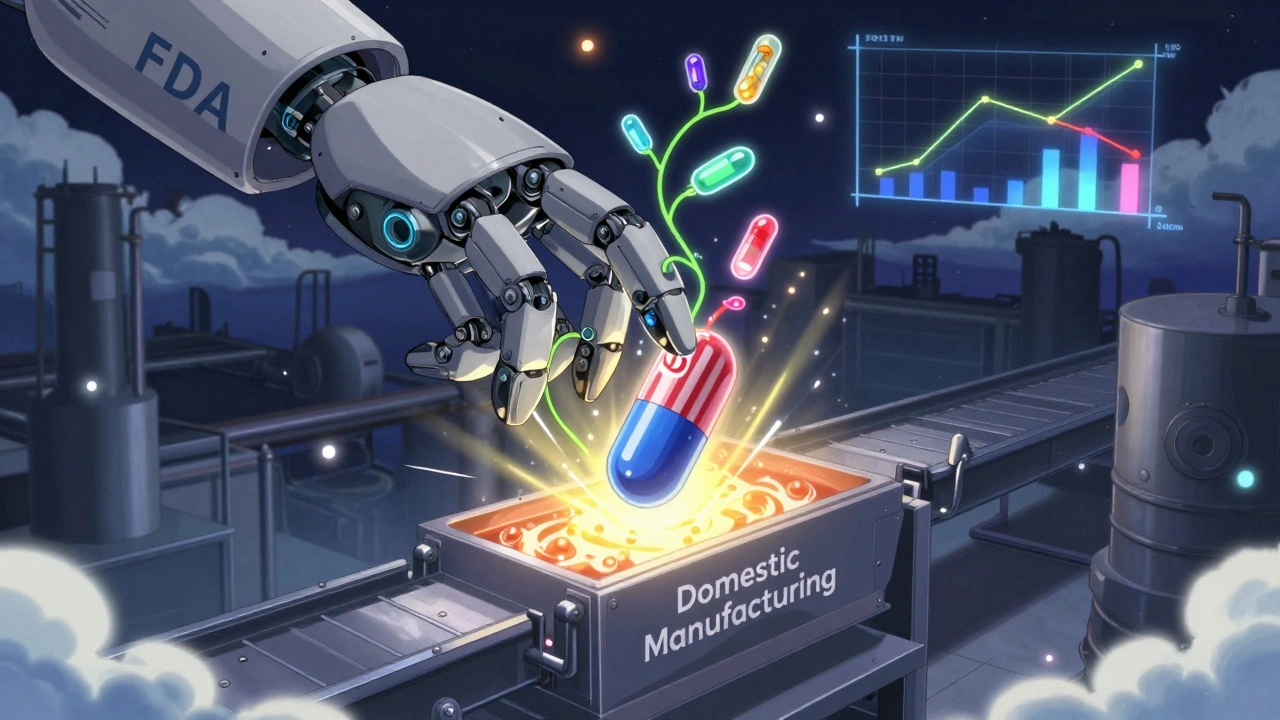
In October 2025, the FDA announced a pilot program that will fast-track ANDA reviews for generic drugs made and tested entirely in the United States. This is a big deal. For years, most generic drugs-authorized or not-were manufactured overseas, especially in India and China. But supply chain risks, pandemic disruptions, and political pressure have pushed the U.S. government to prioritize domestic production.
This new program could change how authorized generics are made. Brand manufacturers might now choose to produce their authorized generics in U.S. facilities to get faster approval. That means higher costs, but also more control over supply, quality, and timing. It could also make it harder for overseas generic makers to compete, especially if they can’t match the speed of U.S.-based authorized versions.
At the same time, regulators are watching authorized generics more closely. Critics argue they’re a loophole-a way for brand companies to delay true competition. A 2025 study in the JAMA Health Forum found that when patent extensions are used to delay generics, patients and insurers pay an extra $2.5 billion in commercial plans and $2.4 billion in Medicare over three years. Authorized generics, when timed to extend market control, contribute to that cost.
But here’s the nuance: Health Affairs research shows authorized generics also provide transparency. They give regulators real-world data on how pricing shifts when competition enters. They help track whether price drops actually happen after patent loss. In that sense, they’re not just a tactic-they’re a diagnostic tool.
The Trend Is Changing: Delayed Launches Are Falling
One of the biggest shifts in recent years? Brand companies are getting less patient. According to RAPS in June 2025, the practice of delaying authorized generic launches is declining. Why? Two reasons: regulatory pressure and market fatigue.
Policymakers are pushing back against tactics that slow down generic access. The FDA is more transparent. Congress is asking harder questions. And payers-like Medicare and insurance companies-are demanding faster price drops. In response, brand companies are realizing that waiting too long to launch an authorized generic makes them look bad. They’re moving faster to avoid backlash.
That doesn’t mean authorized generics are disappearing. It means they’re becoming more predictable. Instead of being a surprise weapon, they’re turning into a standard part of the post-patent playbook. Companies now plan them like product launches-timing them with regulatory deadlines, manufacturing schedules, and competitor moves.
What This Means for Patients and Payers
On the surface, authorized generics sound like a win for patients. Lower prices, same drug. But the reality is more complicated. When a brand company controls both the brand and the authorized generic, they still control the market. True competition-where multiple independent companies fight for price-doesn’t always happen.
That said, authorized generics have driven real savings. In 2024 alone, generic and biosimilar medicines saved the U.S. healthcare system $467 billion. Over the past decade, that total reached $3.4 trillion. Authorized generics played a role in that. They helped push down prices faster than traditional generics alone could have.
For patients on Medicare or Medicaid, authorized generics often mean lower copays. For insurers, they mean lower drug spend. For manufacturers, they mean a smoother transition off patent protection.
The Road Ahead
The future of authorized generics won’t be about hiding from competition-it’ll be about managing it. As more high-cost drugs go generic, brand companies will have no choice but to adapt. The FDA’s push for domestic manufacturing will make U.S.-based authorized generics more common. Regulatory scrutiny will force more transparency. And patients will benefit from faster price drops.
But the real test will be whether authorized generics become a bridge to true competition-or a wall that blocks it. If they’re used to delay other generics, they’re a problem. If they’re used to jumpstart price competition, they’re a tool.
Right now, the signs point to the latter. Authorized generics are evolving from a tactical trick into a standard part of the generic drug ecosystem. And as the market grows, so will their role-not as a loophole, but as a lever for change.
Are authorized generics the same as brand-name drugs?
Yes, authorized generics are chemically identical to the brand-name drug. They’re made in the same factory, using the same ingredients and processes. The only differences are the label, packaging, and price. They’re not copies-they’re the original product sold under a generic name.
Why do brand companies sell authorized generics?
Brand companies use authorized generics to maintain market share after patent expiration. Instead of losing all revenue to competitors, they launch their own lower-priced version to capture part of the generic market. It’s a way to soften the financial blow while still controlling production and timing.
Do authorized generics delay competition?
Sometimes, yes. Historically, brand companies waited to launch authorized generics until after the first traditional generic entered the market, often to undercut them. But recent data shows this tactic is declining. Regulatory pressure and public scrutiny are pushing companies to launch sooner, making authorized generics less of a barrier and more of a catalyst for competition.
Are authorized generics cheaper than traditional generics?
Usually, yes-but not always. Authorized generics are often priced slightly lower than the brand-name drug but may be priced similarly to or even higher than some traditional generics, especially if those are made by large manufacturers with low overhead. However, because authorized generics come from the original manufacturer, they’re often more reliable in terms of supply and quality.
How does the FDA track authorized generics?
The FDA has maintained a public list of authorized generics since 1999, based on annual reports submitted by brand manufacturers. These reports include the drug name, dosage, manufacturer, and launch date. While the system is transparent, it’s manual and sometimes lags behind actual market activity. The FDA is exploring digital updates to improve timeliness.
Will the FDA’s new U.S.-manufacturing pilot affect authorized generics?
Yes. The October 2025 pilot program speeds up approval for generics made entirely in the U.S. This gives brand companies an incentive to produce their authorized generics domestically, even if it costs more. It could reduce reliance on overseas supply chains and make authorized generics more predictable in terms of availability and quality.
Do authorized generics help lower drug prices overall?
They do, but indirectly. Authorized generics introduce price pressure early in the post-patent phase, which pushes traditional generics to lower their prices too. In markets where authorized generics are present, average drug prices tend to drop faster than in markets without them. However, they don’t replace true competition-they complement it.
Shubham Pandey
December 3, 2025 AT 12:27Authorized generics? Same drug, cheaper label. Big deal.
william tao
December 5, 2025 AT 03:09Let us be perfectly clear: this is not market competition-it is corporate theater. The same factory, same pills, same regulatory loophole. The brand-name manufacturer, having spent billions on marketing and patent extensions, now plays the benevolent price-cutter while retaining 100% control of the supply chain. This is not innovation. It is a sophisticated form of rent-seeking dressed in the clothing of consumer welfare. The FDA’s data may be transparent, but the incentives are not. And patients? They are merely spectators in a rigged game where the house always wins.
Sandi Allen
December 6, 2025 AT 07:45Wait-wait-WAIT-this is ALL a scam!! The FDA, Big Pharma, and Congress are ALL in cahoots!! They let the same company make the brand AND the 'generic'-so they can control the price, the supply, the narrative-and then they pretend it's 'competition'!! And now they want to make them in the U.S.?? That's just another way to raise prices under the guise of 'security'!! They're lying to you!! They're lying to EVERYONE!! This is how they keep you dependent!!
John Webber
December 7, 2025 AT 12:48so like… they just slap a new label on the same bottle and call it a generic? lol. no wonder drugs are still so expensive. they just keep the same pills, same factory, same everything… but now it’s ‘cheaper’? sounds like a trick. and now they wanna make it in the us? so it’ll cost even more? this whole thing is messed up.
Elizabeth Farrell
December 8, 2025 AT 12:25I really appreciate how nuanced this breakdown is-it’s easy to see authorized generics as just another corporate trick, but the reality is more layered. Yes, they’re a strategic move by manufacturers, but they’ve also created a tangible, immediate drop in prices that helps millions of patients access life-saving medications sooner than they otherwise would have. The fact that they’re becoming more predictable and less delayed? That’s progress. We shouldn’t ignore the good just because the system isn’t perfect. The goal should be to encourage more transparency and faster timelines, not to dismiss the entire mechanism. Patients are benefitting-let’s keep pushing for even better outcomes, not just cynicism.
Paul Santos
December 9, 2025 AT 05:23Ah, the authorized generic-capitalism’s elegant paradox. A Hegelian dialectic played out in pill form: thesis (brand), antithesis (generic), synthesis (brand-as-generic). The manufacturer, in a sublime act of self-sublation, negates its own exclusivity to preserve its dominance. It’s not merely a market tactic-it’s a phenomenological reconfiguration of value. And now, with U.S.-based production? We’re witnessing the reterritorialization of pharmaceutical sovereignty. 🤓💊
Eddy Kimani
December 10, 2025 AT 20:49This is fascinating from a market dynamics perspective. The timing of authorized generic launches correlates strongly with the 180-day exclusivity window for first-filers-this isn’t random, it’s game theory in action. And the shift toward earlier launches? That’s a direct response to payer pressure and regulatory nudging. What’s really interesting is how this affects biosimilar adoption: if the originator launches an authorized version of a biologic, it could suppress biosimilar uptake by locking in distribution channels. We need longitudinal studies on price elasticity in these hybrid markets. The data’s there-we just need to connect the dots.
Chelsea Moore
December 12, 2025 AT 02:26THIS IS UNACCEPTABLE!! They’re literally selling the SAME DRUG under a different name and calling it a ‘generic’?!?! How is this even legal?!?! Patients are being deceived!! And now they’re making them in the U.S. to ‘improve quality’-but it’s still the same company!! This isn’t competition-it’s a monopoly with a disguise!! I’m so angry!! Why isn’t anyone doing something?!?!?!