
More than 4 in 10 adults over 65 take five or more prescription drugs every day. Many of these aren’t helping anymore-but they’re still costing you hundreds, sometimes thousands, each year. You’re not alone. People are paying for pills they don’t need, and their doctors often don’t know they’re still taking them. The good news? You can fix this. Working with your doctor to stop unnecessary medications-called deprescribing-can cut your drug bills, lower your risk of side effects, and even keep you out of the hospital.
What Is Deprescribing (And Why It’s Not Just Stopping Pills)
Deprescribing isn’t about quitting meds cold turkey. It’s a careful, step-by-step process where you and your doctor review every pill, patch, and supplement you’re taking-and decide which ones you can safely stop. This isn’t just for older adults. About 15% of people between 40 and 64 are also taking too many drugs. The goal? Remove medications that don’t do enough good to justify the risk or cost.For example, someone might still be taking a proton pump inhibitor (PPI) for heartburn five years after their symptoms disappeared. Or they’re on a statin for cholesterol even though their life expectancy is now limited due to other health issues. These drugs cost money and can cause real harm: dizziness, falls, memory problems, kidney stress, even infections.
Studies show that stopping just one unnecessary $50-a-month drug saves $600 a year. Avoiding a single medication-related hospital stay-which costs an average of $15,700-saves far more. Kaiser Permanente’s program cut inappropriate medication use by 35% and saved $1.2 million in one year alone. That’s not magic. That’s smart medicine.
How to Prepare for Your Deprescribing Conversation
You can’t fix this in a 10-minute visit. You need to come prepared. Start by doing a brown bag review. Empty every pill bottle, capsule, patch, and supplement you take into a bag-yes, even the ones from the dollar store or the herbal remedies your cousin swore by.Bring this bag to your appointment. Include:
- All prescription drugs
- All over-the-counter meds (like ibuprofen, antacids, sleep aids)
- Vitamins, minerals, and supplements (even if they’re labeled "natural")
- Any medications you stopped taking but still have in your cabinet
While you’re at it, write down the cost of each item. Many people don’t realize how much they’re spending. One woman in Ohio found she was paying $120 a month for a sleep aid she hadn’t needed in two years. Another cut $1,980 a year by stopping a $90/month vitamin D supplement after her blood test showed she wasn’t deficient.
Doctors say patients who bring a complete list make deprescribing discussions 68% more productive. That’s because they see the full picture-not just what’s in the electronic record.
Ask These Five Questions at Your Appointment
Don’t let your doctor rush you. Use this moment to get clarity. Here are five questions that work:- Why am I taking this medication? What condition is it meant to treat? Is it still relevant?
- What are the benefits versus the risks? Is this drug preventing a serious problem-or just causing new ones like dizziness, confusion, or stomach bleeding?
- Can this drug cause falls or memory problems? Many common meds (like antihistamines, benzodiazepines, or certain blood pressure drugs) increase fall risk in older adults. Falls are the leading cause of injury-related hospitalizations in seniors.
- Can I stop or reduce this dose? Not all meds need to be taken daily. Some can be lowered, taken every other day, or stopped entirely.
- Who should I follow up with, and when? If you stop a drug, you need to know what to watch for and when to call back.
These questions aren’t confrontational-they’re practical. Your doctor wants you to be safe. They just might not have had the time to ask these things themselves.
What Tools Do Doctors Use to Decide What to Stop?
Doctors don’t guess. They use evidence-based tools. One of the most trusted is the Beers Criteria, a list of 53 medications that are often inappropriate for older adults because of side effects. If you’re on any of these, it’s worth asking about.Another tool is the Medication Appropriateness Index (MAI). It scores each drug across 10 factors: Is it needed? Is the dose right? Are there better alternatives? Is it causing harm? It takes about 7 minutes per medication-but it’s worth it.
Some clinics now use AI tools like MedStopper, which scans your medication list and flags high-risk or low-benefit drugs with 89% accuracy. These tools aren’t replacing doctors-they’re helping them do their job better.
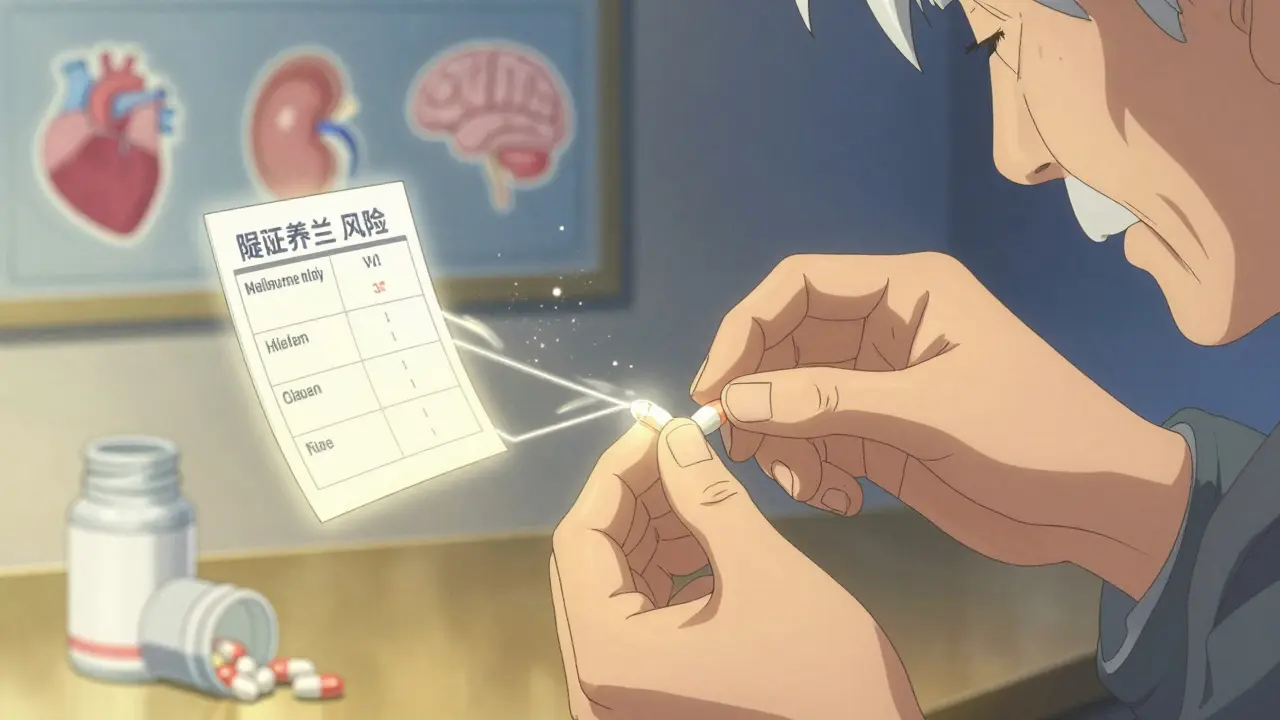
How Deprescribing Actually Works: Tapering, Not Stopping
You won’t walk out with a prescription to stop everything. That’s dangerous. Deprescribing is slow. Usually, one drug at a time. Sometimes over weeks or months.For example, if you’re on a sleeping pill like zolpidem, your doctor might suggest cutting the dose in half for two weeks, then taking it every other night, then stopping. Why? Because sudden stops can cause rebound insomnia, anxiety, or even seizures.
Same with blood pressure meds. Stopping too fast can cause your pressure to spike dangerously. That’s why 12% of people who tried to quit on their own ended up in the ER, according to the National Council on Aging.
Good deprescribing includes a plan: what to watch for, when to call, how to track symptoms. Your pharmacist can help here too. Most offer free Medication Therapy Management (MTM) services under Medicare Part D. They’ll review your whole list, spot duplicates, suggest cheaper generics, and even call your doctor with recommendations.
Real Savings: What You Can Expect to Save
Let’s get specific. Here’s what people actually saved:- Stopping a $120/month sleep aid = $1,440/year
- Discontinuing a $90/month vitamin D supplement = $1,080/year
- Getting off a $75/month herbal remedy = $900/year
- Stopping an unnecessary statin = $600-$1,200/year
- Switching from a brand-name PPI to a generic = $300-$500/year
One patient in a Kaiser study stopped three unnecessary drugs and saved $840 in one year. Another avoided a hospitalization by stopping a drug that caused confusion and falls-saving $15,700.
And it’s not just about the pills. The U.S. spends $30 billion a year on preventable hospital visits from bad drug reactions. Deprescribing cuts that. For every dollar spent on structured deprescribing programs, systems save $3.50.
When Deprescribing Might Not Be Right
It’s not always simple. Some drugs serve multiple purposes. A blood pressure pill might also help with migraines. An antidepressant might be used for nerve pain. Stopping one could affect another condition.Also, if you have a chronic illness like heart failure or kidney disease, some meds are critical-even if they’re expensive. The goal isn’t to cut costs at all costs. It’s to cut unnecessary costs.
And if you’re seeing multiple doctors? That’s a red flag. One study found that patients who see three or more prescribers are 300% more likely to get duplicate or conflicting prescriptions. Talk to your primary doctor about coordinating care. Ask if they can be your medication “captain.”

What’s Changing in 2025 to Help You Save
The system is starting to catch up. Since 2023, the Inflation Reduction Act capped insulin at $35/month and expanded access to comprehensive medication reviews under Medicare. Starting in 2024, Medicare Advantage plans are being scored on medication safety-meaning hospitals and clinics now get paid more for helping patients deprescribe.And more insurers are covering MTM services. Community pharmacists are now key players in this process. You don’t need a doctor’s referral-just walk in with your bag of meds.
By 2025, 72% of major health systems will have formal deprescribing programs. That’s up from 28% in 2018. The momentum is real. But you still have to start the conversation.
What Happens If You Don’t Do Anything?
If you keep taking drugs you don’t need, you’re not just wasting money. You’re increasing your risk of:- Falls and fractures
- Memory loss and confusion
- Stomach bleeding from NSAIDs or blood thinners
- Kidney damage from too many painkillers
- Emergency room visits and hospital stays
One in three hospital admissions for people over 85 is caused by a medication problem. That’s not bad luck. That’s preventable.
And the financial toll? The Lown Institute estimates 4.9 million older Americans are taking inappropriate meds right now-costing $13.6 billion in drug expenses and another $16.4 billion in extra care. You don’t have to be part of that statistic.
Next Steps: What to Do Right Now
1. Empty your medicine cabinet into a bag. Include everything-even expired pills. 2. Write down the cost of each item. Use your pharmacy receipt or a free app like GoodRx. 3. Call your primary care doctor and ask for a medication review. Say: “I’d like to go over my meds to see if anything can be safely stopped or lowered.” 4. Ask about MTM services at your pharmacy. Most offer them for free under Medicare. 5. Don’t stop anything on your own. Even if it seems harmless, some drugs need to be tapered. 6. Follow up in 4-8 weeks. Track how you feel. Did your sleep improve? Did your dizziness go away? Share it with your doctor.Deprescribing isn’t about giving up treatment. It’s about getting back control. It’s about making sure every pill you take is doing real work-and not just taking money out of your wallet.
Can I just stop taking my meds on my own to save money?
No. Stopping some medications suddenly can be dangerous. Blood pressure drugs, antidepressants, seizure meds, and steroids can cause serious withdrawal effects if stopped too fast. Even supplements like melatonin or magnesium can cause rebound symptoms. Always work with your doctor or pharmacist to create a safe plan.
Will my doctor think I’m trying to save money and not care about my health?
Most doctors support deprescribing-it’s part of the American Geriatrics Society’s top five recommendations. Many are frustrated by the current system that rewards prescribing more than reviewing. If you bring data (like your medication list and costs), you’re showing you’re informed and responsible. That’s a good thing.
What if my doctor says no to stopping a drug?
Ask why. Request evidence: "Is there a study showing this drug helps someone my age with my conditions?" If you’re still unsure, ask for a referral to a geriatrician or a pharmacist who specializes in medication reviews. You have the right to a second opinion.
Are generic drugs always better than brand names?
Yes, for most medications. Generics have the same active ingredients, strength, and safety profile as brand names-they just cost less. For example, the generic version of omeprazole (Prilosec) costs $4 a month versus $150 for the brand. Always ask if a generic is available and covered by your plan.
Can I use GoodRx or other discount apps to save money instead of deprescribing?
Discount apps help with price, but they don’t fix the problem. If you’re taking a drug that’s no longer helping, saving $20 on it still means you’re exposing yourself to side effects and wasting money over time. Deprescribing removes the need entirely. Use apps to compare prices, but pair them with a medication review for the best results.
Fabio Raphael
December 26, 2025 AT 01:21I brought my brown bag to my doc last month and she was shocked at how many things I was still taking. Turned out I’d been on a statin for 8 years even though my cholesterol’s been perfect since I switched to plant-based eating. She laughed and said, ‘We just keep prescribing until someone says stop.’ Took me 5 years to finally speak up. So glad I did. Saved $720/year and my knees don’t ache like before.
Nikki Brown
December 26, 2025 AT 13:51People really need to stop being so lazy about their health. If you’re taking meds, you should at least know what they’re for. I’ve seen seniors on 12 pills and they can’t even tell me the name of one. It’s not the system’s fault-it’s personal responsibility. And if you can’t afford your meds, maybe you shouldn’t be on them. Simple as that.
roger dalomba
December 27, 2025 AT 09:50Deprescribing? More like ‘de-prescribe-your-bills.’
Meanwhile, Big Pharma is laughing all the way to the bank while you’re ‘reviewing your meds.’
Next thing you know, they’ll sell you a $200 app to tell you not to take the $200 pill.
Thanks, capitalism.
Rajni Jain
December 27, 2025 AT 15:41OMG I did this last week!! 😍 I brought my whole medicine cabinet to the pharmacy and the pharmacist was like ‘honey, you haven’t needed this melatonin since 2021’… I cried. Not because I was sad-because I realized I’d been paying $80/month for a placebo. Now I just read a book before bed. Best sleep in years. 🙏
Natasha Sandra
December 28, 2025 AT 00:34YESSSS this is so important!! 💖 I’m 52 and was on 7 different meds. My doctor was like ‘we’ll just keep adding until it works’… until I said ‘wait, what if we take some away?’ Cut out 3, saved $1,200, and my brain fog lifted. I feel like myself again. Everyone should do this. You deserve to feel good without spending your retirement on pills 💊💸
Erwin Asilom
December 29, 2025 AT 22:56While the premise is sound, the implementation challenges remain significant. Primary care physicians are overburdened, and the EHR systems rarely integrate comprehensive medication reconciliation tools. The Beers Criteria, while useful, lacks dynamic patient-specific weighting. A structured, longitudinal deprescribing protocol-ideally coordinated with clinical pharmacists-is required to mitigate polypharmacy risk. Without systemic infrastructure, individual initiatives remain statistically insignificant.
Sumler Luu
December 30, 2025 AT 04:36I’m glad this is getting attention. My mom was on 11 meds. She didn’t know why she took half of them. One was for ‘anxiety’ but she hadn’t felt anxious in 3 years. We got her off it, and her balance improved. She still takes the blood pressure one-because it works. But the rest? Gone. No drama. Just quiet relief.
sakshi nagpal
December 31, 2025 AT 13:13This is an excellent guide. In India, many elderly take multiple medications due to fragmented care and lack of coordination between specialists. The concept of deprescribing is still emerging, but the principles are universal. I’ve seen patients on five antihypertensives because each doctor added one. Coordination is key. We need more community health workers to help families manage this. Thank you for the clarity.
Sandeep Jain
December 31, 2025 AT 19:43i did the brown bag thing last month and my pharmacist found 3 dupes. one was a blood pressure med i was already taking under a diff name. i was like wtf. also found a bottle of gabapentin i forgot i was on. turned out my doc prescribed it for nerve pain but i stopped feeling it 2 yrs ago. saved me like $500. thanks for the reminder 😊
Brittany Fuhs
January 1, 2026 AT 22:25Of course this works in the U.S. where we have Medicare and pharmacists who care. In other countries, people just die quietly from untreated conditions because they can’t afford the pills. Stop pretending this is a solution. It’s a Band-Aid on a hemorrhage. And don’t tell me about ‘smart medicine’-we’re not fixing the system. We’re just teaching people to beg less.
Sophia Daniels
January 2, 2026 AT 03:27Let me get this straight-you’re telling me the healthcare system is so broken that we have to ask our doctors to take away drugs they *gave* us? And we’re supposed to be grateful? 🤡
Meanwhile, my insurance raised my premiums $800 this year because ‘medication utilization increased.’
They profit when you take pills. They profit when you get hospitalized from pills. They profit when you buy a $20 app to track pills.
Deprescribing is just the latest way they make you feel like you’re winning while they keep winning harder.
Peter sullen
January 2, 2026 AT 11:33It is imperative to underscore the necessity of a multidisciplinary, evidence-based, and patient-centered approach to deprescribing. The integration of clinical decision support systems, pharmacist-led medication therapy management, and longitudinal outcome tracking must be prioritized within value-based care models. Failure to institutionalize these protocols risks perpetuating iatrogenic harm and inefficient resource allocation.
Steven Destiny
January 3, 2026 AT 15:36Stop being polite. Walk into your doctor’s office with your bag of meds and say: ‘I’m not taking these anymore unless you can prove they’re still helping.’ If they give you flak, fire them. Your life isn’t a revenue stream. I did this last year. Cut 4 meds. Saved $2,100. No side effects. No regrets. You’re not being difficult-you’re being smart.
Amy Lesleighter (Wales)
January 5, 2026 AT 09:42My grandma stopped her statin. She was 89. No heart issues. Just ‘doctor said so.’ We checked her cholesterol-perfect. She said, ‘I don’t need a pill to tell me I’m alive.’ Now she eats eggs, walks 3 miles a day, and laughs louder. The pills were just noise. Sometimes the best medicine is silence.