
Every year, thousands of people in the U.S. get the wrong medication-not because the pharmacy made a mistake with the drug, but because they gave it to the wrong person. It sounds impossible, but it happens more often than you think. The fix isn’t complicated: use two patient identifiers before handing out any prescription. Yet, in busy pharmacies, this simple rule is often skipped, rushed, or done wrong. And the cost? Lives.
Why Two Identifiers? It’s Not Just a Rule-It’s a Lifesaver
The Joint Commission, the organization that sets safety standards for U.S. healthcare facilities, made this requirement official back in 2003. Their rule, NPSG.01.01.01, says you must use at least two unique identifiers to confirm a patient’s identity before giving out medication. That’s not a suggestion. It’s mandatory. And if you don’t follow it, your hospital or pharmacy risks losing accreditation-and with it, Medicare and Medicaid payments. So what counts as an identifier? Your full name. Your date of birth. Your medical record number. Your phone number. Anything that ties directly to you, and only you. Room numbers? No. Floor numbers? No. Even your address isn’t enough if someone else lives at the same place. Why? Because those can change, be misheard, or be shared by multiple people. The goal is simple: make sure the pill you’re holding matches the person standing in front of you. If you get this wrong, you could give someone a drug they’re allergic to. Or double their dose. Or give them a medication that clashes with another they’re already taking. A 2020 study in JMIR Medical Informatics found that up to 10% of dangerous drug interactions go undetected because patient records are mixed up. That’s about 6,000 people a year getting meds that could kill them.Manual Checks Aren’t Enough-Even When Done Right
You might think, “I just ask the patient their name and birthdate. That’s enough.” But in real life, it’s rarely that clean. Picture this: Two patients with the same last name, born on the same day, walk into the pharmacy within minutes of each other. One is getting warfarin. The other, insulin. The pharmacist asks, “Are you John Smith?” The first says yes. The second, also John Smith, says yes too. They both give the same birthdate. No one checks the middle name. No one looks at the medical record number. The wrong prescription goes out. This isn’t hypothetical. A 2024 case study from Altera Health showed a woman hospitalized for fatigue because two doctors in the same system prescribed nearly identical medications-because the hospital had two separate records for her. One under her first name, one under her middle name. She never knew. The pharmacy never knew. Even when pharmacists double-check verbally, it doesn’t work. A 2020 review in BMJ Quality & Safety found no solid proof that having two staff members verify a prescription reduces errors. Why? Because they often talk to each other, confirm what they think they heard, and miss the real mismatch. Human memory is unreliable. Stress makes it worse.Technology Changes Everything-Barcodes, Biometrics, and EMPI
The real game-changer isn’t asking more questions. It’s using technology to remove human error entirely. Barcode scanning at the point of dispensing has cut medication errors reaching patients by 75%, according to a 2012 study in the Journal of Patient Safety. Here’s how it works: the pharmacist scans the patient’s wristband (with their name and MRN encoded) and the medication’s barcode. If they don’t match, the system stops the process. No exceptions. No guesswork. Even better? Biometric systems like palm-vein scanners. Imprivata’s system, used in hospitals across the U.S., matches patients to their records with 94% accuracy. Compare that to the 17% match rate in places without a centralized patient database. That’s not just better-it’s life-saving. Behind all this is the Enterprise Master Patient Index (EMPI). Think of it as the glue holding all your patient records together. If you’re John Smith and you’ve been to three clinics, the EMPI links all your records-medications, allergies, past visits-into one clean file. Without it, you get duplicates. And duplicates lead to errors. A 2023 KLAS Research report found that 89% of U.S. hospitals use some kind of tech-based identification system. Barcodes are the most common (76%), biometrics are growing (12%), and EMPI systems are in 68% of large health systems. But community pharmacies? Many still rely on verbal checks. And that’s where the risk is highest.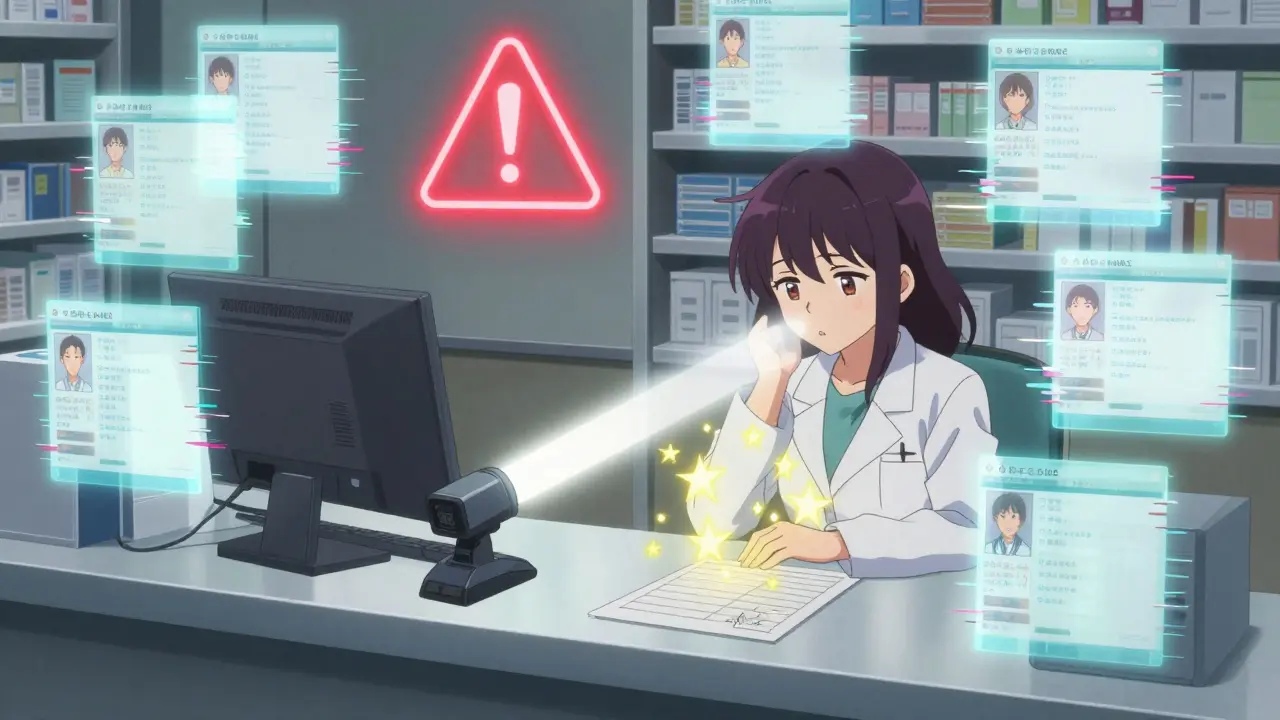
Why Community Pharmacies Struggle-And How to Fix It
A 2023 survey by the American Society of Health-System Pharmacists (ASHP) found that 78% of pharmacists believe two-identifier verification improves safety. But 63% admitted they sometimes skip steps during busy hours. Why? Because it takes time. In a community pharmacy, you might have 20 people waiting. The system doesn’t scan. The patient says, “It’s me,” and you trust them. You don’t document it. You don’t check the MRN. You don’t verify the date of birth against the screen. You’re tired. You’re rushed. You think, “It’s fine.” But it’s not fine. A Reddit post from a community pharmacist in March 2024 said, “We had a near-miss last week. A guy came in for his blood pressure med. I didn’t check his DOB. Turned out he was supposed to get a different drug. His real record showed he had kidney failure. If I’d given him the wrong pill, he could’ve ended up in dialysis.” The fix isn’t harder work. It’s better tools. Simple solutions exist:- Use a printed verification checklist at the counter. Have the patient sign off after confirming name and DOB.
- Install low-cost barcode scanners on counter terminals. Even basic ones cost under $200 and cut errors fast.
- Train staff on “timeout” protocols before high-risk meds like insulin, opioids, or blood thinners. Stop. Check. Confirm. Document.
What Gets Documented Matters-More Than You Think
The Joint Commission doesn’t just care that you check. They care that you write it down. In 2023, 37% of non-compliant pharmacies failed not because they didn’t verify-but because they didn’t document it. No signature. No timestamp. No note in the system. That’s a violation. And it’s easy to fix. Your electronic health record (EHR) should auto-populate the verification step. If it doesn’t, build a simple checkbox: “Name and DOB confirmed.” Make it mandatory. No checkbox? No medication dispensed. Documentation isn’t just for inspectors. It’s your legal protection. If something goes wrong, your records show you did your job.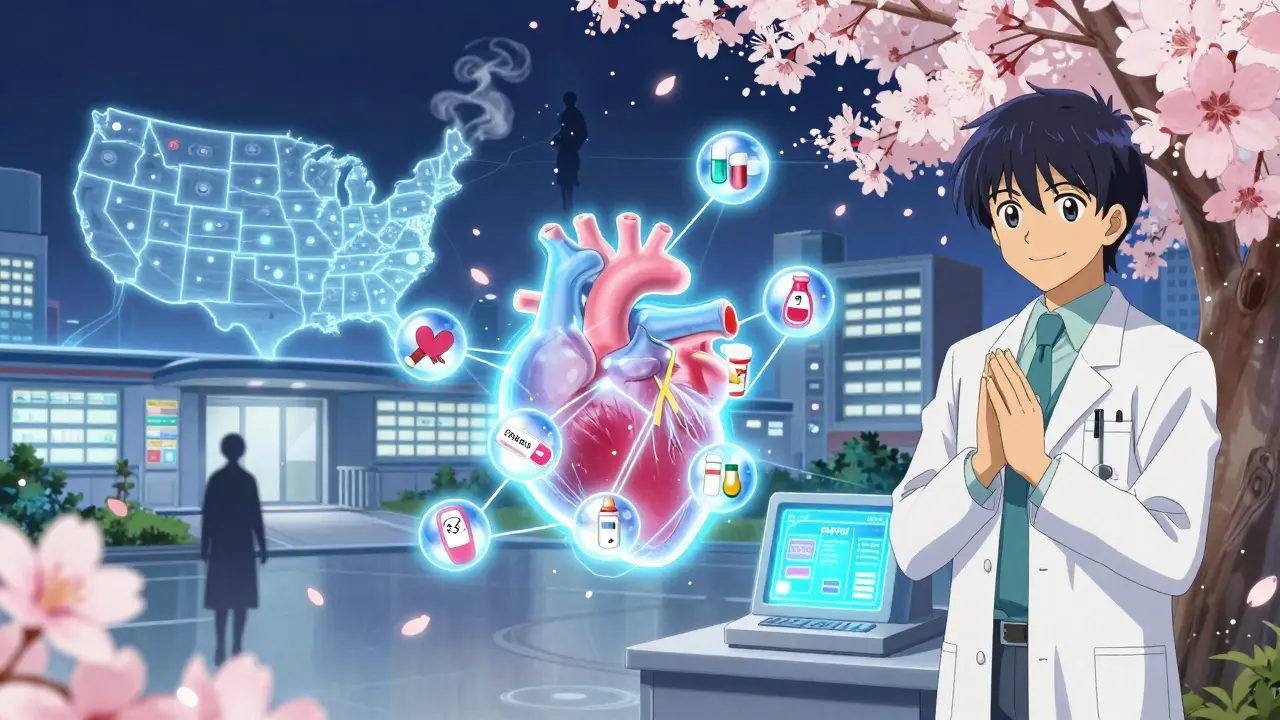
The Future: A National Patient Identifier?
Right now, every hospital, clinic, and pharmacy uses its own system. Your name might be spelled differently. Your birthdate might be entered as 05/12/1980 in one place and 12/05/1980 in another. Your record might be split across three files. It’s a mess. The Office of the National Coordinator for Health IT (ONC) is testing a pilot program in early 2025 to roll out a voluntary, opt-in national patient identifier. Think of it like a Social Security number-but for health records only. It would link every prescription, test, and visit into one unbreakable chain. A 2020 study estimated this could uncover up to 9.7% more dangerous drug interactions. That’s thousands of lives saved each year. But there’s resistance. Privacy fears. Cost. Legacy systems that can’t adapt. The estimated price to fully integrate an EMPI system? $1.2 to $1.8 million per 100-bed hospital. Still, the cost of doing nothing is higher. Duplicate records cost large hospitals $40 million a year just to fix mistakes. And every error carries the risk of death.What You Can Do Right Now
You don’t need a $2 million system to start saving lives. Here’s what works today:- Always use two identifiers. Name and DOB. Name and MRN. Never room number or location.
- Verify visually. Look at the ID on the screen. Look at the patient. Match them. Don’t just listen.
- Use technology when you can. Even a $150 barcode scanner cuts errors in half.
- Document every check. If you didn’t write it down, it didn’t happen.
- Train your team. Make verification part of your daily culture-not an afterthought.
Jenci Spradlin
January 9, 2026 AT 19:22just had a guy come in yesterday for his metformin and i didnt check the dob cause he looked like the pic and said it was him. turns out he was his brother who had the same last name and looked 90% alike. i panicked. now i scan everything. $150 scanner saved my license.
Matthew Maxwell
January 10, 2026 AT 07:15It is unconscionable that any healthcare professional would consider bypassing the Joint Commission’s mandated two-identifier protocol. This is not a suggestion-it is a non-negotiable standard of care. Failure to comply constitutes negligence, and negligence in this context is tantamount to malpractice. The data is unequivocal: human verification alone is statistically inadequate. Technology is not optional; it is the ethical baseline.
Pharmacies that resist barcode integration or EMPI adoption are not merely inefficient-they are actively endangering lives under the guise of convenience. The cost of compliance is negligible compared to the financial and moral liability of a single preventable death.
Furthermore, the notion that ‘it takes too long’ is a privileged delusion. If you cannot perform two verifications in under 90 seconds, you are not overworked-you are incompetent. Training is not a burden; it is the foundation of professional integrity.
Documentation is not bureaucracy-it is accountability. If you did not record it, you did not do it. End of story.
Community pharmacies that cling to verbal confirmations are relics of a bygone era. The standard of care has evolved. Those who refuse to evolve have no place in modern medicine.
Jacob Paterson
January 11, 2026 AT 21:37Oh wow, so we’re supposed to treat every patient like they’re trying to trick us into giving them the wrong pill? That’s just adorable. I mean, sure, let’s turn the pharmacy into a prison intake line with barcode scanners and signed checklists-because nothing says ‘caring healthcare’ like treating your grandma like a suspected drug dealer.
And don’t even get me started on this ‘EMPI’ nonsense. We’re gonna give everyone a national health ID? Next they’ll be scanning our retinas before we buy Tylenol. Next thing you know, the government’s gonna know what time I took my blood pressure meds. Privacy? What’s that?
Also, I’m pretty sure the guy who said ‘it’s me’ and got the wrong pill was just confused. Maybe he’s old. Maybe he’s tired. Maybe he’s not a robot. But let’s just turn the whole system into a dystopian surveillance state because one guy got mixed up. Brilliant.
Phil Kemling
January 12, 2026 AT 22:54There’s a quiet irony in how we demand perfect accuracy in medicine while refusing to accept the fallibility of the systems we build. We design protocols to prevent human error, yet we rely on humans to enforce them-often under conditions designed to maximize stress and fatigue.
The two-identifier rule is a bandage on a hemorrhage. It assumes that if we just add one more layer of verification, the problem disappears. But the real issue is fragmentation: disjointed records, incompatible systems, institutional inertia. Technology helps, yes-but only if we stop treating it as a tool and start treating it as a cultural shift.
We don’t need more checklists. We need trust. Trust that systems work. Trust that data is unified. Trust that the person across the counter is not a threat, but a patient.
And yet, we build walls of verification because we’ve been taught that safety is the absence of failure, not the presence of care.
Maybe the real question isn’t how to verify identity-but how to restore dignity in the process.
tali murah
January 14, 2026 AT 00:05Let me get this straight: pharmacists are too ‘busy’ to verify a patient’s birthdate, but somehow have time to scroll through TikTok during their 12-minute lunch break? Oh, the tragedy. The horror. The sheer audacity of human laziness.
And now we’re supposed to feel bad for them? ‘Oh, it’s hard work!’ No, sweetheart. It’s called being paid to save lives. You don’t get a pass because you’re tired. You get a pass because you’re competent. And if you’re not competent enough to follow a two-step rule that’s been around since 2003, then you shouldn’t be handling medication.
Let’s be clear: every time someone skips the DOB check, they’re gambling with someone’s kidneys, their liver, their life. And if you’re the one who skipped it? You’re not a professional. You’re a liability in a white coat.
And yes-I’m talking to you, community pharmacy with the ‘we’re too small for tech’ excuse. You’re not small. You’re negligent.
Diana Stoyanova
January 14, 2026 AT 10:17Y’all, I work in a pharmacy and I swear-this post made me cry. Not because I’m emotional (okay maybe a little), but because I’ve been there. I’ve rushed. I’ve thought ‘it’s fine’-and then I saw a patient’s face when they realized the pill they got wasn’t theirs. That look? That’s not just fear. It’s betrayal.
We started using a simple printed checklist. We made it part of our morning huddle. We celebrate when someone catches a mismatch-even if it’s just a typo in the name. Now we have a little ‘Safety Hero’ sticker on the wall. People fight over who gets to put it up.
And guess what? Our wait times didn’t go up. We just stopped rushing and started caring. And people notice. They say ‘thank you’ like they mean it.
It’s not about tech. It’s about culture. One person. One check. One moment of slowing down. That’s how you change everything.
Start today. Don’t wait for a near-miss. Don’t wait for a lawsuit. Just stop. Look. Confirm. Say their name out loud. Make eye contact. That’s the real barcode.
Elisha Muwanga
January 14, 2026 AT 22:41Why are we letting the government dictate how we run pharmacies? This is America. We don’t need a national patient ID. We don’t need barcodes. We need common sense. If someone says they’re John Smith, and they look like John Smith, and they’re picking up John Smith’s prescription-then it’s John Smith.
These rules are just socialist overreach disguised as safety. We’re turning healthcare into a bureaucratic nightmare because some bureaucrat in D.C. got scared of a few bad headlines.
And don’t get me started on ‘documentation.’ Do you know how many hours I waste filling out forms? Time I could be helping real people. This isn’t healthcare. It’s paperwork theater.
Let the big hospitals have their $2 million EMPI systems. We’re small businesses. We need freedom, not federal mandates.
Catherine Scutt
January 15, 2026 AT 09:28My mom got the wrong blood thinner last year. She didn’t die, but she bled for three days. The pharmacy didn’t check her DOB. Said she ‘looked right.’
Now I don’t trust any pharmacy that doesn’t scan something.
Darren McGuff
January 16, 2026 AT 11:55Interesting that the article highlights tech solutions but doesn’t mention the UK’s NHS number system-used since the 1940s. Every patient has a single, lifelong identifier. Errors are rare. Records are unified. No one has to guess if ‘John Smith’ is the one with the allergy or the one with the kidney disease.
It’s not about cost. It’s about will. The UK did it. Why can’t we? We have the tech. We have the data. We just lack the political courage.
And for the record: the ‘two identifiers’ rule is a joke without a central ID. Name and DOB? That’s not unique. It’s a lottery. We need one number. One system. One truth.
Ashley Kronenwetter
January 16, 2026 AT 22:29Thank you for this thorough and well-researched piece. The emphasis on documentation as legal and ethical protection is particularly vital. I have reviewed compliance reports for over a dozen institutions, and the most consistent failure point is not the verification itself-but the absence of contemporaneous documentation.
It is not enough to verify. It must be recorded. This is not merely regulatory; it is a moral imperative. The patient deserves to know their safety was prioritized. The provider deserves to know they fulfilled their duty. The system deserves integrity.
I encourage all practitioners to treat the verification step not as a chore, but as a sacred ritual of care.
Aron Veldhuizen
January 18, 2026 AT 03:49Let’s be honest-this entire system is built on the assumption that identity is fixed, static, and universally known. But what if your name changed after marriage? What if your birthdate was misrecorded at birth? What if you’re nonbinary and your medical records still say ‘Mr.’?
Technology doesn’t solve identity-it enforces it. And who gets to decide what counts as a ‘valid’ identifier? The state? The hospital? The algorithm?
By requiring two identifiers, we’re not preventing error-we’re enforcing conformity. The real danger isn’t the wrong pill. It’s the system that refuses to see people as anything but data points.
Maybe the solution isn’t more checks. Maybe it’s less control.
Heather Wilson
January 18, 2026 AT 15:23Let’s cut through the noise. The problem isn’t technology. The problem is culture. 63% of pharmacists admit they skip steps. That’s not a system failure. That’s a moral failure. You’re not ‘busy.’ You’re indifferent. And indifference kills.
Barcodes? EMPI? Those are just tools. The real issue is that we’ve normalized cutting corners. We’ve made ‘it’s fine’ a professional ethic.
And now we want to blame the lack of funding? The lack of training? No. We want to blame the system because we don’t want to take responsibility.
If you’re not doing it right every time, you’re not a pharmacist. You’re a dispenser with a conscience problem.
Micheal Murdoch
January 20, 2026 AT 00:04Hey everyone-this is a tough topic, but I want to say something hopeful.
I’ve trained new pharmacy techs for 12 years. The ones who get it? They’re not the ones who memorized the rules. They’re the ones who ask, ‘What if that was my mom?’
That’s the magic question. Not ‘what’s the policy?’ But ‘what’s the person?’
Yes, we need scanners. Yes, we need checklists. But what we really need is a team that remembers: every name on a bottle is someone’s grandparent, someone’s child, someone’s best friend.
Start small. Say their name. Look them in the eye. Ask if they’ve had this med before. That’s the real two identifiers: their face and your attention.
You don’t need a $2 million system to be human. You just need to care enough to pause.
Matthew Maxwell
January 21, 2026 AT 23:22And yet, despite the overwhelming evidence, the same excuses persist: ‘It’s too slow,’ ‘We’re understaffed,’ ‘The system doesn’t support it.’ These are not justifications-they are admissions of professional failure. If your workflow cannot accommodate a 15-second verification, your workflow is broken, not your staff.
There is no such thing as ‘too busy’ when lives are at stake. The Joint Commission did not issue this standard to inconvenience you. They issued it because people died. And they will continue to die until every pharmacy treats this rule as sacred, not optional.
Leadership must enforce compliance-not as a policy, but as a culture. If you tolerate skipping steps, you are complicit in harm.