
Every year, thousands of people walk into a pharmacy to pick up their prescription-only to walk out with someone else’s medicine. It sounds like a mistake from a bad TV show, but it’s real. And it’s happening in pharmacies right now, even in places you trust. These aren’t rare accidents. They’re preventable errors that can lead to hospital visits, allergic reactions, or even death. The good news? You don’t have to accept this as normal. There are clear, proven ways to stop wrong-patient errors at the pharmacy counter.
Why Wrong-Patient Errors Happen
Wrong-patient errors occur when a pharmacist or technician gives a prescription to the wrong person. It’s not always about carelessness. Often, it’s because names sound alike-like John Smith and Jon Smith. Or because two patients arrive at the same time, one picking up insulin, the other blood pressure pills. In a busy pharmacy, with 20 people waiting and phones ringing, it’s easy for a quick check to slip through the cracks. The Institute for Safe Medication Practices calls these one of the most dangerous types of medication errors. Why? Because the consequences are unpredictable. A diabetic might get a high-dose opioid. An elderly patient might get a drug that causes dangerous drops in blood pressure. Someone with a known allergy might get a drug that triggers anaphylaxis. These aren’t theoretical risks. A 2022 report from the Agency for Healthcare Research and Quality found that medication errors send about 1.3 million people to U.S. emergency rooms every year. A significant portion of those are wrong-patient errors.The Two-Identifiers Rule: The Bare Minimum
The simplest and most widely adopted way to prevent these errors is the two-identifier rule. Before handing over any prescription, pharmacy staff must confirm two things: the patient’s full legal name and date of birth. Not just the first name. Not just the last name. Full name and DOB. This isn’t a suggestion. It’s a standard. CVS, Walgreens, and Walmart have required this since 2015-2018. The Joint Commission, which sets safety standards for U.S. healthcare, has mandated it for hospitals since 2003-and community pharmacies are following suit. The National Association of Boards of Pharmacy updated its Model State Pharmacy Act in 2024 to make this mandatory nationwide. But here’s the catch: if staff just ask, “Are you John Smith?” and the person says “Yes,” that’s not verification. That’s assumption. Real verification means checking the name and DOB against the pharmacy’s computer system and the prescription label. If the system says John Smith, DOB: 03/14/1958, and the person says they’re John Smith, DOB: 03/14/1968-that’s a red flag. Stop. Double-check. Ask for ID.Barcode Scanning: The Game Changer
The two-identifier rule reduces wrong-patient errors by about 45%. That’s good-but not enough. The real leap comes with technology. Barcode scanning systems require the patient to present a card, phone app, or even a wristband with a unique barcode that links directly to their pharmacy profile. When the pharmacist scans it, the system automatically matches the barcode to the prescription being dispensed. If they don’t match, the system won’t let the transaction proceed. Walgreens rolled this out across all 9,000+ of its U.S. locations in 2021. Within 18 months, wrong-patient errors dropped by 63%. That’s not a small number. That’s hundreds of lives potentially saved every year. These systems aren’t perfect. They require hardware, software, and staff training. A typical setup costs between $15,000 and $50,000 per pharmacy. That’s a barrier for small, independent pharmacies. But the cost of getting it wrong? A single wrong-patient error can cost a pharmacy over $12,500 in legal fees, fines, and lost reputation, according to the 2024 National Community Pharmacists Association report.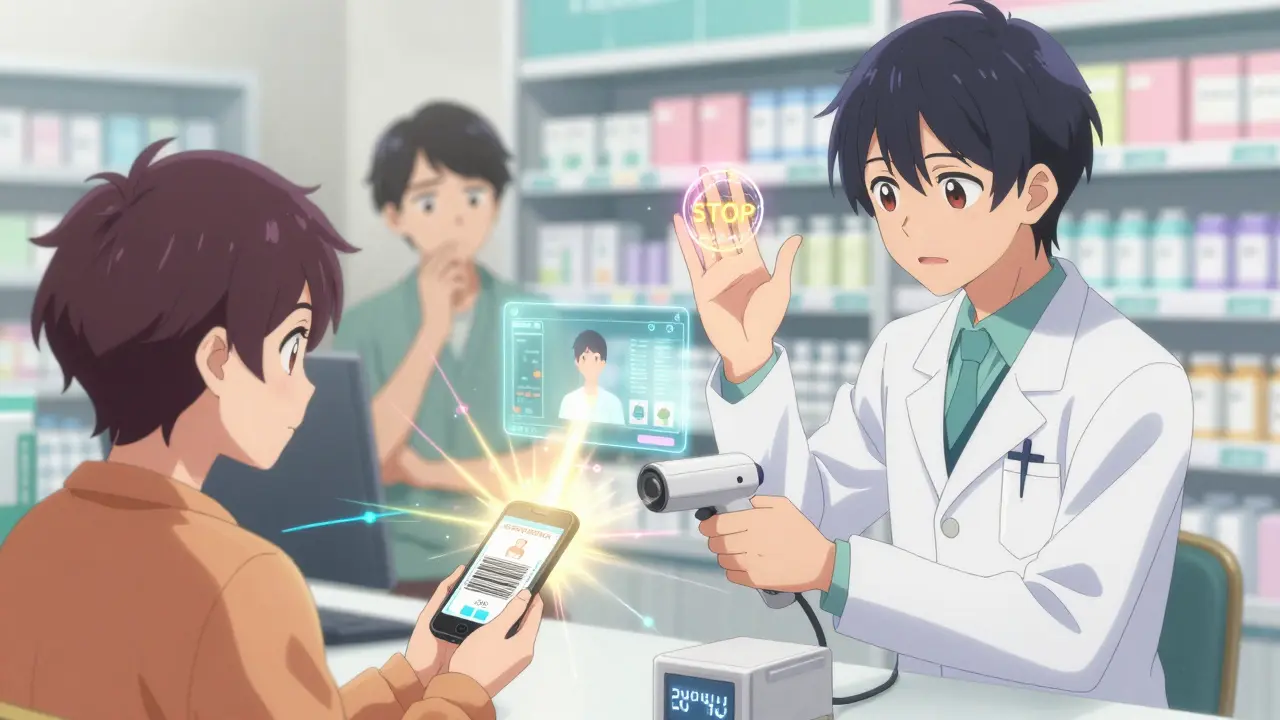
RFID and Biometrics: The Future Is Here
Some pharmacies are already moving beyond barcodes. RFID wristbands-used mostly in hospital settings-are proving even more effective. A 2023 study in the American Journal of Health-System Pharmacy showed a 78% drop in errors when patients wore RFID bands that automatically linked to their prescriptions. Even more advanced? Biometrics. In early 2025, Walgreens launched a pilot in 500 locations using fingerprint scanning to verify patients. Preliminary results showed 92% accuracy. No more forgetting your ID. No more mixing up names. Just scan your finger, and the system knows it’s you. But privacy concerns are real. Patients don’t want their fingerprints stored in a pharmacy database. That’s why these pilots are still limited. The industry is working on encrypted, decentralized systems that don’t store biometric data long-term. It’s coming. But for now, barcodes are the most practical upgrade.Staff Empowerment: The Human Layer
Technology helps. But people stop errors. That’s why the most successful pharmacies don’t just train staff-they empower them. Dr. Beth Kollisch from ECRI Institute says the top three traits of pharmacies with zero wrong-patient errors are: standardized protocols, technology, and a culture where anyone-tech, pharmacist, even the front desk clerk-can stop the process if something feels off. Imagine this: a technician scans a barcode. The system says “John Smith.” But the person picking it up looks confused. They say, “I don’t take this medicine.” That’s not a mistake. That’s a lifesaving moment. In a culture of fear, that tech might say, “Oh, sorry, maybe I scanned the wrong one,” and keep going. In a culture of safety, they say, “You’re right. Let me check.” That’s why training isn’t just about checking boxes. It’s about teaching staff to trust their gut. If the name matches but the voice sounds unsure, if the patient says, “I haven’t taken this in years,” pause. Ask again. Verify again. It’s not slow. It’s smarter.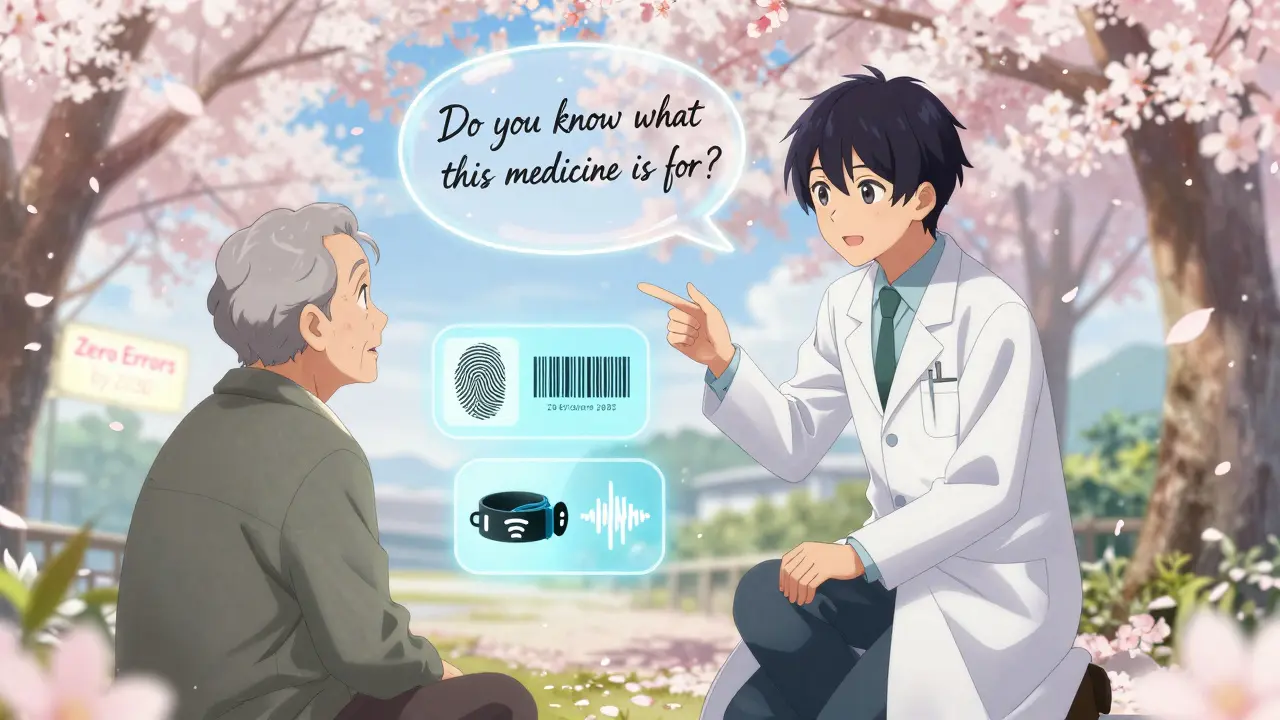
Patient Counseling: The Final Safety Net
The last line of defense? Talking to the patient. When a pharmacist says, “This is your new blood pressure pill,” and the patient replies, “I don’t have high blood pressure,” that’s not an awkward moment. That’s a saved life. Pharmacy Times reports that 83% of dispensing errors are caught during counseling-right before the patient walks out the door. That’s why counseling isn’t optional. It’s critical. Pharmacists need to ask: “Why are you taking this?” “Do you know what it’s for?” “Have you taken this before?” Simple questions. Big impact. And patients? Don’t be shy. If you’re picking up a prescription for someone else, say so. If you’re unsure why you’re getting a certain pill, ask. If the pharmacist doesn’t verify your identity, politely insist. You’re not being difficult. You’re protecting your life.What Independent Pharmacies Can Do
Not every pharmacy can afford a $50,000 barcode system. But that doesn’t mean they’re stuck with risk. Start with the basics: enforce the two-identifier rule without exception. Use printed ID checklists at the counter. Assign a “verification champion” on each shift-a tech or pharmacist who makes sure no one skips the steps. Use low-cost digital tools. Many pharmacy software systems like PioneerRx and QS/1 now have mandatory dual-identifier fields. If the staff doesn’t enter both name and DOB, the system won’t let them complete the sale. That’s free prevention built into the software. And educate your patients. Put up a simple sign: “We verify your identity to keep you safe. Please have your ID ready.” Most people understand. A 2024 ECRI survey found 68% of patients appreciate the extra steps.What’s Next? Zero Errors by 2030
The Pharmacy Quality Alliance has set a bold goal: zero wrong-patient errors by 2030. It’s ambitious. But possible. AI-assisted identification is on the horizon. Voice recognition and facial matching are being tested in labs and pilot stores. One expert predicts 70% of pharmacies will use some form of AI verification by 2027. But technology alone won’t fix this. It’s the combination: strong rules, smart tools, empowered staff, and engaged patients. That’s the formula. Right now, pharmacies are at a crossroads. They can keep hoping staff remember to check names. Or they can build systems that make mistakes impossible. The choice isn’t about cost. It’s about care. Because no one should walk out of a pharmacy with someone else’s medicine.What’s the most common cause of wrong-patient errors at pharmacies?
The most common cause is mixing up patients with similar names-like “Lisa Garcia” and “Liz Garcia”-especially during busy hours. Sound-alike and look-alike names account for about 22% of all wrong-patient errors, according to ECRI Institute’s 2025 safety alert. Rushing, distractions, and skipping verification steps make these mistakes more likely.
Can I refuse to give my date of birth at the pharmacy?
You can refuse, but doing so may delay or prevent you from getting your prescription. Pharmacies are legally and ethically required to verify your identity before dispensing medication. If you’re uncomfortable sharing your DOB, ask if they can use another form of ID, like a driver’s license. Most pharmacies will accept photo ID if you can’t remember your birth date.
Why do pharmacies ask the same questions every time?
It’s not about distrust-it’s about safety. Even if you’ve been coming to the same pharmacy for years, someone else might be picking up your prescription next week. Or your name might be similar to another patient’s. Consistent verification stops errors before they happen. It’s the same reason airports check your ID every time-you’re not being targeted, you’re being protected.
Do all pharmacies use barcode scanning?
No. Chain pharmacies like CVS and Walgreens have adopted barcode systems in 76% of locations. But only 42% of independent pharmacies use them, mostly due to cost. However, even without scanners, all pharmacies are required to use at least two patient identifiers (name and date of birth) under updated national standards.
What should I do if I think I got the wrong medicine?
Don’t take it. Call the pharmacy immediately. If you’re already home, don’t swallow it. Bring the medication back to the pharmacy and ask to speak with the pharmacist. Most errors are caught during counseling, but if you notice something off-like a different color, shape, or name on the pill-speak up. Your vigilance could save your life.
Are wrong-patient errors more common in certain types of pharmacies?
Yes. Hospital outpatient pharmacies have the lowest error rates because they use advanced systems like RFID and barcode scanning in nearly 90% of cases. Chain community pharmacies are next, with 76% adoption of safety tech. Independent pharmacies have higher rates of error because they often rely on manual checks alone. But even small pharmacies can reduce risk by enforcing strict ID verification and training staff to speak up.
Ted Conerly
January 10, 2026 AT 09:56Two-identifier rule is non-negotiable. I’ve worked in pharmacies for 18 years. The moment you skip DOB verification, you’re gambling with lives. I’ve seen it happen - a guy walks in for his wife’s diabetes med, says his name is John Smith, and gets the insulin. He didn’t even notice until he passed out at the bus stop. Don’t be that pharmacy.
Mario Bros
January 11, 2026 AT 01:21Barcodes saved my grandma’s life. She got someone else’s blood thinner once. After Walgreens put in the scanner, she started smiling at the techs. Said they treated her like a person, not a name on a screen. Small things matter.
chandra tan
January 11, 2026 AT 10:31In India, we don’t have barcode systems in most pharmacies - but we have something better: community. Everyone knows everyone. If you walk in for your mom’s blood pressure med, the guy behind the counter says, ‘Aunty Priya’s pills? Oh, you’re her son, right? You always wear that blue shirt.’ It’s not tech, it’s trust. Maybe we don’t need fancy scanners if we just pay attention.
Dwayne Dickson
January 12, 2026 AT 23:08It is both a professional and ethical imperative that pharmacists adhere to standardized verification protocols. The conflation of patient identity constitutes a systemic failure of due diligence, and the normalization of such lapses reflects a troubling erosion of clinical rigor. The assertion that ‘it’s just a name mix-up’ is not merely inaccurate - it is dangerously reductive. The consequences are not abstract. They are fatal. And they are preventable.
Faith Edwards
January 14, 2026 AT 16:05How is it that in a nation that mandates seatbelt use and bans lead paint, we still allow pharmacies to operate like a 1980s drive-thru with zero safeguards? This isn’t negligence - it’s institutionalized contempt for human life. And yet, we’re supposed to be grateful when they finally get around to scanning a barcode? Please. We deserve better than band-aid solutions and performative safety.
Jay Amparo
January 15, 2026 AT 03:54I’ve seen this in my village back home - a young girl got her aunt’s heart med because the pharmacist didn’t ask for ID. She ended up in the hospital. But after that, the whole town started reminding each other: ‘Always show your card.’ No one got mad. Everyone got safer. It’s not about tech. It’s about culture. We can build that here too.
Lisa Cozad
January 15, 2026 AT 07:54My mom’s pharmacy started asking for ID every time - even though she’s been coming for 15 years. At first, I thought it was overkill. Then I realized: what if someone steals her card? What if her name gets mixed up with a new patient? Now I’m the one reminding her to bring her license. It’s not annoying - it’s loving.
Saumya Roy Chaudhuri
January 16, 2026 AT 09:30Biometrics? RFID? Please. This is all a distraction. The real problem is that pharmacies are owned by corporations that care more about profit than people. They won’t spend $50k on scanners because they’d rather pay $12k in lawsuits. They’re not trying to save lives - they’re trying to minimize liability. Don’t be fooled by the ‘safety culture’ talk. It’s PR.
anthony martinez
January 17, 2026 AT 10:17So we’re supposed to believe that scanning a barcode or fingerprint is the magic fix? Funny. I’ve been to pharmacies where they scan the barcode… then hand the pill to the wrong person anyway. Tech doesn’t replace training. It just gives people a false sense of security. You can’t automate common sense.
Jake Nunez
January 18, 2026 AT 13:11My cousin got the wrong antibiotic. Ended up in the ER. The pharmacist didn’t even ask for ID - just said ‘You’re Lisa, right?’ and handed it over. She didn’t even know it was wrong until her tongue swelled up. Now I always ask for the pill bottle to be opened in front of me. If they don’t like it, go somewhere else.
Christine Milne
January 19, 2026 AT 18:56Let’s be clear: this is a liberal healthcare fantasy. In the real world, people don’t want to be treated like suspects. This obsession with verification is eroding trust. Why can’t we just assume good faith? You want safety? Don’t take pills you don’t recognize. Simple. No scanners. No ID. Just personal responsibility.
Bradford Beardall
January 21, 2026 AT 14:52Interesting that you mention AI voice recognition. I read a paper from MIT last year where they trained an algorithm to detect patient hesitation based on vocal micro-tremors. Turns out, people who are lying or confused have a 0.3-second pause before answering ‘Are you John Smith?’ That’s longer than a human can consciously control. Imagine if the system flagged that pause and forced a re-verification. We’re not far from that.
McCarthy Halverson
January 22, 2026 AT 09:41Two IDs. Always. No exceptions. If you skip it, you’re risking a death. That’s it. No fluff. No tech magic. Just do your job.
neeraj maor
January 23, 2026 AT 17:52They say barcodes and fingerprints are the future. But what if the system gets hacked? What if your biometric data gets sold to insurance companies? They’ll raise your premiums because you ‘have a history of medication errors’ - even if you never made one. This isn’t safety. It’s surveillance capitalism dressed up in white coats. They’re not protecting you. They’re profiling you. And you’re letting them.