
Every year, thousands of people accidentally take too much of a medication-sometimes because they lost track of what they took, when they took it, or how much. It’s not always a mistake with illegal drugs. Sometimes it’s just a mix of prescriptions, over-the-counter pills, and supplements that add up in dangerous ways. A simple medication log can stop that before it happens.
Why Medication Logs Work
You don’t need to be using opioids to be at risk. Mixing alcohol with sleep aids. Taking two painkillers that both contain acetaminophen. Forgetting you already took your morning dose and doubling up. These aren’t rare mistakes. They happen to people managing chronic pain, anxiety, diabetes, heart conditions-you name it. A medication log isn’t about suspicion or addiction. It’s about clarity. Think of it like a food diary, but for pills. If you’re trying to lose weight, you track calories. If you’re trying to avoid an overdose, you track doses. The CDC says one of the biggest risks for overdose is taking multiple drugs that depress the central nervous system-like opioids, benzodiazepines, or alcohol-without knowing how they interact. A log forces you to see the full picture. It’s not enough to remember you took something. You need to know exactly what, when, and how much.What to Write in Your Log
A good medication log doesn’t need to be fancy. It just needs to be consistent. Here’s what every entry should include:- Medication name-Use the full name, not just the brand. For example, write “oxycodone 5 mg” instead of “Percocet.”
- Dosage amount-Write the exact number of milligrams or units. Don’t guess. If you’re unsure, check the bottle.
- Date and time-Use a 24-hour clock if possible. 14:30 is clearer than “2:30 pm.”
- Reason for taking it-Was it for pain? Anxiety? Insomnia? This helps spot patterns. If you’re taking a sleep aid every night because you’re in pain, that’s a red flag.
- Method of use-Did you swallow it? Crush it? Snort it? Inject it? The way you take a drug changes how fast it hits your system-and how dangerous it is.
- Other substances taken at the same time-Alcohol, marijuana, cough syrup, even melatonin. These can all combine dangerously.
- How you felt-Drowsy? Nauseous? Clear-headed? This helps you spot early signs of tolerance or overdose.
Example entry:
Dec 3, 2025, 08:15 - Oxycodone 5 mg, taken for lower back pain. Swallowed. Took with coffee. Felt drowsy by 10:00. No other meds.
That’s it. No jargon. No complexity. Just facts.
Choose Your Format: Paper or Digital?
Some people swear by a notebook. Others prefer apps. Both work-if you use them. Paper logs are simple. Buy a small notebook. Keep it with your pills. No batteries. No passwords. No distractions. Just write it down. The act of writing helps memory. You’re less likely to skip entries. Digital logs can send reminders. Apps like Medisafe, MyTherapy, or even a simple notes app on your phone let you set alerts. You can even share entries with a trusted person. Some apps let you scan pill bottles to auto-fill names and dosages. But here’s the catch: if you forget your phone, you forget your log. If the app crashes, you lose data. Paper doesn’t crash. It doesn’t need Wi-Fi. It doesn’t track your location. Pick what fits your life. But don’t overthink it. The best log is the one you actually use.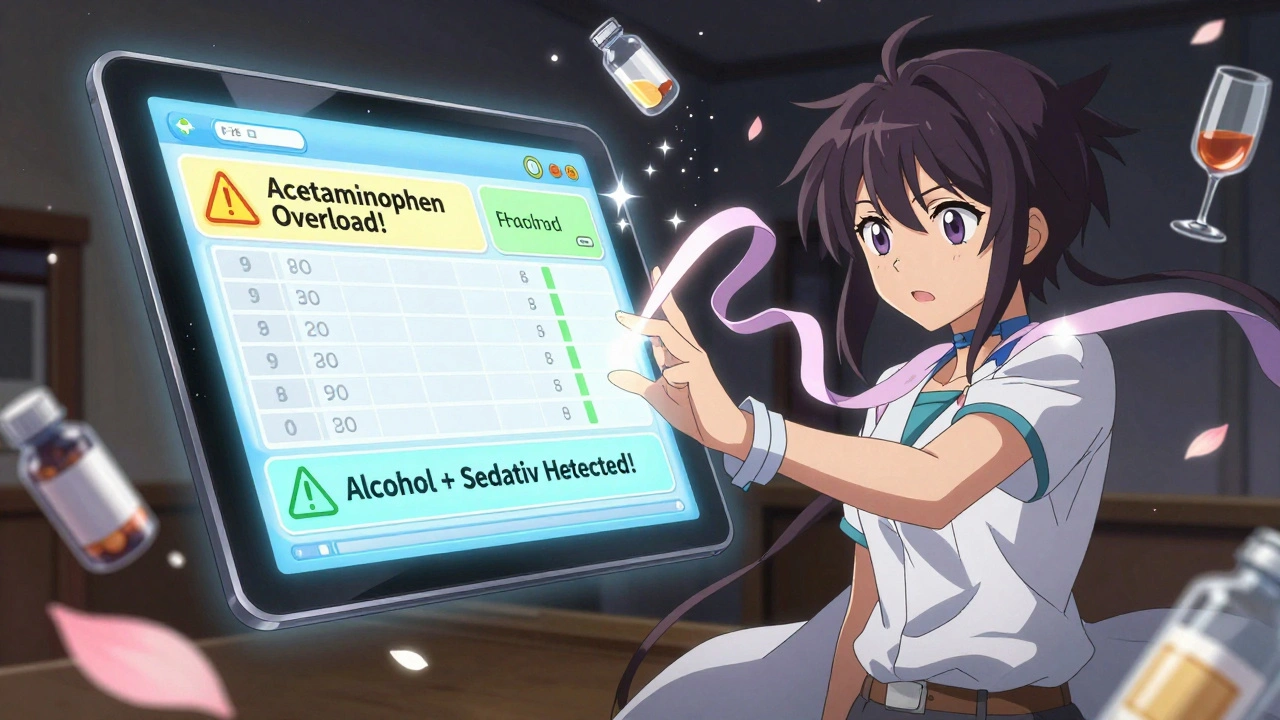
How to Use It to Avoid Overdose
A log isn’t just a record. It’s a safety tool. Here’s how to use it:- Check before you take anything-Before you swallow a pill, look at your log. Did you take this already today? What else did you take in the last 4 hours?
- Follow the “start low, go slow” rule-If you’re trying a new medication, write down the lowest dose first. Wait at least 24 hours before increasing. Don’t rush. Your body needs time to react.
- Spot dangerous combinations-If you notice you’re taking a painkiller and a muscle relaxant on the same day, that’s a warning. Both slow your breathing. Write it down. Then talk to your doctor.
- Use test strips if available-If you’re using pills you didn’t get from a pharmacy, test them. Fentanyl and xylazine are often mixed in without warning. Write the result in your log: “Tested pill, fentanyl detected.”
- Share it with someone-Give a copy to a friend, family member, or peer support person. If you don’t answer a call, they can check your log and know what you took. This saves lives.
One person in Sydney told me they started logging after nearly overdosing on a mix of tramadol and alcohol. They didn’t realize tramadol affects the same brain receptors as opioids. Their log showed they’d taken it twice in 12 hours. That’s when they stopped.
Common Mistakes and How to Fix Them
People try logs. Then they quit. Here’s why-and how to keep going:- “I forget to write it down.”-Set a phone alarm for when you usually take meds. Or keep the log right next to your pill organizer.
- “I don’t remember the exact dose.”-Use a measuring spoon or pill splitter. Never guess. If you’re unsure, call your pharmacist.
- “It feels like I’m being watched.”-It’s not about judgment. It’s about control. This log is yours. No one else sees it unless you want them to.
- “I only take a few pills.”-Even one medication can be dangerous if mixed. One pill of benzodiazepine plus one glass of wine can be enough to stop your breathing.
The goal isn’t perfection. It’s awareness. Miss one day? Just start again. No guilt.

When to Talk to a Professional
Your log isn’t a substitute for medical advice. But it’s the best tool you have to speak up. Bring your log to every doctor’s appointment. Show them what you’ve been taking, when, and how you felt. If you’re seeing multiple providers, your log is the only thing that gives them the full picture. One doctor might not know you’re taking something from another. If your log shows you’re increasing doses quickly, taking more than prescribed, or mixing substances often-it’s time to ask for help. You don’t need to be addicted to need support. You just need to be safe.Real Impact: Stories Behind the Numbers
In 2023, a study in Australia found that people who kept daily medication logs were 40% less likely to have an overdose event than those who didn’t. That’s not because they were “better” people. It’s because they had data. One woman in Melbourne used her log to realize she was taking three different painkillers-all with acetaminophen. She was hitting 4,000 mg a day. The safe limit is 3,000 mg. She didn’t know. Her log showed it. She switched to a safer option. Another man in Adelaide logged every time he took his anxiety med. He noticed he took it more often on weekends, usually with beer. He cut out the alcohol. His anxiety didn’t get worse. His breathing did. These aren’t rare cases. They’re everyday people who just started writing things down.Final Thought: You’re Not Alone
Overdose doesn’t happen because someone is careless. It happens because systems fail. Prescriptions overlap. Labels get blurry. Memory fades. But you can build your own safety net. A medication log doesn’t require special training. It doesn’t cost money. It doesn’t need approval. All it needs is your honesty. Start today. Write down what you took this morning. Just one line. That’s enough. Tomorrow, add another. Keep going. You’re not just tracking pills. You’re protecting your life.Do I need a special app to keep a medication log?
No. A simple notebook and pen work just as well as any app. The key isn’t the tool-it’s consistency. If you’re more likely to write in a paper log you keep by your bed, use that. If you forget paper but always have your phone, use a notes app. Choose what fits your habits.
Can a medication log really prevent an overdose?
Yes. Studies show people who track their medication use are significantly less likely to have accidental overdoses. A log helps you avoid double-dosing, spot dangerous drug combinations, and notice patterns before they become crises. It’s not a guarantee, but it’s one of the most effective tools you can use.
What if I’m taking medications prescribed by different doctors?
That’s exactly when you need a log the most. Each doctor might only see their own prescriptions. You could be getting overlapping painkillers, sedatives, or antidepressants without anyone realizing. Your log gives you the full picture to share with each provider-helping them make safer choices for you.
Should I include over-the-counter drugs and supplements?
Absolutely. Many overdoses happen because people think OTC means safe. Pain relievers like acetaminophen, sleep aids like diphenhydramine, and even herbal supplements like kava or valerian can interact dangerously with prescription drugs. Include everything you take, even if it’s “just a vitamin.”
What should I do if my log shows I’m taking too much?
Don’t panic. Don’t stop suddenly. Write down what you’ve noticed and schedule a call with your doctor or pharmacist. They can help you adjust safely. If you’re using illegal substances, contact a harm reduction service-they can help you test drugs, reduce doses, and connect you with support. Your log is a starting point, not a failure.
Can I share my log with someone I trust?
Yes, and it’s a smart idea. If you’re using substances that carry overdose risk, having someone else who knows what you’ve taken can be lifesaving. They can check your log if you’re unresponsive. You can even give them a printed copy or a screenshot of your digital log. This isn’t about control-it’s about safety.
If you’re unsure where to start, pick one medication you take daily and write down its name, dose, and time for the next three days. That’s your first step. You don’t need to fix everything at once. Just begin.

joanne humphreys
December 6, 2025 AT 23:21I started keeping a medication log after my mom nearly overdosed on gabapentin and melatonin. She didn’t realize how much the combination slowed her breathing. Now I keep mine in a small notebook next to her pill organizer. It’s not glamorous, but it’s saved us from at least three near-misses. Just writing it down makes you pause before you swallow something.
Nigel ntini
December 8, 2025 AT 22:31This is one of the most practical, life-saving pieces of advice I’ve seen on Reddit in years. The structure is clear, the examples are real, and the emphasis on consistency over perfection is exactly right. I’ve recommended this to three friends already-one of them was taking four different NSAIDs daily without knowing the cumulative acetaminophen risk. A log isn’t just helpful; it’s non-negotiable for anyone on multiple meds.
Priya Ranjan
December 9, 2025 AT 01:02People still need to be told this? It’s 2025. If you can’t keep track of your own pills, maybe you shouldn’t be taking them at all. I’ve seen too many adults treat medication like candy-pop one here, another there, no thought, no consequences. This isn’t rocket science. Write it down. Or don’t be surprised when your liver fails.
Ashish Vazirani
December 9, 2025 AT 14:46Dan Cole
December 10, 2025 AT 11:34What’s fascinating here is the epistemological shift: we’re not just tracking substances-we’re reconstructing agency. The log becomes an externalized memory matrix, a phenomenological anchor against the erosion of self-control by pharmacological entropy. You’re not merely recording doses-you’re reasserting sovereignty over your neurochemistry. This isn’t a checklist. It’s an existential act of resistance against systemic neglect.
Max Manoles
December 11, 2025 AT 12:56I use a notes app on my phone with voice-to-text. I say, ‘Oxycodone 5mg, 9:15 a.m., back pain, coffee, drowsy.’ It’s quick, searchable, and I never forget it because the phone pings me. I also share a read-only copy with my sister. She checks in if I don’t respond to a text for 12 hours. It’s not about trust-it’s about safety nets. Simple, but powerful.
Katie O'Connell
December 13, 2025 AT 11:40While the utility of such a log is undeniable, one must acknowledge the underlying sociopolitical failure that necessitates this individualized burden of record-keeping. The fragmentation of care, the lack of interoperable electronic health records, and the absence of centralized medication reconciliation systems place undue responsibility on the patient. One wonders whether the onus should not lie more squarely with institutional infrastructure than with the conscientious citizen.
Akash Takyar
December 14, 2025 AT 15:47My uncle, who is 78 and on seven different medications, started this log after his last ER visit. He uses a printed template we made for him. He writes it by hand every morning after breakfast. He says it gives him peace. Last week, he caught that he’d taken two doses of his blood pressure pill. He called his pharmacist before taking the third. That’s dignity. That’s control. That’s what this is about.
Kenny Pakade
December 15, 2025 AT 21:11Why are we even talking about this? It’s 2025. If you’re that forgetful, maybe you shouldn’t be allowed to drive, let alone take pills. This is just another way to make responsible people feel guilty for being smart. I’ve never needed a log. I know what I take. End of story.
brenda olvera
December 17, 2025 AT 17:46olive ashley
December 18, 2025 AT 14:59Who’s really behind this? The pharmaceutical companies? They profit more when you take more pills, right? And now they’re pushing this log thing to make you think you’re safe while they keep adding new drugs to the market. I’ve seen the patents-this is all a control mechanism. You think you’re protecting yourself, but you’re just feeding the system. Don’t be fooled.