When you stand at the pharmacy counter and the pharmacist asks if you want the generic version of your medication, you're probably thinking about the price. But the real question is: is it actually the same thing? It is a common myth that generics are "lite" versions of brand-name drugs. In reality, for a generic to hit the market, it has to pass a gauntlet of tests that prove it performs exactly like the original.
The core of this system is the Hatch-Waxman Act is a 1984 law that balanced patent protections for innovator drugs with a streamlined pathway for affordable generic competition . This law created the framework that allows generic drugs to make up over 90% of prescriptions filled in the U.S. today. The goal isn't just to make drugs cheaper, but to ensure that the cost savings don't come at the expense of your health.
The Two Pillars of Equivalence
To get a green light from the FDA, a generic manufacturer can't just make a drug that "seems" to work. They have to prove two specific things: pharmaceutical equivalence and bioequivalence. If a drug fails either one, it doesn't get approved.
First, there is Pharmaceutical Equivalence. This means the generic and the brand-name drug are essentially twins. They must have the identical active ingredient, the same strength, the same dosage form (like a tablet or a capsule), and the same route of administration. While the active parts must be identical, the FDA allows for differences in "inactive" ingredients-things like the fillers, binders, or the color of the pill-as long as they don't interfere with how the drug works.
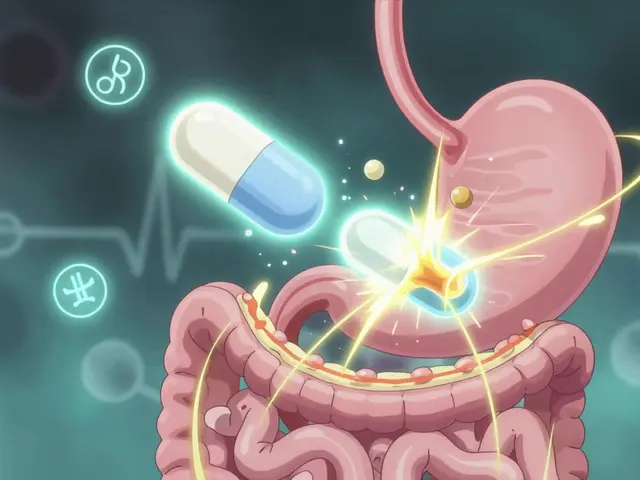
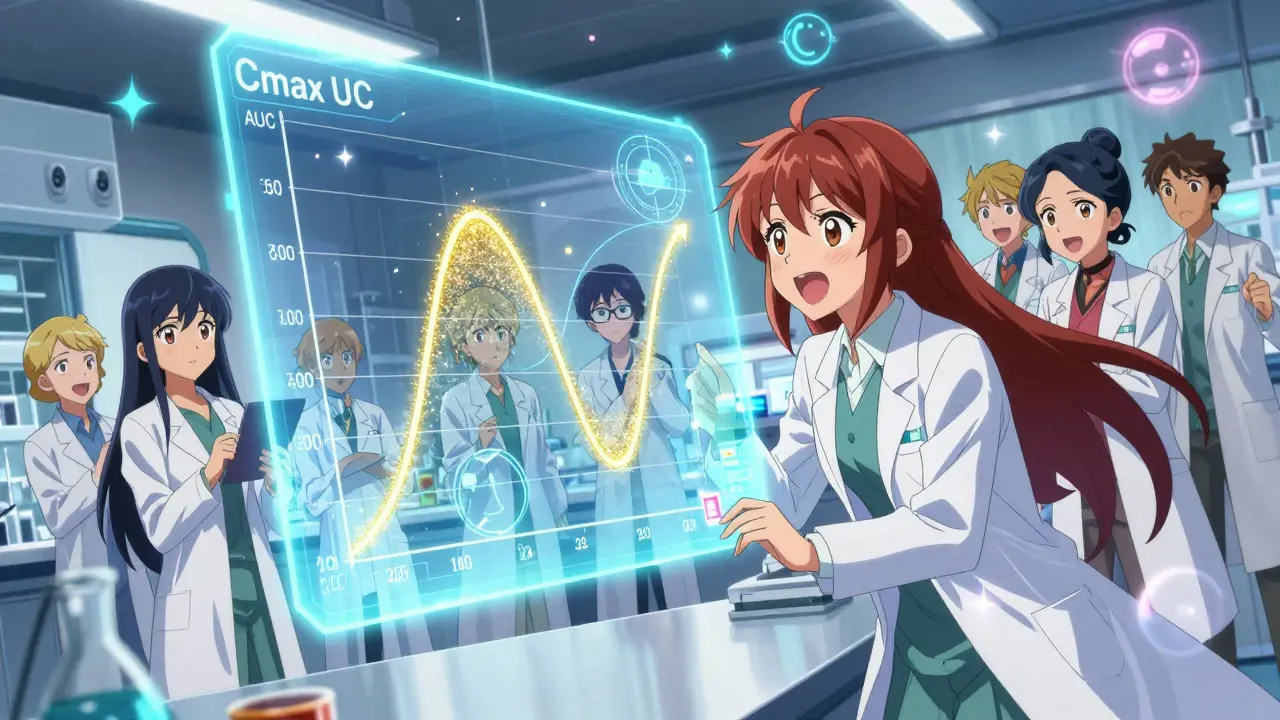
Then there is Bioequivalence, which is where the actual science of absorption comes in. The FDA doesn't just want to know if the drug is the same; they want to know if it gets into your bloodstream at the same speed and in the same amount as the brand name. To prove this, manufacturers conduct pharmacokinetic studies, usually involving 24 to 36 healthy volunteers. They track two main metrics: Cmax (the maximum concentration of the drug in the blood) and AUC (the area under the curve, which represents the total drug exposure over time).
| Feature | Requirement for Generic | Permitted Variation |
|---|---|---|
| Active Ingredient | Must be identical | None |
| Strength & Dosage | Must be identical | None |
| Absorption Rate (Bioequivalence) | 90% Confidence Interval (80% to 125%) | Minor statistical variance |
| Inactive Ingredients | Must be safe/inert | Color, shape, flavor |
Navigating the ANDA Process
Brand-name drugs go through a massive, years-long process to prove they are safe and effective from scratch. Generics take a shortcut called the Abbreviated New Drug Application, or ANDA. It's "abbreviated" because the manufacturer doesn't have to repeat the expensive clinical trials to prove the drug works-they just have to prove it is equivalent to the one already approved.
This process is managed by the Office of Generic Drugs (OGD). The review is rigorous and often involves several cycles of feedback and data requests. To speed things up, the FDA uses the Generic Drug User Fee Amendments (GDUFA), where companies pay fees to fund the review process, helping the FDA hit a standard review goal of about 10 months for complete applications.
Beyond the paperwork, the FDA puts the factories under the microscope. Every manufacturer must follow current Good Manufacturing Practices (cGMP). These are the rules found in 21 CFR Parts 210 & 211 that dictate everything from how raw materials are stored to how the air is filtered in the clean room. The FDA performs about 3,500 inspections annually worldwide to make sure these rules aren't just on paper but are actually practiced on the factory floor.
The Challenge of Complex Generics
Not all drugs are as simple as a sugar pill. Some, like inhalers, topical creams, or long-acting injectables, are called "complex generics." For these, a simple blood test isn't enough to prove bioequivalence. Why? Because if you're using a nasal spray, the most important thing is how the drug sits in your nasal cavity, not necessarily how much hits your bloodstream instantly.
To handle this, the FDA has released over 2,000 product-specific guidances. These documents tell manufacturers exactly what extra tests they need to perform-something called "Q3 sameness"-which looks at the physical and chemical structure of the drug. If you're using a complex generic, the testing is actually more sophisticated than what is required for a standard tablet.
Stability and Shelf-Life Testing
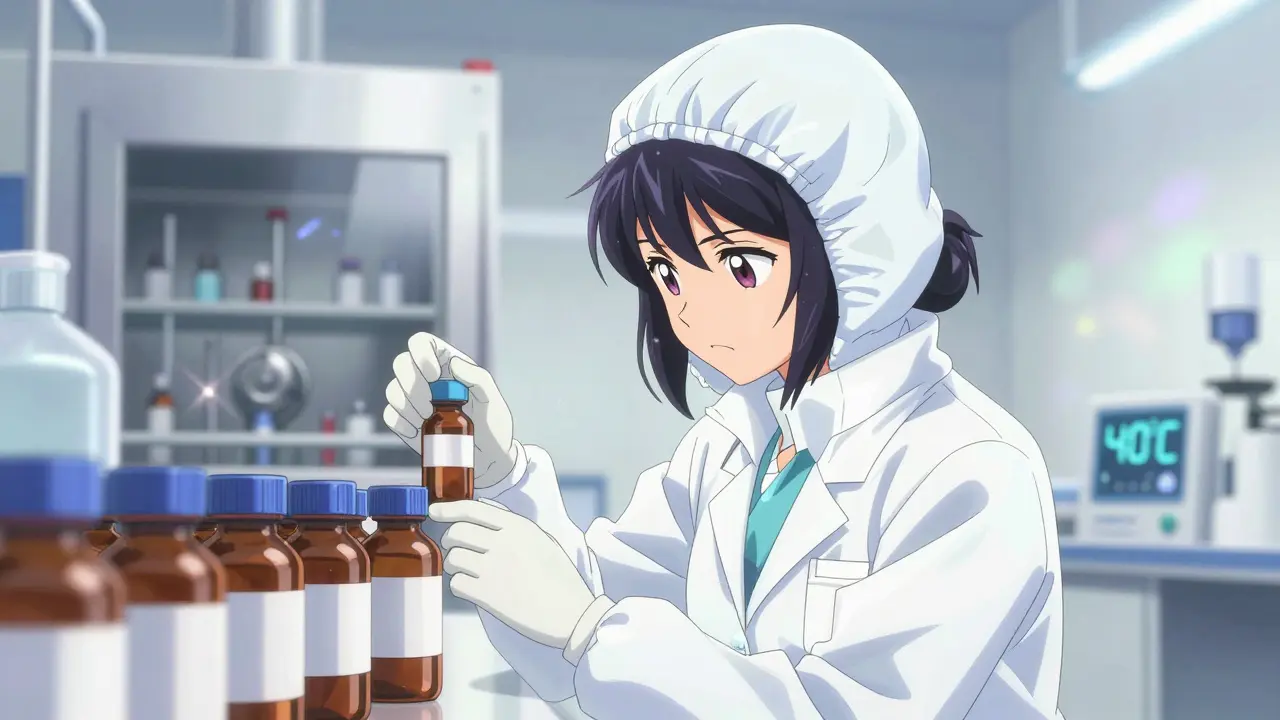
A drug that works today but breaks down in three months is useless. That's why the FDA requires strict stability testing. Manufacturers must prove their drug stays potent and pure over time. This usually involves two types of studies:
- Accelerated Stability: Drugs are kept at high heat (40°C) and high humidity (75% RH) for six months to simulate aging.
- Long-Term Studies: Drugs are stored at recommended conditions for 12 to 24 months to confirm the expiration date.
Every single production lot also undergoes batch testing. This confirms that the identity, strength, and purity are consistent across thousands of bottles, ensuring the pill you take in January is identical to the one you take in June.
Real-World Performance and Patient Experience
Statistically, the system works. Generic drugs saved the U.S. healthcare system roughly $37 billion in 2022. Most people-about 89% in some surveys-are completely satisfied with their generic meds. However, it's worth noting that for a very small number of people, the "inactive" ingredients or tiny variances can matter.
This is most common with Narrow Therapeutic Index (NTI) drugs. These are medications where a tiny change in concentration can be the difference between a working dose and a toxic one. Examples include levothyroxine for thyroid issues or certain seizure medications. In these rare cases, a patient might feel a difference when switching between different generic brands, even if both meet FDA standards, simply because their body is hyper-sensitive to the slight differences in absorption.
Are generic drugs less effective than brand-name drugs?
No. FDA-approved generics must be bioequivalent to the brand-name version, meaning they deliver the same amount of active ingredient to the bloodstream at the same rate. They are designed to provide the same clinical benefit.
Why do some generic pills look different from the brand name?
The FDA allows generic manufacturers to use different inactive ingredients, colors, and shapes. As long as these additives don't change how the drug works or its safety profile, they are permitted.
What is an ANDA?
An Abbreviated New Drug Application (ANDA) is the application submitted to the FDA for the approval of a generic drug. It is "abbreviated" because it doesn't require the full clinical trials that the original brand-name drug had to undergo.
What happens if a generic drug fails a bioequivalence test?
The FDA will not approve the drug for market. The manufacturer must either reformulate the drug to better match the brand-name absorption profile or provide additional data to justify why the variance doesn't affect safety or efficacy.
Who monitors the quality of generic drugs after they are approved?
The FDA continues to monitor quality through periodic facility inspections (cGMP audits) and by monitoring reports of adverse events or product failures through their surveillance systems.
Next Steps for Patients and Providers
If you are a patient taking a standard medication, you can generally trust the generic version without hesitation. However, if you are taking a narrow therapeutic index drug, like a blood thinner or thyroid hormone, it's a good idea to stick with one specific generic manufacturer. If your pharmacy switches the brand of generic they provide, notify your doctor so they can monitor your levels for any fluctuations.
For those interested in how these drugs are developed, the FDA's product-specific guidances provide a deep dive into the testing requirements for complex medications, offering a transparent look at the science behind the switch.