
When the house goes quiet and the world settles into stillness, that’s when tinnitus often feels loudest. If you’ve ever lain awake at night listening to a persistent ring, buzz, or hiss in your ears - even though no one else can hear it - you know how exhausting this can be. It’s not just annoying. It’s a full-blown sleep disruptor. And the more you struggle to fall asleep, the worse the tinnitus seems to get. It’s a cycle: tinnitus keeps you awake, and being sleep-deprived makes your tinnitus feel louder and more intense.
Why Tinnitus Gets Worse at Night
The quiet isn’t the problem. It’s the lack of background noise. During the day, your brain is busy processing traffic, conversations, music, appliances - all kinds of sounds. These external noises act like a gentle blanket over your tinnitus, masking it without you even noticing. At night, that blanket vanishes. Without competing sounds, your brain turns up the volume on the internal noise it’s been ignoring all day. Studies show that in complete silence, tinnitus perception can spike by up to 40%. This isn’t in your head - it’s how your auditory system works. Your brain doesn’t turn off its sound-processing circuits when you sleep. It just has nothing else to focus on.The Science Behind Sound Masking
The most reliable way to break this cycle is sound masking - not by drowning out the tinnitus, but by gently shifting your brain’s attention. The goal isn’t to erase the sound. It’s to make it less noticeable. Research from Healthy Hearing shows that playing sound at a level just below your tinnitus volume reduces perceived loudness by 30-50%. That’s not magic. It’s neuroscience. When you introduce a steady, non-intrusive sound, your brain starts to treat the tinnitus as background noise too. It’s like turning down the volume on a radio that’s been playing too loudly in the corner of the room. Not all sounds work the same. White noise - the hissing static of an old TV - is common, but not always best. Pink noise, which has more low-end energy, feels smoother and less harsh. Brown noise, even deeper and rumbling, mimics the sound of distant thunder or a strong fan. Widex’s 2023 clinical guide found that 68% of users preferred brown noise for nighttime use. Green noise, centered in the mid-frequencies (around 500 Hz), works well for those whose tinnitus sounds like a high-pitched tone. The key? Test them. Spend a few nights trying each one at different volumes. Your brain will tell you what feels right.Devices That Actually Work
You don’t need expensive gear to get started. A simple desktop fan can produce 45-55 decibels of steady noise - enough for many people. But dedicated sound machines offer more control. The LectroFan Classic, for example, delivers 20 different fan sounds and noise types up to 60 decibels. It’s been rated 4.3 out of 5 by over 1,200 users. Smartphone apps are convenient, but they’re inconsistent. Battery drain, ads, and poor audio quality make them unreliable for nightly use. A 2023 Soundly study found that only 3.8 out of 5 users were satisfied with apps, compared to 4.3 for dedicated machines. If you have hearing loss, modern hearing aids with tinnitus therapy features can help. Widex’s Moment 4.0 and Phonak’s models now include notch therapy - a precise frequency filter that cancels out your specific tinnitus tone. But if your hearing is normal, these won’t help. Stick with sound masking.What Else Helps - Beyond Noise
Sound alone isn’t enough. Sleep hygiene matters just as much. Your bedroom temperature should be between 60-67°F (15.6-19.4°C). Too warm, and your body won’t drop into deep sleep. Too dry, and your auditory nerves get more sensitive. Aim for 40-60% humidity. A humidifier can make a difference. Screen time before bed is a silent saboteur. Blue light from phones and tablets suppresses melatonin - the hormone that tells your body it’s time to sleep. Even if you fall asleep, the quality of your sleep drops. Studies show that people who avoid screens for 90 minutes before bed improve their tinnitus-related sleep issues by 47% more than those who don’t. Stress is another major player. When you’re anxious, your body releases cortisol - a hormone that spikes by 25-30% during tinnitus flare-ups. That spike directly interferes with deep sleep. Simple breathing exercises - inhale for four counts, hold for four, exhale for six - can calm your nervous system in minutes. Try doing this for 10 minutes before turning off the lights.
The Power of Routine
One of the most overlooked strategies is consistency. Going to bed and waking up at the same time every day - even on weekends - reduces tinnitus-related sleep disturbances by 33%. That’s not a small number. It’s the difference between 90 minutes of tossing and turning and 45. But it takes time. You need at least two to three weeks of strict routine before you notice a shift. Your brain needs to relearn that nighttime = rest, not vigilance. A 60-minute pre-sleep ritual works wonders. Try this: 20 minutes of quiet reading (paper book, not a screen), 20 minutes of gentle stretching or meditation, and 20 minutes adjusting your sound therapy. This signals your brain that sleep is coming. It’s a ritual, not a chore.Cognitive Behavioral Therapy (CBT) for Tinnitus
Sound masking helps with the noise. CBT helps with the reaction to it. CBT for tinnitus isn’t about fixing your ears. It’s about changing how your brain responds to the sound. A 2022 meta-analysis in the Journal of Clinical Sleep Medicine found that CBT reduced nighttime distress in 72% of users after eight weeks - far more than sound therapy alone. The problem? Only 38% of people complete the full program. It requires a trained therapist, weekly sessions, and homework. But if you’re still struggling after trying sound and sleep hygiene, it’s worth exploring. Many clinics now offer online CBT programs designed specifically for tinnitus.What Doesn’t Work
Don’t fall for quick fixes. Earplugs in bed? They can make things worse. Blocking all sound forces your brain to hyper-focus on the tinnitus. Custom earplugs with 15dB attenuation helped one Reddit user with hyperacusis - but only because they were paired with CBT. For most people, complete silence is the enemy. Over-relying on loud masking can backfire too. Dr. James Henry from the National Center for Rehabilitative Auditory Research warns that if you play sound so loudly that you can’t hear your tinnitus at all, your brain may become more sensitive to it over time. The goal is partial masking - enough to distract, not enough to erase.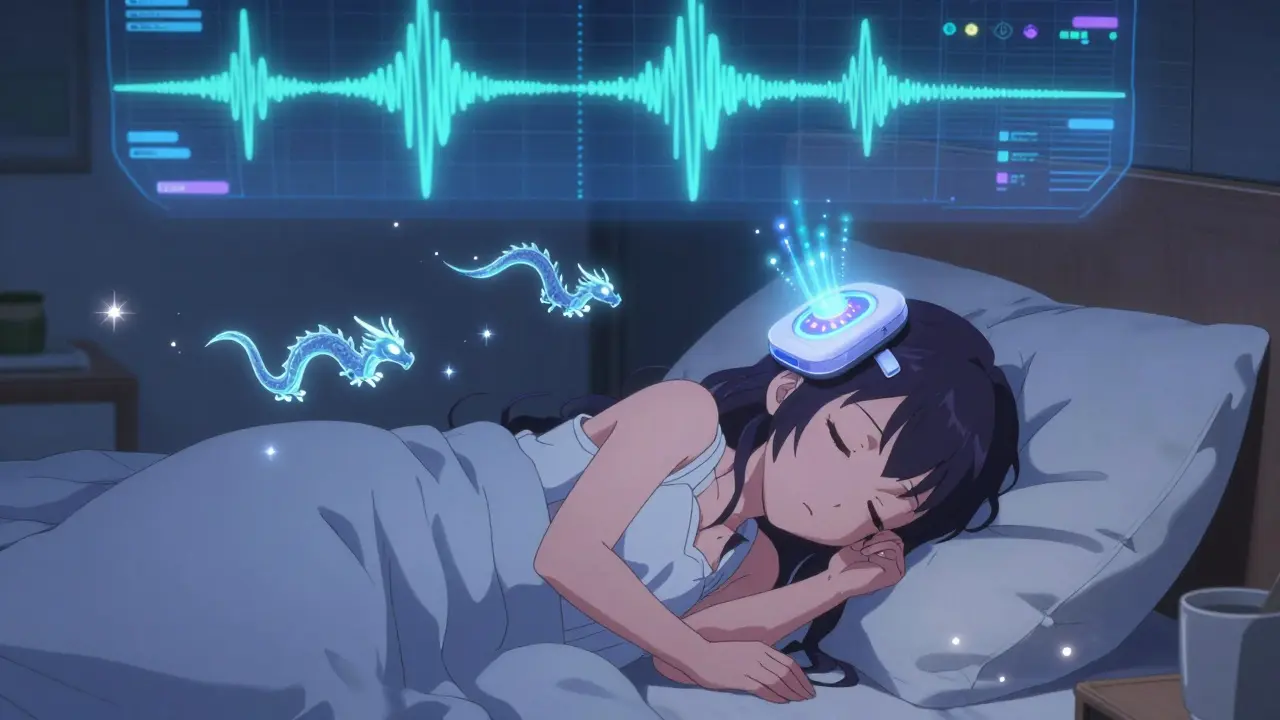
Real Stories, Real Results
One user on Reddit, u/SilentNights87, tracked their sleep with an Oura Ring. Before sound therapy, they took over 90 minutes to fall asleep. After switching to brown noise at 52dB on a LectroFan, their sleep onset dropped to under 30 minutes. That’s more than an hour of extra rest - every night. Another user, u/EarRinging2023, tried every sound machine. Nothing helped. Their tinnitus was so sharp, even low volumes hurt. They ended up using custom earplugs with attenuation, plus daily CBT sessions. It took months. But now, they sleep through the night.What’s New in 2026
The field is evolving fast. In 2023, the FDA cleared the Lenire device - the first prescription system that combines sound therapy with mild electrical pulses to the tongue. Clinical trials showed a 65% reduction in symptom severity. It’s not for everyone - it requires a doctor’s prescription - but it’s a breakthrough. AI is also stepping in. The Tinnitus Talk app, updated in late 2023, uses your phone’s microphone to analyze your tinnitus frequency and match it with personalized sound therapy. It’s 89% accurate. Companies like Widex and Sonova are now building closed-loop systems that adjust sound in real time based on your brainwaves. A prototype from McMaster University, published in Nature Communications, uses EEG to detect when you’re entering light sleep and automatically lowers the masking volume. Early results show 78% improvement in sleep efficiency. By 2026, 40% of tinnitus sleep tools will use biometric feedback. This isn’t science fiction. It’s happening now.Where to Start
Here’s your simple roadmap:- Track your tinnitus for three nights. Note the pitch (high, low, buzzing, hissing) and when it’s worst.
- Buy or borrow a sound machine. Try white, pink, and brown noise at low volumes.
- Set your bedroom to 65°F. Use a humidifier if air feels dry.
- Stop using screens 90 minutes before bed. Read a book instead.
- Go to bed and wake up at the same time - every day.
- Try a 20-minute breathing or meditation routine before lights out.
- Stick with it for at least 14 days. Don’t quit before then.
Can tinnitus be cured with sound therapy?
No, sound therapy doesn’t cure tinnitus. But it can significantly reduce how much it disrupts your sleep. The goal isn’t to eliminate the sound - it’s to make it less noticeable so your brain stops reacting to it as a threat. Many people report falling asleep faster and waking up less often after consistent use.
Is white noise the best sound for tinnitus at night?
Not necessarily. While white noise is popular, many people find it too harsh. Pink noise is smoother, and brown noise - with its deep, rumbling quality - is preferred by 68% of users in clinical studies. Try all three. Your brain will tell you which one feels most calming.
Should I use earplugs to block out tinnitus at night?
Generally, no. Blocking all sound can make tinnitus feel louder because your brain focuses harder on the internal noise. The exception is for people with hyperacusis (extreme sound sensitivity), who may need custom low-attenuation earplugs - but only when paired with sound therapy and CBT.
How long does it take for sound therapy to work?
Most people notice improvement within a week, especially if they combine sound masking with good sleep habits. But for lasting change, you need consistency for at least two to three weeks. Your brain needs time to rewire its response to the tinnitus sound.
Can I use my phone as a sound machine?
You can, but it’s not ideal. Phone speakers are weak, battery drains fast, and apps often interrupt with ads or updates. A dedicated sound machine like the LectroFan is more reliable. If you must use your phone, put it on airplane mode, use a high-quality app like myNoise, and place it across the room - not next to your head.
Does stress make tinnitus worse at night?
Yes. Stress raises cortisol levels by 25-30% during tinnitus flare-ups, which directly interferes with sleep quality. That’s why calming techniques - like deep breathing, meditation, or a warm bath - are just as important as sound therapy. Managing stress isn’t optional. It’s essential.
Are hearing aids helpful for tinnitus at night?
Only if you have hearing loss. Hearing aids with built-in tinnitus notch therapy can reduce nighttime symptoms by 61% for those with hearing impairment. But if your hearing is normal, hearing aids won’t help. Stick with sound machines or CBT instead.
What’s the best time to start sound therapy?
Start as soon as you notice tinnitus is disrupting your sleep. Delaying only lets the cycle grow stronger. The sooner you introduce consistent sound and routine, the faster your brain will adapt. Don’t wait for it to get worse.
Is it normal for tinnitus to get worse before it gets better?
Sometimes, yes. When you first start sound therapy, your brain may notice the new sound and temporarily focus more on the tinnitus. This usually lasts 3-7 days. If you keep going, your brain begins to treat both sounds as background. Stick with it. This is part of the adaptation process.
Where can I find professional help for tinnitus-related sleep issues?
Start with the American Tinnitus Association’s free 24/7 helpline. They connect you with audiologists and CBT therapists trained in tinnitus management. Many sleep clinics also offer specialized programs. If you have hearing loss, ask your audiologist about hearing aids with tinnitus therapy features. You’re not alone - help exists.
Matthew Morales
February 4, 2026 AT 18:37switched to brown noise on my lectrofan and now i fall asleep in like 15 mins. no joke. my dog even sleeps better now. 🤓
Diana Phe
February 5, 2026 AT 09:46Carl Crista
February 6, 2026 AT 21:11Andre Shaw
February 7, 2026 AT 04:12Dr. Sara Harowitz
February 8, 2026 AT 15:39Joyce cuypers
February 10, 2026 AT 10:33Georgeana Chantie
February 10, 2026 AT 21:31Carol Woulfe
February 12, 2026 AT 07:31Kieran Griffiths
February 12, 2026 AT 20:48Tehya Wilson
February 13, 2026 AT 21:36