
Primary Sclerosing Cholangitis (PSC) isn’t just another liver problem. It’s a slow, silent killer that eats away at the bile ducts-first inside the liver, then outside-until bile can’t flow, the liver gets scarred, and failure follows. There’s no cure. No magic pill. And for most people, it takes years just to get a diagnosis. If you’ve been told you have PSC, or you’re wondering if your fatigue, itching, or abdominal pain might be more than just stress, this is what you need to know.
What Exactly Happens in Your Liver With PSC?
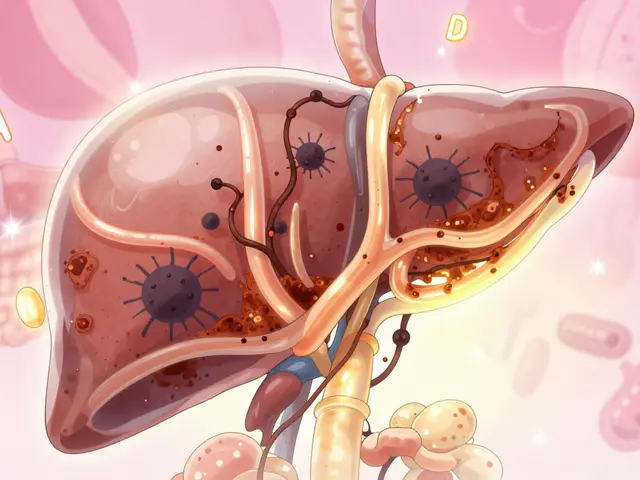
Your liver makes bile to help digest fat. That bile travels through tubes called bile ducts to your small intestine. In PSC, those ducts get inflamed, scarred, and narrowed-like pipes rusting from the inside. Over time, they become so blocked that bile backs up into the liver, poisoning it. This isn’t a one-time injury. It’s a constant, low-grade attack that builds up over years.
The scarring doesn’t just happen in one spot. It spreads through the entire biliary tree. On an MRCP scan (a special MRI of the bile ducts), doctors see a ‘beaded’ pattern-narrow sections alternating with wider ones-like a garden hose with kinks. Normal bile ducts are 3 to 8 millimeters wide. In PSC, they shrink to under 1.5 mm. That’s not a typo. That’s the reality.
Doctors classify the progression into four stages:
- Stage 1: Inflammation around the portal areas of the liver
- Stage 2: Fibrosis starts creeping out from the portal zones
- Stage 3: Fibrosis bridges between areas, forming early scar tissue
- Stage 4: Cirrhosis-widespread scarring, liver function crashing
From the first symptoms to cirrhosis? On average, it takes 12 to 15 years. But for some, it’s faster. For others, slower. There’s no way to predict exactly when it will hit stage four.
Why Does PSC Happen? It’s Not Just Bad Luck
PSC isn’t caused by drinking too much or being overweight. It’s autoimmune-but not like lupus or rheumatoid arthritis. There’s no clear trigger. No single virus. No known toxin. Instead, it’s a mix: your genes, your gut, and your immune system all going wrong at once.
Over 20 genetic spots are linked to PSC. The strongest? The HLA-B*08:01 allele. If you have it, your risk jumps by more than double. But having the gene doesn’t mean you’ll get PSC. Only 1 in 100,000 people develop it. So something else has to click.
That’s where the gut comes in. More than 70% of people with PSC also have inflammatory bowel disease, especially ulcerative colitis. The connection isn’t random. The same immune cells that attack the colon in ulcerative colitis also target the bile ducts. Researchers now believe gut bacteria are sending signals-bad ones-that wake up the immune system in the wrong way. One study found that specific bacterial metabolites in PSC patients trigger inflammation in liver cells. It’s like your gut is accidentally lighting a fire in your liver.
And here’s the twist: unlike Primary Biliary Cholangitis (PBC), which has a clear antibody marker (AMA) in 95% of cases, PSC doesn’t. Only 20 to 50% test positive for p-ANCA, and even that’s not specific. That’s why PSC is so hard to diagnose. No easy blood test. No simple label.
What Are the Real Symptoms? It’s Not Just Jaundice
Most people don’t feel sick at first. Many are diagnosed by accident-during a routine blood test showing high liver enzymes, or an MRI for something else.
When symptoms show up, they’re relentless:
- Fatigue: 92% of patients report it. Not just tired. Exhausted. Like your bones are heavy and your brain won’t turn on.
- Itching (pruritus): 78% say it’s unbearable. Not just skin-deep. One patient described it as ‘itching from inside my bones.’ It gets worse at night. Sleep becomes impossible.
- Abdominal pain: Usually in the upper right side. Dull, constant, nagging. Often mistaken for gallstones or indigestion.
- Jaundice: Yellow skin and eyes. Happens later, when bile backs up badly.
- Weight loss and fever: Signs of infection-acute cholangitis. That’s an emergency. Fever over 38.5°C, pain, jaundice? Go to the hospital.
And here’s the cruel part: many people wait 2 to 5 years before getting diagnosed. Doctors miss it. General practitioners don’t know to look for it. Even specialists sometimes think it’s IBD flaring up or just stress.

There’s No Cure. So What Do You Do?
Let’s be clear: no medication stops PSC from progressing. Not yet. The only cure is a liver transplant-and even then, it’s not a guarantee. About 1 in 5 people get PSC again in the new liver. But transplant survival is strong: over 80% live at least five years after surgery.
So what’s the goal? Slow the damage. Manage symptoms. Catch complications early.
Ursodeoxycholic acid (UDCA) used to be the go-to drug. It was given to almost everyone. But now? The European Association for the Study of the Liver says: don’t use it. Multiple trials show it doesn’t improve survival. At high doses (28-30 mg/kg/day), it might even raise the risk of serious problems. It’s not recommended anymore.
Itching? Here’s what actually works:
- Rifampicin: 150-300 mg daily. Helps 50-60% of patients.
- Naltrexone: 50 mg daily. Blocks opioid receptors that worsen itching.
- Colesevelam: 1.89g to 3.78g daily. Binds bile acids in the gut, reducing itching and liver enzyme spikes.
Vitamin deficiencies are common because bile isn’t flowing to digest fat. You’ll need regular blood tests for vitamins A, D, E, and K. Most patients need daily supplements. Low vitamin D? That’s not just bone health-it’s linked to faster disease progression.
Colon cancer risk: Because 70% of PSC patients also have ulcerative colitis, your colon is at risk. You need a colonoscopy every 1 to 2 years. The lifetime risk of colorectal cancer is 10-15%. Surveillance saves lives.
The Shadow: Cholangiocarcinoma
Every year, 1.5% of PSC patients develop cholangiocarcinoma-a cancer of the bile ducts. It’s rare, but deadly. Once it shows up, survival drops to 10-30% within five years. And it’s often found too late.
There’s no reliable screening test. MRCP and blood markers like CA 19-9 aren’t good enough. That’s why experts recommend annual imaging and close monitoring. If you suddenly develop unexplained weight loss, new pain, or rising liver enzymes, don’t wait. Push for imaging. Ask: ‘Could this be cancer?’
Where to Get Care-And Why It Matters
PSC is rare. Most community hospitals don’t see more than a few cases a year. That’s dangerous. Studies show patients treated at specialized PSC centers have 85% better symptom control.
What makes a center ‘specialized’? They have:
- Doctors who see PSC patients every week
- Access to MRCP, ERCP, and liver biopsies
- Nutritionists who know about fat-soluble vitamins
- Linkages to IBD and transplant teams
- Participation in clinical trials
In the U.S., 72% of patients live within 100 miles of a specialized center. In rural Europe? Only 35%. If you’re not near one, consider traveling for consultations every 6 to 12 months. Your care depends on it.

What’s Coming Next? Hope on the Horizon
There’s real momentum in research. Over 10 drugs are in clinical trials.
- Obeticholic acid: A bile acid modulator. Phase 3 trials showed a 32% drop in liver enzymes. But the FDA is holding off due to safety concerns.
- Cilofexor: A non-steroidal FXR agonist. Showed a 41% reduction in ALP levels. Already granted orphan drug status in Europe.
- NorUDCA: A modified version of the old drug. Early data shows promise in reducing inflammation without the risks of high-dose UDCA.
Experts believe we’ll have at least two disease-modifying drugs approved within five years. They won’t be magic, but they could slow progression enough to delay transplant by years.
Meanwhile, the PSC Partners Seeking a Cure registry has over 3,100 patients across 12 countries. That’s data. That’s power. That’s how we find answers.
Living With PSC: The Daily Reality
It’s not just medical. It’s emotional. On patient forums, ‘hope’ is the most common word. Hope for a trial. Hope for a new drug. Hope for a day without itching.
But there’s also frustration. Seventy-four percent of patients say doctors have ‘nothing to offer beyond symptom management.’ That’s true. Right now. But that’s changing.
What helps? Connecting with others. Joining a support group. Reading up. Asking questions. Knowing your numbers-your ALP, your ALT, your vitamin levels. Keeping a symptom journal. Pushing for scans when something feels off.
PSC doesn’t define you. But it changes how you live. You’ll need to plan for fatigue. You’ll need to say no sometimes. You’ll need to advocate for yourself. And you’ll need to hold onto hope-not because it’s guaranteed, but because it’s the only thing that keeps you moving forward.
Is primary sclerosing cholangitis the same as primary biliary cholangitis?
No. They’re different diseases. PSC affects both large and small bile ducts inside and outside the liver, while PBC mainly attacks small ducts inside the liver. PBC has a clear antibody marker (AMA) in 95% of cases; PSC doesn’t. PSC is strongly linked to ulcerative colitis; PBC isn’t. Treatment and progression differ too.
Can you live a normal life with PSC?
Yes-but not without adjustments. Many people work, travel, and raise families. But fatigue and itching can be disabling. You’ll need to plan rest, manage symptoms, and get regular monitoring. With good care, many live 20+ years after diagnosis. The key is early detection and specialized care.
Does PSC run in families?
Not typically. PSC isn’t inherited like cystic fibrosis. But genetics play a role. If you have a close relative with PSC or ulcerative colitis, your risk is higher. Still, the chance of a sibling developing it is less than 5%. It’s more about gene-environment interaction than direct inheritance.
Why is UDCA no longer recommended for PSC?
Multiple large studies found UDCA doesn’t improve survival or slow disease progression in PSC. At high doses (28-30 mg/kg/day), it was linked to more complications, including higher risk of needing a transplant or developing esophageal varices. Major guidelines (EASL, AASLD) now advise against routine use.
How often should I get tested if I have PSC?
Every 3 to 6 months: liver enzymes (ALP, ALT, AST), bilirubin, and vitamin levels. Every 12 months: MRCP to check bile duct changes. Every 1 to 2 years: colonoscopy if you have ulcerative colitis. Annual ultrasound to screen for liver cancer. If symptoms worsen, get tested sooner.
Can PSC be reversed?
No. Once bile ducts are scarred, the damage can’t be undone. Treatment focuses on slowing progression and managing symptoms. Liver transplant is the only way to replace the damaged organ. Research is focused on stopping the disease before scarring begins.
What lifestyle changes help with PSC?
Avoid alcohol completely. Maintain a healthy weight. Eat a balanced diet rich in vegetables and lean protein. Take prescribed vitamins. Exercise gently to combat fatigue. Don’t smoke. Manage stress-high stress worsens inflammation. Stay up to date on vaccines (hepatitis A and B, flu, pneumonia).
What’s Next?
If you have PSC, your next step isn’t waiting. It’s connecting. Find a specialist. Join a registry. Ask about clinical trials. Learn your numbers. Talk to others who get it. You’re not alone, even if it feels that way.
If you’re a caregiver, learn the signs of cholangitis. Keep a symptom log. Push for imaging when things change. Advocate. Your role is critical.
PSC is rare. But it’s real. And the people living with it? They’re fighting hard. The science is catching up. Hope isn’t just a word. It’s a pipeline of drugs, trials, and data-and it’s getting stronger every year.
Rulich Pretorius
December 15, 2025 AT 10:27It's staggering how little the medical community understands this disease. You're told you have a silent killer, then handed a pamphlet and told to come back in six months. No one talks about the emotional toll-the isolation, the guilt of being a burden, the way your own body becomes a stranger. PSC doesn't just scar bile ducts. It scars your sense of normalcy.
Dwayne hiers
December 16, 2025 AT 13:33From a hepatology standpoint, the lack of a specific serologic marker remains the central diagnostic bottleneck. While MRCP is the gold standard for imaging, the beaded appearance is only present in ~60% of advanced cases. Early-stage PSC often mimics cholestasis from drug-induced injury or autoimmune hepatitis, leading to significant diagnostic delay. The HLA-B*08:01 association is robust, but its low population frequency limits predictive utility. Until we identify a reliable circulating biomarker, we're flying blind.
Sarthak Jain
December 16, 2025 AT 22:12man i just got diagnosed last month and this post is like a bible. i had no idea about the vitamin thing-my doc never mentioned D or K. i thought the itching was just dry skin. now i’m on colesevelam and it’s kinda helping, but god the fatigue… it’s like my body’s running on 5% battery. anyone else feel like they’re always one nap away from collapsing?
Edward Stevens
December 17, 2025 AT 23:09So let me get this straight-we’ve got a disease that’s basically the liver’s version of a slow-motion car crash, no cure, no reliable test, and the only ‘treatment’ is waiting for a transplant that might not even stick? And we’re supposed to be grateful for a 32% drop in ALP? Cool. Cool cool cool. Next up: curing cancer with a coupon.
Tim Bartik
December 19, 2025 AT 17:08They say PSC’s linked to gut bacteria but they never say who’s to blame-those damn immigrants bringin’ in their weird food and dirty water. We used to have clean livers in America. Now? Everyone’s got some foreign germ in their guts. And don’t get me started on these ‘clinical trials’-they’re just testing drugs on poor folks so Big Pharma can make billions. I read a guy on Telegram who said the whole thing’s a hoax. They’re scared of the real cure-vitamin C IVs.
Natalie Koeber
December 21, 2025 AT 15:36Did you know the FDA banned UDCA because they’re in bed with Big Pharma? The real cure is already out there-it’s been suppressed for decades. Look up Dr. Gabe Mirkin’s 1998 paper on bile acid modulation. They don’t want you to know that cholangiocarcinoma rates dropped 70% in a hidden Swiss clinic using ozone therapy. The ‘specialized centers’? They’re just gatekeepers keeping the truth from you. Your liver doesn’t need a transplant-it needs a spiritual cleanse. And maybe a detox tea from my cousin’s wellness retreat in Sedona.
Jonny Moran
December 23, 2025 AT 06:38Just wanted to say-this is one of the most honest, detailed posts I’ve ever read on PSC. I’ve been living with this for 11 years. The itching? Yeah, it’s bone-deep. The fatigue? It’s not laziness. It’s your body screaming. But you’re not alone. I started a local support group last year. We meet every other Sunday. No fancy meds, just coffee, stories, and someone who gets it. If you’re reading this and you’re scared? Reach out. We’ve got your back.
Daniel Wevik
December 23, 2025 AT 14:20Let’s talk about the real win here: surveillance. The fact that we can now monitor PSC progression with annual MRCP and colonoscopies means we’re catching cholangiocarcinoma earlier than ever. That’s not nothing. Even if we don’t have a drug yet, early detection gives us a fighting chance. I’ve seen patients go from ‘I’m dying’ to ‘I’ve got 10 more years’ just because someone caught a nodule before it spread. Keep the scans. Keep the logs. Keep asking questions. Progress isn’t always a miracle drug-it’s just showing up.
jeremy carroll
December 25, 2025 AT 06:43just wanted to say thank you for writing this. i’ve been silent on here for years but this… this is the first time i felt seen. i’m 32, had my transplant 3 years ago, and still get panic attacks when my labs are off. you’re right-hope isn’t a guarantee. but it’s the only thing that gets me outta bed. keep pushing. we’re all in this together. 💪