
Overdose Prevention: How to Recognize, Avoid, and Respond to Drug Overdoses
When someone takes too much of a drug—whether it’s prescription, illegal, or even an over-the-counter painkiller—it can stop their breathing, slow their heart, or shut down their brain. This is an overdose, a medical emergency caused by consuming more of a substance than the body can safely process. Also known as drug toxicity, it doesn’t always look like a movie scene—sometimes it’s just someone who won’t wake up, or their lips turning blue. Overdose prevention isn’t just about avoiding street drugs. It’s about understanding how common medications like acetaminophen, benzodiazepines, or even sleep aids can become dangerous when mixed, doubled up, or taken over time.
Naloxone, a life-saving medication that reverses opioid overdoses by blocking opioid receptors in the brain. Also known as Narcan, it’s now available without a prescription in most states and can be carried like an EpiPen. But naloxone only works on opioids—like heroin, fentanyl, oxycodone, or morphine. It won’t help with an overdose from alcohol, cocaine, or too much Tylenol. That’s why knowing what drug caused the overdose matters. Many people don’t realize that combining opioids with sleep meds or alcohol multiplies the risk. Even a single extra pill can be fatal if your body isn’t used to it. And it’s not just about illegal drugs. Prescription painkillers, anti-anxiety meds, and even some cough syrups contain ingredients that can build up in your system. The acetaminophen, a common pain reliever found in Tylenol and hundreds of cold and flu products. Also known as paracetamol, it’s safe at recommended doses but can cause liver failure if you take more than 4,000 mg in a day—easily done if you’re taking multiple products at once. You might not feel sick right away, but the damage starts silently.
Overdose prevention starts with awareness. Keep a list of all your meds and supplements. Ask your pharmacist if anything you’re taking can interact dangerously. Don’t share pills, even if someone says they have the same condition. Store medications out of reach of kids and pets. If you or someone you know uses opioids, keep naloxone on hand—many pharmacies give it free. Learn the signs: slow or stopped breathing, unresponsiveness, pinpoint pupils, blue or gray skin. If you see them, call 911, give naloxone if you have it, and keep breathing for them until help arrives. You don’t need to be a doctor to save a life.
The posts below cover real stories and science-backed strategies—from how to spot a counterfeit pill laced with fentanyl, to why switching to generics can sometimes change how your body handles a drug, to how pharmacies track drug safety to prevent accidental overdoses. You’ll find clear, no-fluff advice on what to do before, during, and after a potential overdose. This isn’t theory. It’s what works when every second counts.
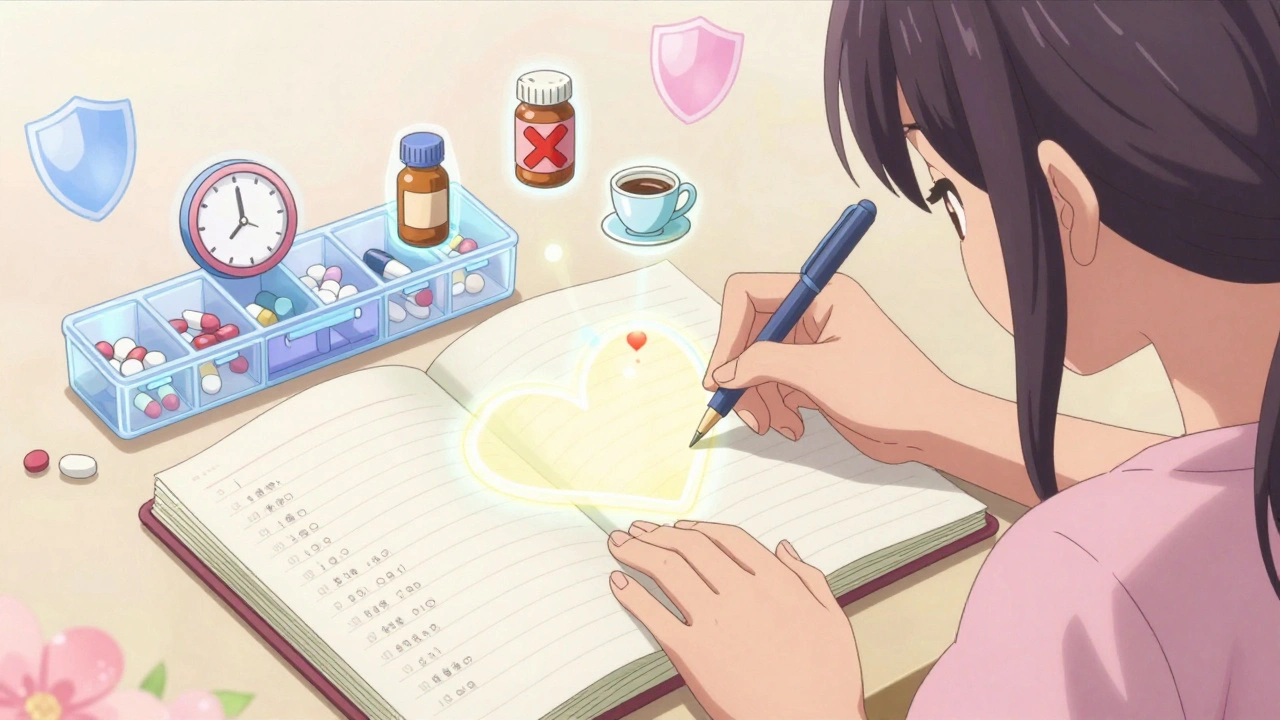
How to Use a Medication Log to Prevent Overdose Errors
A medication log helps prevent accidental overdose by tracking what you take, when, and how much. Simple, consistent recording can stop dangerous drug interactions and double-dosing before they happen.
December 5 2025