
REM sleep behavior disorder isn’t just about acting out dreams. It’s a warning sign your brain is changing. People with this condition kick, punch, yell, or jump out of bed while asleep-sometimes hurting themselves or their partners. Unlike nightmares, where you wake up scared, RBD means you’re physically living out your dreams. And the scariest part? For most people, it’s not just a sleep problem. It’s the first red flag of Parkinson’s disease, dementia with Lewy bodies, or another neurodegenerative disorder.
What Happens in Your Brain During RBD?
Normally, during REM sleep, your brain turns off your muscles so you don’t act out dreams. This is called muscle atonia. In RBD, that shutdown fails. Electromyography (EMG) during a sleep study shows abnormal muscle activity-sometimes as high as 15% of REM sleep epochs. You might be dreaming about being chased, fighting, or falling, and your body responds like it’s awake. Studies show these episodes happen an average of 4.2 times per hour. That’s not occasional. That’s nightly.The cause? It’s tied to degeneration in brainstem areas that control muscle inhibition during sleep. Over time, this same damage spreads to areas that regulate movement, memory, and mood. That’s why 73.5% of people with idiopathic RBD (meaning no known cause) develop Parkinson’s or a similar disease within 12 years. RBD isn’t a sleep disorder you outgrow. It’s a neurological alarm.
How Is RBD Diagnosed?
You can’t diagnose RBD from symptoms alone. A sleep study-polysomnography (PSG)-is required. This test records brain waves, eye movements, muscle tone, heart rate, and breathing while you sleep. The key finding is REM sleep without atonia (RSWA). That means your muscles are active when they should be completely still.Doctors also rule out other causes: seizures, sleep apnea, or medications like antidepressants that can mimic RBD. If you’re over 50, have no other known neurological condition, and your sleep study confirms RSWA, you’re likely diagnosed with idiopathic RBD. That’s the version that signals future brain disease.
Many people delay diagnosis because they think it’s just “bad dreams” or “sleep talking.” But if your partner says you’ve punched them, climbed out of bed, or screamed for 10 minutes straight-get tested. The average time from symptom onset to diagnosis is 4 to 5 years. That’s years of injury risk and missed chances to monitor brain health.
First-Line Treatments: Melatonin and Clonazepam
There are no FDA-approved drugs specifically for RBD. But two medications are used off-label and backed by decades of clinical experience.Melatonin is the safer first choice, especially for older adults. Doses start at 3 mg at bedtime and can be increased slowly to 6 mg, 9 mg, or even 12 mg. It works by helping restore normal muscle inhibition during REM sleep. About 65% of patients see a big drop in episodes. Side effects? Mild-maybe a headache or morning grogginess. One 68-year-old man went from 7 episodes a week to just 1 after starting 6 mg nightly. He kept sleeping in the same bed with his wife.
Clonazepam is stronger. It’s a benzodiazepine that suppresses muscle activity. It works for 80-90% of patients. Many see improvement in just a few days. But it comes with serious risks: dizziness (22% of users), unsteadiness (18%), daytime sleepiness (15%), and a 34% higher risk of falls in people over 65. It can also cause dependence. One patient stopped after 3 months because his balance got worse-he went from zero falls to two per month.
Doctors now lean toward melatonin first, especially for older patients. A 2022 survey of 450 neurologists showed 58% start with melatonin, 32% with clonazepam. Only 10% use both together. Why? Because safety matters more than speed when you’re treating someone who might already be at risk for falling.
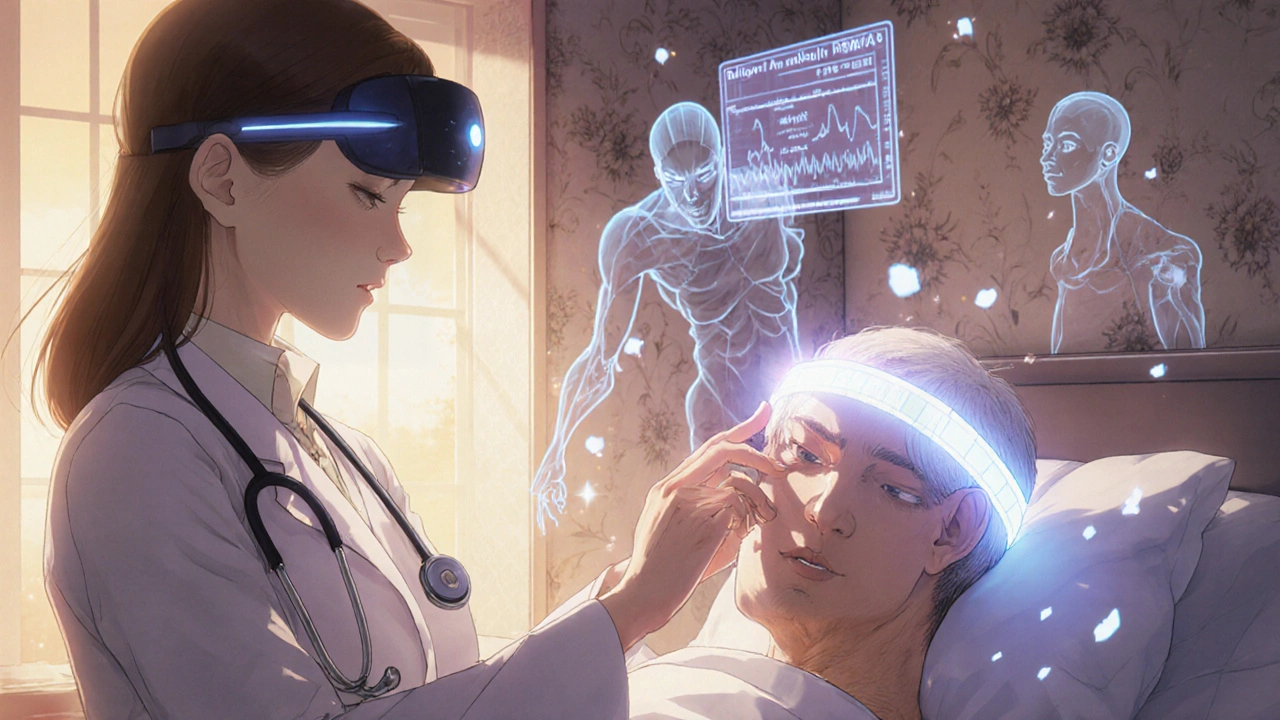
Other Medications: What Works and What Doesn’t
Not everyone responds to melatonin or clonazepam. That’s where other options come in.Pramipexole, a dopamine agonist used for Parkinson’s and restless legs, helps about 60% of RBD patients. It’s often tried if someone also has restless legs syndrome. But it can cause nausea, dizziness, or impulse control issues. It’s not a first-line choice for most.
Rivastigmine, a drug for Alzheimer’s and dementia, showed promise in one small study for RBD patients with mild cognitive impairment who didn’t respond to other treatments. But there’s not enough evidence to use it widely.
Then there’s the new hope: dual orexin receptor antagonists. Drugs like suvorexant (Belsomra) and NBI-1117568 (still in trials) block wake-promoting signals in the brain. Mount Sinai research in October 2023 found these drugs cut dream enactment behaviors by 78% in animal models. Early human data looks promising. The FDA gave Fast Track status to NBI-1117568 in January 2023, meaning it could be approved faster. This might be the first RBD-specific treatment in the next few years.
Safety First: Protecting the Bedroom
Medication helps-but it doesn’t make your bedroom safe overnight. Even with treatment, episodes can still happen. That’s why environmental changes are non-negotiable.Remove weapons. Seriously. Guns, knives, or even heavy lamps can become dangerous if you swing out in your sleep. Pad sharp corners of furniture. Put thick rugs or foam mats beside the bed so you don’t hurt yourself if you fall out. Install bed rails if needed. Some families even move the mattress to the floor.
Alcohol is a major trigger. Just one or two drinks can double the chance of an episode. Same with certain antidepressants and sleep aids. If you’re on these, talk to your doctor. Don’t stop them cold-work with them to adjust safely.
And yes, some couples still end up sleeping separately. One study found 42% of RBD patients do this, even with treatment. That’s not failure. It’s survival. Better to sleep apart than risk serious injury.

Neurological Monitoring: Watching for the Next Step
If you have idiopathic RBD, you’re not just managing sleep. You’re monitoring your brain.The American Academy of Neurology recommends annual neurological checkups. Why? Because RBD converts to Parkinson’s, dementia with Lewy bodies, or multiple system atrophy at a rate of 6.3% per year. That means over 10 years, most people will develop one of these diseases. Early detection matters. If you start noticing subtle changes-slower movement, loss of smell, constipation, or mild memory lapses-tell your neurologist. These could be early signs.
There’s no cure yet. But research is accelerating. Clinical trials are testing drugs that might slow or stop the brain degeneration behind RBD. The goal isn’t just to stop the punching in your sleep. It’s to stop Parkinson’s before it starts.
What’s Next for RBD Treatment?
The future of RBD isn’t just better sleep meds. It’s disease-modifying therapy.Right now, we treat the symptom. In 5 to 10 years, we might treat the cause. Companies like Neurocrine Biosciences are developing drugs that target the same brain pathways that fail in Parkinson’s. If they work, they could delay or even prevent neurodegeneration in RBD patients.
Until then, the best approach is simple: diagnose early, treat safely, protect the environment, and monitor closely. Melatonin for most. Clonazepam if needed. No alcohol. No weapons. Annual checkups. And never ignore the warning.
RBD isn’t just a sleep problem. It’s a neurological event. And the time to act is now-before the next step becomes unavoidable.
Can REM sleep behavior disorder be cured?
No, RBD cannot be cured with current treatments. Medications like melatonin and clonazepam reduce or stop dream enactment behaviors, but they don’t fix the underlying brain degeneration. For most people, RBD is a sign of an upcoming neurodegenerative disease like Parkinson’s or dementia with Lewy bodies. Research is focused on finding treatments that can slow or prevent this progression, but no such therapy is available yet.
Is melatonin safer than clonazepam for RBD?
Yes, melatonin is generally safer, especially for older adults. It has fewer side effects-only about 8% of users report mild issues like headache or drowsiness. Clonazepam works better for many people (80-90% effectiveness), but it carries higher risks: dizziness, unsteadiness, daytime sleepiness, and a 34% increased risk of falls in people over 65. It can also lead to dependence. Most doctors now recommend melatonin as the first-line treatment unless symptoms are severe or unresponsive.
Do I need a sleep study to diagnose RBD?
Yes. A polysomnography (sleep study) is required to confirm RBD. The key finding is REM sleep without atonia (RSWA)-meaning your muscles aren’t paralyzed during REM sleep like they should be. Symptoms alone aren’t enough. Many other conditions, like seizures or medication side effects, can mimic RBD. Only a sleep study can rule those out and give a definitive diagnosis.
Can alcohol make RBD worse?
Yes, even small amounts of alcohol can trigger or worsen RBD episodes. Studies show that 65% of people with RBD experience more frequent or intense dream enactment after just one or two drinks. Alcohol disrupts normal sleep architecture and interferes with the brain’s ability to maintain muscle inhibition during REM sleep. Avoiding alcohol entirely is one of the most effective non-medication strategies for managing RBD.
What are the chances RBD leads to Parkinson’s disease?
About 73.5% of people with idiopathic RBD develop a neurodegenerative disease like Parkinson’s, dementia with Lewy bodies, or multiple system atrophy within 12 years. The risk increases by about 6.3% each year after diagnosis. That’s why annual neurological exams are recommended-early signs like slowed movement, loss of smell, or constipation can be caught and managed before they become disabling.
Should I sleep in a separate room if I have RBD?
Many people with RBD eventually sleep separately, even with medication. One study found 42% of patients do this to protect their bed partner from injury. It’s not a sign of treatment failure-it’s a safety decision. If your partner is getting kicked, punched, or thrown out of bed, separate sleeping is often the best option. Combine it with bedroom safety changes, and you can reduce risk dramatically.
Are there new drugs coming for RBD?
Yes. Dual orexin receptor antagonists like suvorexant and NBI-1117568 show strong promise. Early research shows they can reduce dream enactment behaviors by up to 78% in animal models and are better tolerated than clonazepam. The FDA granted Fast Track status to NBI-1117568 in January 2023, meaning it could be approved within the next few years. These drugs target the root cause of sleep-wake imbalance in RBD and may offer a safer, more effective long-term solution.

elizabeth muzichuk
November 30, 2025 AT 14:52I can't believe people still think melatonin is 'safe'-it's literally a hormone that messes with your circadian rhythm long-term. And don't get me started on how doctors just hand it out like candy. My cousin took 12mg for years and ended up with severe depression. This isn't medicine, it's chemical band-aids. Wake up, people.
And clonazepam? At least it's honest about being addictive. But no one talks about how pharma companies push melatonin because it's not regulated. They're profiting off your ignorance.
I've seen RBD patients get misdiagnosed as 'just stressed' for YEARS. Then one day, boom-Parkinson's. Why aren't we doing brain scans at diagnosis? Why are we waiting for the body to break before we act?
This isn't about sleep. It's about a failing medical system that treats symptoms like they're optional.
And yes, I'm the one who made my husband sleep on the couch. He threw a lamp at me. I'm not 'dramatic.' I'm alive.
Stop normalizing this. It's not 'just a phase.' It's your brain dying.
And if you're still drinking wine before bed? You're not a patient-you're a liability.
Debbie Naquin
December 1, 2025 AT 14:15The core neurobiological mechanism in idiopathic RBD implicates the loss of GABAergic and glycinergic inhibition in the sublaterodorsal nucleus, leading to REM sleep without atonia. This is a prodromal biomarker for synucleinopathies with a 73.5% conversion rate over 12 years, per the 2020 MDS criteria.
Pharmacologically, melatonin’s action on MT1/MT2 receptors may modulate the pontine reticular formation, restoring inhibitory tone. But its efficacy ceiling is limited by poor blood-brain barrier penetration.
Clonazepam enhances GABA-A activity, directly suppressing motor output-but its pharmacokinetic profile in elderly patients increases fall risk via cerebellar depression.
Emerging orexin antagonists like NBI-1117568 target the lateral hypothalamus, stabilizing sleep-wake transitions. Preclinical data suggests a disease-modifying potential by reducing alpha-synuclein aggregation via sleep architecture normalization.
The real question isn't treatment-it's early intervention. We need longitudinal biomarkers: olfactory testing, cardiac MIBG scans, CSF alpha-synuclein seeding assays. We’re treating symptoms while the pathology spreads silently.
Environmental safety is necessary but insufficient. We need neuroprotective trials. Not just symptom control. The window is 5–10 years pre-motor onset. We’re missing it.
Karandeep Singh
December 1, 2025 AT 19:58melatonion works? lol i took it for a week and i started yelling about dragons in my sleep. now my wife says i dream i’m fighting a dragon with a spoon. not sure if that’s better or worse than punching her. also alcohol makes it worse? no sh*t sherlock. i also breathe fire when i drink. maybe i’m just a dragon.
Mary Ngo
December 2, 2025 AT 22:17Let me be very clear: the medical establishment is not just failing RBD patients-it is actively enabling their decline. The FDA approves melatonin as a supplement, not a drug, because pharmaceutical lobbying ensures no rigorous trials are mandated. Meanwhile, the same corporations that profit from antidepressants-known triggers of RBD-are quietly funding ‘awareness campaigns’ that blame stress and poor sleep hygiene.
There is a pattern here. First, you’re told it’s psychological. Then you’re given a pill that masks the symptom. Then, years later, you’re diagnosed with Parkinson’s-and the same system says, ‘Well, we didn’t know it would progress.’
What if RBD isn’t a neurological disorder at all? What if it’s a symptom of environmental neurotoxins-pesticides, PFAS, electromagnetic pollution-that are quietly eroding the brainstem? Why aren’t we investigating that?
And why are we letting pharmaceutical companies profit from treating the symptom while ignoring the cause?
This isn’t medicine. It’s corporate negligence dressed in white coats.
And yes-I slept in a separate room for three years. My husband didn’t just punch me. He once threw a bedside table at my head. They call it ‘dream enactment.’ I call it attempted homicide.
Wake up. The system is rigged.
James Allen
December 4, 2025 AT 05:15Look, I get it-RBD is scary. But let’s not turn this into some doom-and-gloom sci-fi movie. I’ve got a buddy in Ohio who’s had it for 8 years. He takes 6mg melatonin, sleeps on a mattress on the floor, and still plays golf every weekend. He’s 71. No Parkinson’s yet.
Meanwhile, people are acting like this is the end of the world. It’s not. It’s a condition. You manage it. You don’t let it own you.
And yeah, maybe your wife wants to sleep alone. That’s fine. But don’t act like you’re some tragic hero because you’re not allowed to cuddle anymore. It’s not a war. It’s a lifestyle adjustment.
Also, the whole ‘RBD = Parkinson’s’ thing? It’s a probability, not a prophecy. 73.5% sounds scary, but that means nearly 1 in 4 people don’t develop it. Don’t give up your life because of a statistic.
Stay calm. Stay active. Stay sane.
And for the love of God, stop reading Reddit like it’s a medical journal.
❤️
Kenny Leow
December 5, 2025 AT 06:03Thank you for this detailed post. As someone from Singapore with a father who was diagnosed with idiopathic RBD 6 years ago, I appreciate the clarity.
He started on 3mg melatonin, switched to 9mg after 6 months, and now sleeps peacefully. We removed all sharp objects, installed LED night lights, and moved his mattress to the floor. He still dreams about being chased by tigers (he was a marine biologist-go figure).
Annual neuro checkups? Yes. He’s had a slight loss of smell and constipation-both flagged early. No Parkinson’s yet, but we’re watching.
My advice? Don’t panic. Don’t ignore. Don’t delay testing.
And if your partner says you screamed ‘GET OFF ME!’ while throwing a pillow at them? Believe them.
❤️🙏
Kelly Essenpreis
December 5, 2025 AT 08:46why do we even care about this like its a big deal. its just people acting out dreams. i bet most of these cases are just people who drink too much or are stressed. and melatonin? its just a supplement. you can buy it at walmart. stop acting like its some life or death thing. and clonazepam? yeah its strong but so is coffee. people need to chill. also why are we talking about parkinsons like its guaranteed. its not. stop fearmongering. its just sleep. people used to sleep fine without all this tech and meds. we overmedicalize everything now.
Alexander Williams
December 6, 2025 AT 19:38The 73.5% conversion rate to synucleinopathy is derived from longitudinal cohort studies with >10-year follow-up, but selection bias is significant-patients presenting with RBD are often those with more severe phenotypes. Population-based data suggest a lower penetrance.
Furthermore, the notion that melatonin ‘restores’ muscle inhibition is mechanistically speculative. Its effect may be indirect via circadian entrainment and modulation of GABAergic tone in the ventrolateral preoptic nucleus.
Clonazepam’s 80–90% efficacy is overstated. Real-world adherence is poor due to cognitive side effects, particularly in elderly populations with preexisting executive dysfunction.
Orexin antagonists are promising, but their impact on alpha-synuclein pathology remains unproven. They may suppress behavioral expression without altering neurodegeneration.
The real gap? We lack in vivo biomarkers of brainstem degeneration in prodromal RBD. Until we do, we’re managing behavior, not disease.
Environmental safety is necessary but epiphenomenal. We need neuroprotection, not padding.