
Oral chemotherapy is changing how cancer is treated. Instead of sitting in a clinic for hours to get IV drugs, patients now swallow pills or liquids at home. It sounds simpler-fewer trips, less stress, more control. But this convenience comes with hidden risks. Oral chemotherapy can be just as powerful as IV treatment, but if you don’t take it exactly right, it might not work-or worse, it could hurt you.
Why Oral Chemotherapy Is Becoming the Norm
In the last decade, oral chemotherapy has exploded in use. Between 2010 and 2020, 35% of all new cancer drugs approved by the FDA came as pills or liquids. By 2025, nearly half of all cancer drug spending will be on oral treatments. Why? Because they work. Drugs like capecitabine, imatinib, and dasatinib have proven just as effective as IV infusions for many cancers-breast, colon, leukemia, and more. But here’s the catch: these drugs aren’t sugar pills. They’re strong, targeted chemicals designed to kill fast-growing cells. That includes cancer cells-but also healthy ones. And unlike IV chemo, where a nurse checks your dose and watches for reactions, oral chemo puts the entire responsibility on you.How Oral Chemotherapy Works: The Science Behind the Pills
Not all oral chemo is the same. There are four main types, each attacking cancer in a different way:- Alkylating agents (like cyclophosphamide) damage cancer DNA directly. They’re broad-spectrum and often cause nausea, hair loss, and low blood counts.
- Antimetabolites (like capecitabine) trick cancer cells into using fake building blocks, stopping them from multiplying. These commonly cause hand-foot syndrome-red, painful, peeling skin on palms and soles.
- Topoisomerase inhibitors (like topotecan) block enzymes cancer cells need to copy DNA. They can lead to low white blood cells and fatigue.
- Mitotic inhibitors (like vinca alkaloids) stop cells from dividing by messing with their internal skeleton. These often cause nerve pain or numbness.
The Hidden Danger: Why Adherence Is So Hard (and So Critical)
Only 55% to 75% of patients take oral chemo exactly as prescribed. That means up to 45% of people are getting less than full benefit. And in cancer treatment, that’s not just a small risk-it’s life-or-death. Why? Because it’s complicated. Take capecitabine: you take it twice a day for 14 days, then stop for 7. That’s a 21-day cycle. If you forget one pill on day 10, do you double up later? Do you skip the next dose? What if you feel sick and decide to pause because you think it’s “just a side effect”? That’s exactly what many patients do-and it’s dangerous. Other barriers:- Complex schedules (multiple pills, different times, fasting requirements)
- Side effects that make you want to stop
- Cost and insurance hurdles leading to skipped doses
- No one watching you take it
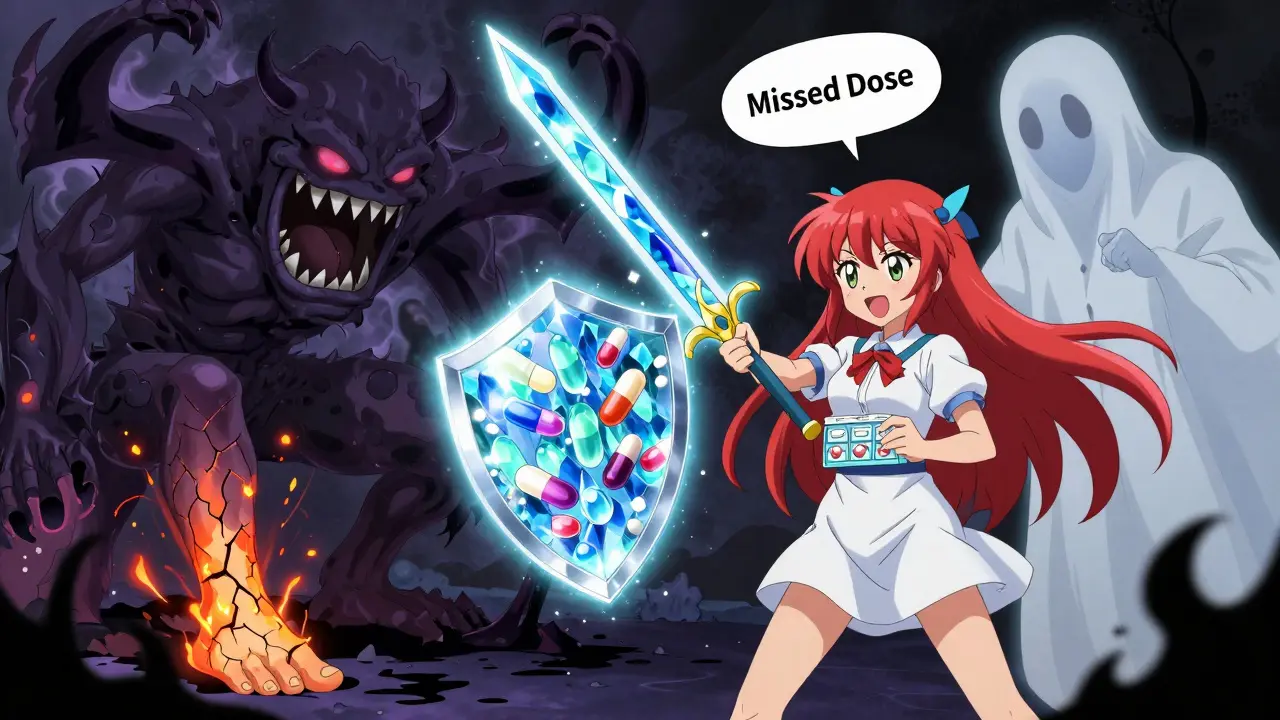
Safety Risks You Can’t Afford to Ignore
Oral chemo isn’t just about forgetting a pill. It’s about what you mix it with. Many oral chemo drugs are broken down by the CYP3A4 enzyme in your liver. If you take something that boosts this enzyme-like rifampin (an antibiotic) or St. John’s Wort-your drug levels can drop by 80%. That means the cancer keeps growing. Or if you take something that blocks it-like ketoconazole (a fungal treatment) or even grapefruit juice-your drug levels can spike by 325%. That’s not just nausea. That’s organ failure. Antacids and proton pump inhibitors (like omeprazole) are another trap. They reduce stomach acid, which many oral chemo drugs need to be absorbed. Taking capecitabine with an antacid? You could lose 30-50% of your dose. Even storage matters. Most oral chemo must be kept at room temperature (20-25°C). Leave it in a hot car? In a bathroom cabinet with steam? The pills can break down. Take a degraded pill? You don’t know how much you’re getting. And disposal? Don’t flush it. Don’t toss it in the trash. Use an FDA-approved medication disposal bag. These drugs are toxic. A child, pet, or even a sanitation worker could be exposed.Common Side Effects and How to Handle Them
Side effects vary by drug-but some patterns are universal.- Myelosuppression: Low blood counts. This is the most common. For alkylating agents, it hits 65% of patients. For targeted drugs like dasatinib, it’s 78%. Symptoms: fatigue, fever, bruising, frequent infections. Weekly blood tests are required. Don’t ignore a low white count.
- Hand-foot syndrome: Seen in over half of patients on capecitabine. Skin gets red, swollen, cracked. Avoid hot water, tight shoes, heavy pressure on hands. Use moisturizers with urea. Tell your team early-this can be managed before it becomes unbearable.
- Diarrhea and mucositis: Capecitabine causes diarrhea in 45% of patients. Mucositis (mouth sores) affects 30%. Sip cool water, avoid spicy or acidic foods. Use salt-and-baking-soda rinses. Don’t wait until you can’t eat.
- Hepatotoxicity: Liver damage. Happens in 15-25% of patients. No symptoms at first. That’s why monthly liver tests are mandatory.
- High blood pressure and skin rashes: Common with targeted drugs. VEGF inhibitors cause hypertension in 25-35%. EGFR inhibitors cause severe acne-like rashes in 75-90%. These aren’t “just side effects.” They’re signs the drug is working-but they need management.
How to Stay on Track: The 6-Point Adherence Plan
If you’re on oral chemo, here’s what works:- Get educated upfront. Your first visit should be at least 45 minutes. Ask for written instructions, pictures, and a dosing calendar. Don’t just nod along. Repeat it back: “So I take this pill at 8 a.m. and 8 p.m., two hours before food, and I can’t take Tums for four hours after.”
- Use a pill organizer. Get one with compartments for morning, afternoon, evening, and days of the week. Some even have alarms. Don’t rely on memory.
- Set phone reminders. Set multiple alarms. Label them clearly: “Capecitabine - Empty Stomach.”
- Get follow-up calls. Ask your clinic to call you on day 3, day 7, and day 14 of each cycle. That’s not optional-it’s standard care now.
- Track refills. If your pharmacy sees you haven’t picked up your next prescription on time, they should alert your oncology team. Don’t wait for them to notice.
- Have a direct line. Know who to call at 2 a.m. if you’re vomiting, running a fever, or can’t breathe. Keep that number on your fridge.
What’s Next: Technology and Personalization
The future of oral chemo is smarter. Some patients now use ingestible sensors-tiny chips in pills that send a signal when swallowed. The Proteus Discover system, FDA-approved in 2021, tells your care team exactly when you took your dose. Smart pill bottles with Bluetooth are in late-stage trials. They track openings, send alerts if you miss a dose, and even remind you about food restrictions. Genetic testing is also changing things. Before taking fluoropyrimidines (like capecitabine), many centers now test for DPYD gene mutations. If you have one, your dose is lowered-and your risk of life-threatening toxicity drops by 72%. These aren’t sci-fi. They’re real, available tools. Ask your oncology team if any of these options are right for you.Final Thought: You’re Not Alone
Oral chemotherapy puts a lot on your shoulders. But you don’t have to carry it alone. The best outcomes happen when patients, pharmacists, nurses, and doctors work as a team. If you’re on oral chemo, treat it like a job. Schedule your doses. Track your symptoms. Ask questions. Don’t be afraid to say, “I don’t understand.” Your life depends on it. And there’s help available-if you know where to look.Can I skip a dose of oral chemotherapy if I feel sick?
Never skip or double a dose without talking to your oncology team. Feeling sick doesn’t mean the drug isn’t working-it might mean your body needs support. Your care team can adjust your dose, prescribe anti-nausea meds, or delay your cycle safely. Skipping doses on your own can reduce effectiveness and make cancer harder to treat.
Is oral chemotherapy less effective than IV chemotherapy?
No. For many cancers, oral chemo is just as effective as IV chemo. Drugs like capecitabine and imatinib have been proven in large clinical trials to match or even outperform IV versions. The difference isn’t in strength-it’s in how you take it. If you miss doses or take it wrong, it won’t work as well. That’s why adherence matters more with oral treatment.
Can I take over-the-counter meds with oral chemotherapy?
Many OTC drugs can interfere. Antacids, ibuprofen, St. John’s Wort, and even some cold medicines can change how your chemo works. Always check with your oncology pharmacist before taking anything new-even vitamins or herbal supplements. A drug you’ve used for years might suddenly become dangerous.
How do I know if my oral chemotherapy is working?
You won’t feel it. Unlike IV chemo, where you might see side effects as a sign the drug is active, oral chemo often works silently. Your team will track progress through blood tests, imaging scans (like CT or PET), and tumor markers. Never assume it’s working just because you feel okay-or assume it’s failing because you have side effects. Stick to the schedule and let your doctors monitor results.
What should I do if I accidentally take two doses?
Call your oncology team immediately. Don’t wait. Taking too much oral chemo can cause serious toxicity-low blood counts, liver damage, or nerve injury. Your team may need to admit you for monitoring, give IV fluids, or start treatments to reverse the effects. Never try to manage this alone.
Are there apps or tools to help me remember my pills?
Yes. Many cancer centers offer free apps that send reminders, track side effects, and sync with your pharmacy. Some pill bottles now have Bluetooth sensors that alert your care team if you miss a dose. Ask your oncology nurse or pharmacist for recommendations. Technology can help-but only if you use it.
Can I drink alcohol while on oral chemotherapy?
It depends on the drug. Alcohol can increase liver stress, worsen nausea, and interfere with how your body breaks down chemo. For drugs like capecitabine or dasatinib, even small amounts can raise toxicity risk. Most oncologists recommend avoiding alcohol completely during treatment. If you’re unsure, ask your care team-don’t guess.
How often do I need blood tests while on oral chemo?
Typically, once a week during the first few cycles, then every 2-4 weeks if stable. Some drugs, like lenalidomide or dasatinib, require weekly blood counts for the first 6 weeks because they cause rapid drops in white blood cells. Never skip a blood test. Low counts can lead to life-threatening infections if not caught early.

Nicola George
December 28, 2025 AT 23:50So let me get this straight-you’re telling me I’m supposed to trust a pill I swallow at 2 a.m. while half-asleep, with no one watching, and not even know if it’s working? 🤔 I mean, if my phone can track my steps, why can’t it track my chemo? This isn’t medicine-it’s a Russian roulette game with a prescription label.
Robyn Hays
December 29, 2025 AT 13:00Wow. This post is like a love letter to patient autonomy wrapped in a biohazard suit. I love how it doesn’t sugarcoat it-oral chemo is basically handing someone a loaded gun and saying, ‘Here, don’t shoot yourself.’ But the real win? The 6-point plan. That’s not just advice-it’s a survival manual. I’ve seen people skip doses because they ‘felt fine,’ and then wonder why the cancer came back harder. Knowledge isn’t power here-it’s oxygen.
Caitlin Foster
December 30, 2025 AT 00:39ST. JOHN’S WORT?!?!?!?!!? Who even still uses that?!? I swear, if I see one more person popping herbal ‘miracle cures’ while on chemo, I’m going to scream into a pillow. 🙄 You wouldn’t mix bleach and ammonia-and yet people think grapefruit juice is ‘just a fruit’?!!?!!? We need a public service announcement with a flaming pill bottle.
Kylie Robson
December 30, 2025 AT 03:13From a pharmacokinetic standpoint, the CYP3A4 enzyme modulation is the most clinically significant variable in oral chemotherapy adherence. The first-pass metabolism variability, coupled with P-glycoprotein efflux and gastric pH dependency, creates a therapeutic window narrower than that of warfarin. In clinical practice, non-adherence correlates with a 3.2-fold increase in disease progression (HR 3.21; 95% CI 2.7–3.8), per the 2023 JCO meta-analysis. Pharmacist-led interventions reduce non-adherence by 41% (p<0.001).
Additionally, DPYD genotyping is now standard-of-care for fluoropyrimidines per NCCN v4.2024. Failure to implement this constitutes a breach of duty of care in 17 U.S. states.
Olivia Goolsby
December 31, 2025 AT 00:23Let me ask you something-why is it always the patient’s fault when the system fails? Who designed this? Who decided that cancer patients should be their own nurses, pharmacists, and compliance officers? The FDA approves these drugs, but they don’t fund the support systems. The pharmacies don’t call. The clinics are overbooked. And now we’re supposed to be grateful because we get to take pills instead of IVs? This isn’t innovation-it’s cost-cutting dressed up as empowerment. And don’t even get me started on the ingestible sensors-those are surveillance tools disguised as ‘care.’ They’re tracking you, not helping you. The real question is: who profits from this? Hint: it’s not you.
Elizabeth Ganak
December 31, 2025 AT 15:55Thank you for writing this. I’m on capecitabine right now, and honestly? I didn’t realize how much I was doing wrong until I read this. I was taking it with coffee because I was hungry, and I thought antacids would help my stomach. Now I know why I got that awful hand-foot thing. I just got a pill organizer and set alarms. I’m not perfect, but I’m trying. And I’m not alone. I’ve started a small WhatsApp group with three other patients. We check in every morning. It helps more than you’d think.
Todd Scott
January 2, 2026 AT 06:06As someone who’s worked with oncology patients across five countries, I’ve seen how cultural context shapes adherence. In the U.S., it’s about autonomy and control. In India, it’s family oversight-often, a relative takes the pills from the bottle and administers them. In Nigeria, cost and stigma are bigger barriers than side effects. But here’s the universal truth: when patients feel heard, they stick to the plan. The real breakthrough isn’t the pill-it’s the conversation. A 10-minute check-in from a nurse who remembers your name? That’s what saves lives. Technology helps, but humanity is the active ingredient.
Miriam Piro
January 3, 2026 AT 17:52Think about it: they give you a pill that can kill you if you take it wrong… and then they say ‘just follow the instructions.’ But who wrote those instructions? A pharmaceutical rep? A bureaucrat? Someone who’s never had cancer? The whole system is designed to make you feel responsible for a system that doesn’t care about you. And now they want you to swallow a chip so they can track you? 🤖 That’s not medicine-that’s a dystopian loyalty program. They don’t want you to be healthy. They want you to be compliant. And if you’re not? Well, there’s always another trial. Another pill. Another excuse. Wake up. This isn’t science. It’s corporate control with a stethoscope.
Chris Garcia
January 5, 2026 AT 11:38There is a quiet dignity in the act of swallowing a pill to fight death. It is not the roar of the IV drip, but the whisper of will. In my village in Nigeria, we say: ‘The hand that holds the medicine holds the future.’ Oral chemotherapy demands not just courage, but discipline-a daily ritual of self-preservation. And yet, the world treats it like a chore. We must honor it as a sacred act. Let us not reduce this to compliance metrics or Bluetooth bottles. Let us see the human being behind the dose. They are not patients. They are warriors. And warriors do not need reminders-they need reverence.
James Bowers
January 6, 2026 AT 10:53It is regrettably evident that a significant proportion of patients exhibit non-adherent behaviors predicated upon a fundamental misunderstanding of the pharmacodynamic properties of targeted chemotherapeutic agents. The conflation of subjective symptomatology with therapeutic efficacy constitutes a clinically dangerous fallacy. Furthermore, the casual use of over-the-counter pharmacological agents without consultation constitutes a breach of the standard of care, and may constitute negligence in the context of physician-patient relationships. Adherence protocols must be institutionalized, not incentivized.
Monika Naumann
January 7, 2026 AT 09:29It is unfortunate that in the Western medical paradigm, the burden of treatment is placed solely upon the individual, while systemic support remains fragmented. In India, we have a tradition of family-based care, where multiple generations participate in the healing process. The concept of ‘patient autonomy’ is noble, but it cannot replace the strength of collective responsibility. We must advocate for healthcare systems that honor cultural structures, not dismantle them in the name of efficiency. A pill is not a cure-community is.