
When a pregnant person is using opioids-whether prescribed for pain or misused as part of a substance use disorder-the stakes aren’t just personal. They’re medical, emotional, and deeply tied to the health of a growing baby. The truth is, opioids during pregnancy aren’t a simple yes-or-no issue. Stopping cold turkey can be dangerous. Staying on them without support can be risky too. But there’s a proven middle ground-and it’s not what most people assume.
What Happens When Opioids Cross the Placenta
Opioids like oxycodone, hydrocodone, heroin, or even prescription painkillers don’t stay in the mother’s bloodstream. They cross the placenta. The baby’s developing brain gets exposed. That doesn’t mean the baby will be born addicted, but it does mean the baby’s nervous system adapts to the drug’s presence. When the baby is born and that steady supply cuts off, withdrawal kicks in. This isn’t just crying or fussiness. It’s a medical condition called Neonatal Opioid Withdrawal Syndrome (NOWS), formerly known as Neonatal Abstinence Syndrome (NAS).Between 50% and 80% of babies exposed to opioids in the womb will show signs of withdrawal. Symptoms usually show up 48 to 72 hours after birth. They include:
- High-pitched crying that won’t soothe
- Shaking or tremors
- Feeding trouble-poor latch, vomiting, diarrhea
- Fast breathing (over 60 breaths per minute)
- Temperature that spikes above 37.2°C
- Excessive sweating or mottled skin
- More than three loose stools per hour
These aren’t guesses. They’re clinical signs measured using tools like the Finnegan scale or the Eat, Sleep, Console method. Hospitals use them to decide if a baby needs medicine to ease withdrawal. The goal isn’t to punish the baby for the mother’s choices-it’s to treat a physiological reaction, like managing a fever or an infection.
Why Quitting Cold Turkey Is Riskier Than You Think
Many people assume the best thing a pregnant person can do is stop opioids right away. That’s a myth-and it’s dangerous.Medically supervised withdrawal during pregnancy increases the risk of serious problems:
- Relapse rates jump by 30-40%
- Preterm labor happens in 25-30% of cases (vs. 15-20% with treatment)
- Fetal distress rises to 18-22% (vs. 8-12% with medication)
- Miscarriage risk doubles-from 2-4% to 5-8%
These aren’t hypotheticals. They’re from CDC guidelines updated in 2023. When a pregnant person goes into withdrawal, the body releases stress hormones that can trigger contractions, reduce blood flow to the placenta, and harm the baby’s development. It’s not about willpower. It’s about biology.
The Gold Standard: Medication-Assisted Treatment (MAT)
The only recommended approach by ACOG, the CDC, and the American Society of Addiction Medicine is Medication-Assisted Treatment (MAT). That means using FDA-approved medications-methadone or buprenorphine-to stabilize the mother’s system so she doesn’t crave opioids or go into withdrawal.MAT doesn’t replace one drug with another. It replaces chaos with control. Here’s how it works:
- Methadone: Starts at 10-20 mg daily, adjusted up to 60-120 mg. It’s long-acting, taken once a day. About 70-80% of women stay in treatment six months later.
- Buprenorphine: Starts at 2-4 mg sublingual, increased to 8-24 mg daily. It’s safer in overdose and often preferred for its milder side effects. Around 60-70% stay in treatment at six months.
Both improve outcomes. Babies born to mothers on MAT weigh 200-300 grams more on average. They’re born 1-2 weeks later. Their heads are bigger. Their lungs are more developed. They’re less likely to need NICU care.
But there’s a twist. One 2022 study from Boston Medical Center found something unexpected: naltrexone-a medication that blocks opioids entirely-resulted in 0% NOWS in newborns. That’s right. None of the babies exposed to naltrexone in utero had withdrawal symptoms. But here’s the catch: those mothers started treatment later in pregnancy, at 28.4 weeks on average. Those on buprenorphine started at 19.7 weeks. That’s a huge difference. Early treatment matters more than the drug itself.
Comparing the Options: What Works Best?
| Treatment | Mother Retention at 6 Months | Neonatal Withdrawal Incidence | Typical NAS Severity | Neonatal Hospital Stay | Breastfeeding Success |
|---|---|---|---|---|---|
| Methadone | 70-80% | 70-80% | High (mean Finnegan score: 14.3) | 17.6 days | 60% |
| Buprenorphine | 60-70% | 70-80% | Moderate (mean Finnegan score: 11.8) | 12.3 days | 65% |
| Naltrexone | Varies (limited data) | 0% (in studied cohort) | None | 2-3 days | 83% |
So which is best? It depends. Methadone has the highest retention rate-it keeps mothers in care longer. Buprenorphine is easier to access, often available in outpatient clinics, and causes less severe withdrawal in babies. Naltrexone looks promising for avoiding withdrawal entirely, but it’s not yet a first-line option because it requires the mother to be fully detoxed before starting-and that’s hard to do safely during pregnancy.
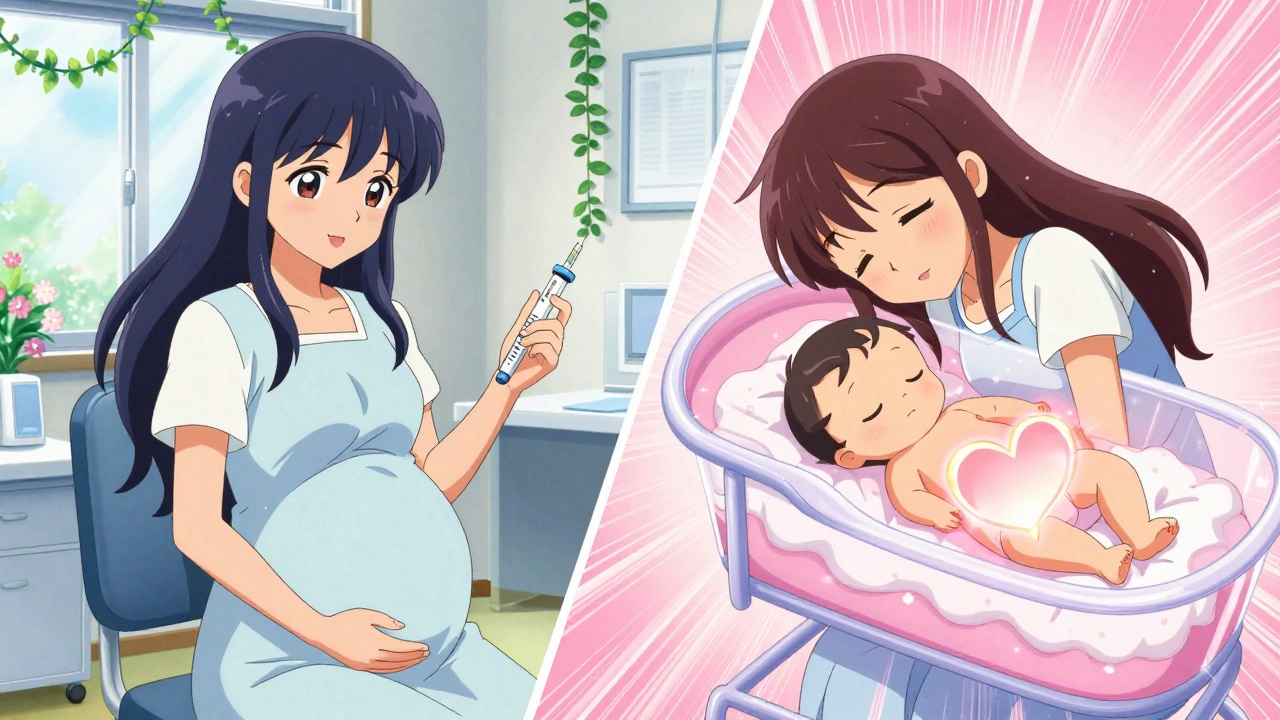
Monitoring the Baby After Birth
No matter what treatment the mother received, every baby exposed to opioids needs close monitoring after birth. The CDC says: at least 72 hours. That’s not optional. It’s standard.Assessments happen every 3-4 hours for the first 24 hours, then every 4-6 hours after that. Trained nurses use standardized tools. Some hospitals still rely on the Finnegan scale, which counts 21 signs of withdrawal. Others use the simpler Eat, Sleep, Console method: Can the baby eat? Can they sleep for more than an hour? Can they be comforted without medicine? If yes to all three, they don’t need drugs.
Hospitals using Eat, Sleep, Console have cut the need for medication by 30-40%. That means fewer babies on morphine, shorter stays, and more time with their moms.
What About Breastfeeding?
Yes, most mothers on methadone or buprenorphine can safely breastfeed. The amount of medication passed through breast milk is tiny-far less than what the baby was exposed to in the womb. In fact, breastfeeding can reduce the severity of withdrawal symptoms.Mothers on naltrexone have even better breastfeeding success-83% in one study. But it’s not automatic. Many women are told not to breastfeed because of stigma, not science. Some providers still give outdated advice. That’s why it’s critical to work with a team that understands the latest guidelines.
The Emotional Side: Stigma, Shame, and Support
Behind every statistic is a person. On Reddit and other forums, mothers share stories that go beyond medical charts:- "My baby scored 12 on the Finnegan scale. I watched them tremble for 14 days. I felt like I failed."
- "The nurse said, ‘You shouldn’t have gotten pregnant.’ I cried all night."
- "Naltrexone gave me my baby back. No withdrawal. No morphine. We went home in two days. I finally felt like a mom."
Over half of the mothers in these forums reported being judged by healthcare workers. Nearly 70% worried constantly about how their withdrawal scores would be interpreted. And 47% struggled with breastfeeding because they weren’t given clear, consistent advice.
That’s why trauma-informed care matters. It’s not just about medicine. It’s about dignity. It’s about listening. It’s about treating the mother as a partner, not a problem.

What’s Changing in 2025?
The field is moving fast. In 2023, the FDA approved Brixadi-a once-weekly buprenorphine injection for pregnant women. Early data shows 89% of women stayed in treatment at 24 weeks, compared to 76% with daily pills. That’s huge. Fewer missed doses. Fewer trips to the clinic. More stability.The American Academy of Pediatrics now says: try non-drug care for at least two hours before giving medication. Swaddling. Skin-to-skin. Dim lights. Feeding on demand. These simple things work.
And in rural areas-where only 28% of hospitals offer MAT on-site-the NIH is funding the HEALing Communities Study. Early results show that when prenatal care, addiction treatment, mental health services, and housing support are all linked together, NAS severity drops by 22%.
The biggest barrier isn’t medicine. It’s access. Only 45% of U.S. hospitals have standardized protocols. In many places, you still need to find a specialist, wait weeks for an appointment, and fight insurance to get coverage. The SUPPORT Act of 2020 required Medicaid to pay for MAT during pregnancy-but only 32 states fully comply.
What You Can Do
If you’re pregnant and using opioids:- Don’t stop on your own. Talk to a provider who knows MAT.
- Ask about buprenorphine or methadone. Ask if naltrexone is an option.
- Find a clinic that offers integrated care-obstetrics, addiction, and mental health all in one place.
- Ask about the Eat, Sleep, Console method for your baby.
- Know your rights: You deserve care without shame.
If you’re a partner, family member, or friend:
- Don’t judge. Listen.
- Help them find a provider who understands pregnancy and addiction.
- Be there for the hard days-the crying, the fear, the uncertainty.
This isn’t about perfection. It’s about progress. One step. One week. One baby going home with their mom, healthy and held.
Is it safe to take opioids during pregnancy if they’re prescribed?
Prescribed opioids for acute pain-like after surgery-are generally safe for short-term use under medical supervision. But if you’re taking them long-term for chronic pain, you should talk to your provider about switching to a safer option. Long-term use increases the risk of dependence and neonatal withdrawal. Never stop or change your dose without medical guidance.
Can I breastfeed if I’m on methadone or buprenorphine?
Yes. The amount of medication passed through breast milk is very low-far less than what the baby was exposed to in the womb. Breastfeeding can actually help reduce withdrawal symptoms in newborns. Most mothers on these medications can and should breastfeed unless advised otherwise by a specialist familiar with maternal addiction care.
What if I relapse during pregnancy?
Relapse is part of recovery for many people. It doesn’t mean you’ve failed. What matters is getting back into care as soon as possible. MAT programs are designed to support you through setbacks. The goal isn’t perfection-it’s safety for you and your baby. Don’t wait. Call your provider. Reach out to a support group. Help is still available.
Is naltrexone better than methadone or buprenorphine?
Naltrexone has shown promise in preventing neonatal withdrawal-none of the babies in one 2022 study had symptoms. But it requires the mother to be fully detoxed before starting, which is difficult and risky during pregnancy. Most experts recommend methadone or buprenorphine because they’re safer to start early and easier to maintain. Naltrexone may be an option later in pregnancy for some, but it’s not yet a first-line treatment.
How long will my baby stay in the hospital if they have withdrawal symptoms?
It varies. Babies on medication for withdrawal may stay 10-20 days, depending on severity. Those managed with non-drug care (Eat, Sleep, Console) often go home in 3-7 days. The goal is to keep the baby comfortable and safe, not to punish them for how long they stay. Hospitals are shifting toward shorter stays by using better, gentler methods.
Are there long-term effects on children exposed to opioids in the womb?
Studies show that with proper care, most children develop normally. The biggest risks come from unstable environments-not the medication itself. Children who grow up in supportive, nurturing homes, with access to early intervention and mental health care, do just as well as their peers. The focus should be on family stability, not just the baby’s first weeks.
Lydia Zhang
December 1, 2025 AT 18:33no withdrawal at all? that's wild
Kay Lam
December 3, 2025 AT 15:41the fact that hospitals are finally using Eat Sleep Console instead of just medicating every baby is huge
it's not just about reducing morphine use it's about letting moms bond with their babies without being treated like criminals
the stigma still lingers in so many corners but the data is clear that compassionate care leads to better outcomes for everyone
the real win isn't the numbers on a chart it's the mom who gets to hold her baby without feeling like she's being judged every time the nurse walks in
Irving Steinberg
December 5, 2025 AT 10:58no big deal right lol
Jack Arscott
December 6, 2025 AT 00:41the closest one is 90 minutes away
and the waitlist is 6 weeks
people are dropping out before they even get started
it's not about willpower it's about access and we're failing them
Jaswinder Singh
December 7, 2025 AT 22:10methadone clinics in every major city
no stigma no drama just treatment
why is the US still acting like this is controversial
Bee Floyd
December 9, 2025 AT 01:24it's in the moms who finally feel safe enough to say I need help
and the providers who stop asking why and start asking how
the data doesn't lie but the humanity behind it? that's what changes lives
one baby at a time
Jeremy Butler
December 9, 2025 AT 08:59the conflation of medical necessity with moral permissibility constitutes a fallacy of equivocation that undermines the integrity of evidence-based practice
Courtney Co
December 9, 2025 AT 15:36I didn't even get to hold her until she was 10 days old
and the nurse said I was lucky I didn't lose her
so now I'm just supposed to be grateful that they didn't take her away?
what kind of care is that
Shashank Vira
December 11, 2025 AT 06:00the irony is palpable
we have commodified redemption and sold it as compassion
the real tragedy is not the neonatal withdrawal but the erosion of agency under the guise of care
Eric Vlach
December 12, 2025 AT 22:08I was on heroin when I got pregnant
my doc said try this
so I did
my son was born at 38 weeks
he slept through the night at 3 days old
we went home in 48 hours
no morphine no NICU no shame
just me and him
and yeah I breastfed
and yeah I'm still clean
it's not magic it's medicine
Souvik Datta
December 14, 2025 AT 17:59but I also know what it feels like to be held by someone who believes in you
the system isn't perfect but the people who show up? they're the ones who change things
you don't need to be perfect to be worthy of care
you just need to want to try
Priyam Tomar
December 15, 2025 AT 11:03and then alcohol because hey it's tradition
and then cigarettes because hey it's a habit
where do we draw the line or is the line just gone now
Matt Dean
December 15, 2025 AT 14:21what's next a baby bonus for every relapse?
Walker Alvey
December 16, 2025 AT 21:19next they'll tell us smoking causes cancer and water is wet
took long enough
Adrian Barnes
December 18, 2025 AT 12:32it's the mothers who were never given a real choice
they were pushed into addiction by systemic neglect
then punished for it by a system that never cared to help them
the morphine in the NICU is just the visible symptom
the disease is the indifference