
Imagine taking your daily heart medication, but the bottle won’t budge. Your hands ache from arthritis. The tiny print on the label blurs together. You’ve tried twisting, pulling, squeezing - nothing works. You’re not alone. Nearly 49% of adults over 65 struggle to open standard child-resistant pill bottles, according to a 2022 FDA report. And if you’re blind or have low vision, reading the label might be impossible without help. This isn’t just inconvenient - it’s dangerous. Missing doses or taking the wrong medicine can land you in the hospital. The good news? You have rights. And there are safer, easier options available - if you know how to ask for them.
Why Standard Pill Bottles Are Hard for Seniors
Child-resistant caps were designed to protect kids. That’s important. But they weren’t built with older adults in mind. Most use a push-and-turn mechanism: you have to press down hard (4.5 to 8.5 pounds of force) while twisting the cap. For someone with arthritis, shaky hands, or limited grip strength, that’s like trying to open a rusted jar with oven mitts on. A 2024 study from the University of Scranton found that 87% of seniors with arthritis could open the newer SnapSlide Rx cap in under 30 seconds - using just one hand. The same group could barely open a standard cap at all.It’s not just the caps. The labels are often too small. Standard print is 10 to 12 point. For someone with macular degeneration, that’s unreadable. Braille labels? Rare. Audio labels? Almost never offered unless you ask. And if you’re lucky enough to get a large-print label, it might be printed on the wrong side of the bottle or smudged from handling.
What Accessible Packaging Actually Means
Accessible doesn’t mean “not child-resistant.” That’s a common myth. The best modern solutions do both: keep kids out and let seniors in. Here’s what’s out there:- SnapSlide Rx: A sliding mechanism that opens with less than 2.5 pounds of force. No twisting. Just slide and lift. It still blocks 94% of children under five, per ISO 8317 testing.
- EZ-Open caps: Larger, ribbed caps that are easier to grip. Still require twisting, but with less pressure. Not child-resistant, so they’re only used for non-hazardous meds.
- Flip-top caps with tamper evidence: These pop open with a firm press. Some still need strength, but newer versions reduce force by 30%.
- Cold-seal wallet packs: Individual blister packs sealed with heat. You peel them open - no twisting. Used mostly for daily dose packs.
Labels can be:
- Large print: At least 16-point font, high contrast (black on white or yellow on black).
- Braille: Grade 2 Braille, with 0.5mm dot height, placed next to the text.
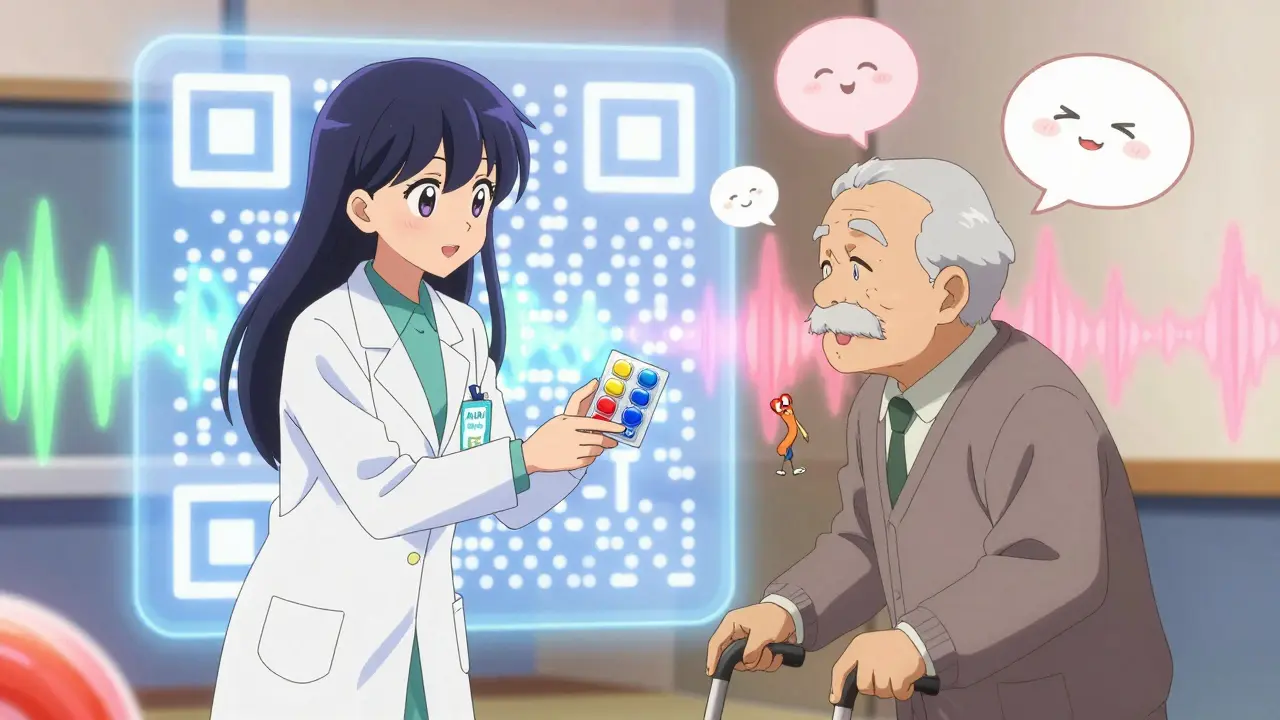
- Audible: QR codes that link to audio recordings - scan with your phone, and the label reads aloud in under 90 seconds.
- Color-coded bands: A red band on the cap means “take in the morning.” Blue means “evening.” This helps even if you can’t read the label.
Your Legal Rights: You Don’t Need a Doctor’s Note
Many pharmacists will ask for a note from your doctor. That’s not required. The U.S. Access Board’s 2019 guidelines - which are now law in 42 states - say pharmacies must provide accessible packaging upon request, no documentation needed. You don’t have to prove you have arthritis. You don’t have to show a vision test. You just have to ask.Still, some pharmacies resist. They say, “We don’t stock those.” Or, “We need 72 hours to order them.” That’s not an excuse. Under HIPAA and ADA rules, pharmacies must make reasonable accommodations. If they refuse, you can cite the Access Board’s guidelines. You’re not asking for a favor. You’re exercising your right to safe, independent medication access.
How to Actually Get Easy-Open Caps and Accessible Labels
Here’s exactly what to do - step by step:- Ask at the time of prescription. Don’t wait until pickup. When your doctor writes the script, say: “Can this be filled with easy-open caps and large-print labels?” That way, the pharmacy knows in advance.
- Call ahead. If you’re picking up in person, call the pharmacy the day before. Ask: “Do you carry SnapSlide Rx caps and large-print labels?” If they say no, ask: “Can you order them for me?” Write down the name of the person you spoke to.
- Be specific. Don’t just say “easy bottle.” Say: “I need SnapSlide Rx caps and 16-point large-print labels.” If you need braille or audio, say so. The more precise you are, the less room they have to say no.
- Expect a delay. Pharmacies usually need 24 to 72 hours to get the right packaging. Plan ahead. Don’t wait until you’re out of meds.
- Ask for a trial. If they’re unsure, ask to try one bottle first. Many pharmacies will let you test the cap before switching your whole prescription.
Which Pharmacies Actually Offer This?
Not all pharmacies are equal. Some are ahead of the curve. Others are still catching up.- CVS Health: Rolled out accessible packaging system-wide in late 2023. All 10,000+ locations offer SnapSlide caps and large-print labels.
- Walgreens: Offers accessible options, but inconsistently. One location might have them; another won’t. Always call ahead.
- Walmart Pharmacy: Carries large-print labels and some easy-open caps. Availability varies by region.
- Independent pharmacies: Only 37% offer accessible packaging, according to a 2024 industry survey. Don’t assume they have it.
Use the American Foundation for the Blind’s online tool to find pharmacies near you that offer accessible labeling. It’s free, updated monthly, and shows exactly what’s available - down to the type of cap and label format.
What to Do If You’re Refused
If a pharmacy says no - even after you’ve cited the law - here’s what to do next:- Ask to speak to the pharmacist-in-charge.
- Call the National Council on Aging’s Medication Access Hotline at 1-800-555-0123. They’ve helped over 12,500 people in early 2024 - and they’ll call the pharmacy for you.
- File a complaint with your state’s Board of Pharmacy. Most have online forms. Include the date, location, and names of staff involved.
- Leave a detailed review on Google or Yelp. Many pharmacies respond faster to public feedback than to phone calls.
One woman in Phoenix, after being turned away three times for large-print labels, cited HIPAA in her Yelp review. The next day, the pharmacy called her personally to apologize - and mailed her a labeled bottle with a SnapSlide cap.
Why This Matters More Than You Think
It’s not just about opening a bottle. It’s about independence. A Kaiser Permanente study tracked 15,000 seniors using accessible packaging over two years. Those who switched saw their medication adherence jump from 65% to 95%. That’s not a small change. It means fewer ER visits. Fewer hospital stays. Fewer complications. For someone with diabetes, heart disease, or high blood pressure, that’s life or death.And the demand is growing. By 2040, nearly 1 in 5 Americans will be over 65. Right now, only 12% of prescription bottles have accessible features. But that’s changing fast. The FDA’s new draft guidance requires all new prescriptions to be tested for senior accessibility by 2027. Medicare Part D now covers the cost difference for eligible patients. The industry is finally catching up.
What’s Coming Next
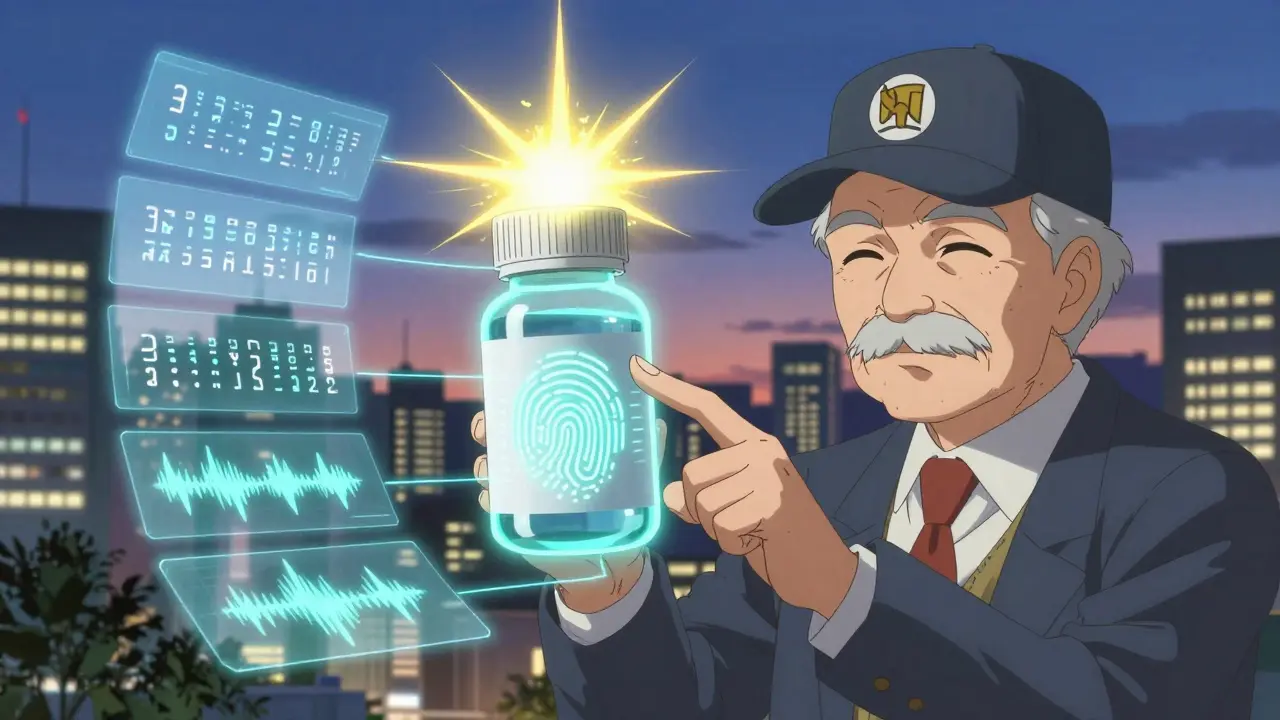
In early 2025, SnapSlide LLC will release Version 2.0 - a cap with biometric authentication. It only opens if it recognizes your fingerprint. That means your grandchild can’t open it, but you can - even with stiff fingers. The EU is also moving fast. Starting January 2025, all prescription packaging sold there must pass dual testing: child resistance AND senior accessibility.These aren’t luxury features anymore. They’re basic safety tools. Just like seatbelts or smoke detectors. If you need them, you’re not asking for special treatment. You’re asking for the same right everyone else has: to take your medicine safely, on your own.
Do I need a doctor’s note to get easy-open pill bottles?
No. You do not need a doctor’s note. Under the U.S. Access Board’s 2019 guidelines, pharmacies must provide accessible packaging upon request - no documentation required. If a pharmacist says you need a note, they’re misinformed. You can cite the guidelines or call the National Council on Aging’s hotline for support.
Are easy-open caps safe for kids?
Yes. The best senior-friendly caps - like SnapSlide Rx - still block 92% to 94% of children under five, meeting the same ISO 8317 safety standards as standard child-resistant caps. They’re designed to be hard for small hands to open, but easy for adults with limited dexterity. The goal isn’t to remove child safety - it’s to add senior accessibility without sacrificing either.
Can I get braille labels for my prescriptions?
Yes. Braille labels are required under the Access Board’s 2019 guidelines. They must follow Grade 2 Braille standards with 0.5mm dot height. Not all pharmacies stock them, but they can order them. Call ahead and ask specifically for “braille labels meeting Access Board standards.” If they say no, ask to speak to the pharmacist-in-charge or file a complaint with your state’s Board of Pharmacy.
How long does it take to get accessible packaging?
Most pharmacies need 24 to 72 hours to prepare accessible packaging. This is because the special caps and labels aren’t kept on every shelf - they’re ordered from distributors. Plan ahead. Request it when your prescription is written, not the day you need it. If you’re running low, ask if they can expedite - many will if you explain the urgency.
Will my insurance cover the cost of accessible packaging?
Yes - if you’re on Medicare Part D. Starting in 2024, Medicare covers the extra cost of accessible packaging for beneficiaries with documented dexterity or vision limitations. Private insurers vary, but many follow Medicare’s lead. Even if your plan doesn’t cover it, the cost difference is usually under $1 per bottle. Many pharmacies absorb it as part of their service.
What if my pharmacy doesn’t have SnapSlide caps?
Ask if they can order them. Many pharmacies can get SnapSlide Rx or similar caps from their distributor within a few days. If they refuse, try a different location - CVS, for example, has them in every store. You can also use the American Foundation for the Blind’s online tool to find pharmacies near you that stock accessible packaging. Don’t settle for a bottle you can’t open.
Crystel Ann
January 14, 2026 AT 12:58This is so important. I’ve watched my mom struggle for years with her blood pressure pills. She’d just leave them on the counter because she couldn’t open them. No one ever told her she could ask for easier caps. It’s not a favor-it’s a basic right.
Thank you for laying this out so clearly.
Arjun Seth
January 15, 2026 AT 05:52People these days want everything handed to them. If you can’t open a bottle, maybe you shouldn’t be taking medicine at all. Just get someone to help you. Stop demanding special treatment.
Frank Geurts
January 16, 2026 AT 17:05While I appreciate the intent behind this initiative, I must emphasize that the legal framework underpinning accessible pharmaceutical packaging is not merely advisory-it is codified under Title III of the Americans with Disabilities Act, as interpreted by the U.S. Access Board’s 2019 Guidelines, which explicitly mandate reasonable accommodation without prerequisite documentation.
Furthermore, the ISO 8317 standard for child-resistant packaging has been successfully adapted in modern designs such as the SnapSlide Rx mechanism, which maintains compliance with child-safety thresholds while reducing required torque by over 60% compared to conventional push-twist caps. This is not innovation-it is ethical obligation.
Nat Young
January 17, 2026 AT 04:36Wait-so now we’re making pill bottles for old people, but kids can still get into them? What’s next? Baby-proofing the nuclear codes?
Also, why does every pharmacy need to stock 17 different kinds of caps? This is bureaucracy run amok.
Amy Vickberg
January 18, 2026 AT 10:06I’m so glad this is getting attention. My grandmother switched to SnapSlide caps last year after we fought with her pharmacy for three weeks. She cried when she opened her first bottle without help. That’s not a luxury-it’s dignity.
If you’re a pharmacist reading this: please, just listen. It takes five minutes to order the right cap. Don’t make people beg.
Jan Hess
January 18, 2026 AT 12:57Stop complaining and just ask for it already
My aunt got braille labels at her local Walmart. Took them two days. No doctor note. No drama. Just said 'I need braille' and they ordered it
It’s not hard. You just have to speak up
Mike Berrange
January 20, 2026 AT 08:54Let’s be real-this isn’t about accessibility. It’s about liability avoidance disguised as compassion.
Pharmacies don’t care about your arthritis. They care that if you miss a dose because you couldn’t open the bottle, you sue them. So now they’re ‘offering’ these caps because they’re legally safer, not morally better.
Also, QR codes for audio labels? That assumes you own a smartphone and know how to use it. What about seniors who still use flip phones? You’re solving a problem for the tech-savvy, not the elderly.
Tom Doan
January 20, 2026 AT 09:16Interesting. So if a pharmacy refuses to provide accessible packaging, you can file a complaint with the state Board of Pharmacy. But how many of those boards actually enforce this? Are there any documented cases of penalties imposed? Or is this just a symbolic gesture with no teeth?
Also, you mention Medicare covers the cost difference-but what about non-Medicare patients? Are we assuming all elderly are on Medicare? That’s a dangerous oversimplification.
Iona Jane
January 22, 2026 AT 01:25They’re putting QR codes on pill bottles now? Next thing you know, the government will be scanning your fingerprints just to take aspirin.
Biometric caps? That’s not safety-that’s surveillance. Who’s tracking who? And why do they need to know your fingerprint to give you a pill?
This isn’t medicine. It’s the beginning of the pharmaceutical surveillance state.
Diane Hendriks
January 23, 2026 AT 03:57Why should American taxpayers fund special pill bottles for people who can’t open them? Why not just have families help? This is another example of weak culture replacing personal responsibility.
Back in my day, we didn’t have SnapSlide caps. We had grit. And if you couldn’t open your bottle, you used pliers. That’s character.
Nishant Garg
January 24, 2026 AT 23:33Man, this hits different. In India, we have this thing called ‘dadi ka dawa’-grandma’s medicine. Sometimes it’s in a plastic sachet, sometimes in a bottle with a foil seal you tear with your teeth. No caps, no labels, just trust and memory.
But here? You’ve got this whole system-legal rights, ISO standards, QR codes, biometrics. It’s beautiful, honestly. But also… overwhelming.
Maybe the real answer isn’t better caps-it’s better community. Someone who checks in. Someone who helps. Tech helps, but people heal.
Jaspreet Kaur Chana
January 26, 2026 AT 09:44Bro I got my mom’s insulin bottle changed to easy-open last week and she’s been crying every time she takes it now because she can finally do it alone
Pharmacy was like ‘oh we don’t have those’ so I called CVS 3 towns over and they mailed her a sample the next day
Just ask. Don’t wait till someone ends up in the ER because they skipped a dose
Also braille labels are a game changer if you’re blind. My uncle uses them and he says it’s like getting his independence back
Haley Graves
January 28, 2026 AT 01:55If you’re asking for accessible packaging, you’re not asking for special treatment-you’re asking for equal access. That’s not radical. That’s basic human decency.
And if your pharmacy says no, don’t just walk away. Call the National Council on Aging. They’ve got templates, scripts, and they’ll call the pharmacy for you. I’ve done it twice. They responded both times.
Don’t let them gaslight you into silence.
ellen adamina
January 29, 2026 AT 11:24I’ve been using audio labels for my diabetes meds for six months now. I didn’t know they existed until my daughter showed me. Now I don’t need help reading anything. It’s just… quiet dignity.
But I still get weird looks when I scan the QR code in the pharmacy line. Like I’m doing something shady.
Why does needing help make people uncomfortable?
Dan Mack
January 30, 2026 AT 02:07They’re putting biometric caps on pills? That’s not safety. That’s the government tracking who takes what, when. You think they’re doing this for you? They’re doing it to build a database.
Next thing you know, your insurance company will deny your coverage if your fingerprint doesn’t match the pill log.
They’re not helping you. They’re controlling you.