
Spotting a fake pill can be terrifying. You take your medication every day, trust the bottle, and then you notice something off - the color is wrong, the imprint is blurry, or the packaging looks like it was printed on a home printer. You’re not alone. In 2022, over 1.2 million counterfeit pills were intercepted at U.S. borders alone, and nearly 96% of online pharmacies operating without proper licenses were selling fake or dangerous drugs. The problem isn’t going away. It’s growing. But here’s the good news: your report could stop a deadly batch before it reaches someone else.
What Counts as a Counterfeit Drug?
A counterfeit drug isn’t just a knockoff. It’s a dangerous fake that could contain the wrong dose, no active ingredient at all, or even toxic chemicals like rat poison, fentanyl, or industrial dye. The World Health Organization calls these substandard and falsified medical products. They’re not mistakes - they’re crimes. Criminals make them to profit, and people die because of them. Common signs you might have a counterfeit:- Spelling errors on the label or packaging
- Missing or mismatched lot numbers
- Pills that are cracked, discolored, or oddly shaped
- Packaging that feels cheap, flimsy, or looks different from what you’ve seen before
- Buying from a website that doesn’t require a prescription for controlled substances
Stop. Don’t Take It. Don’t Throw It Out.
If you suspect a drug is fake, the first thing you do is stop using it. Don’t take another pill. But don’t toss it in the trash either. That’s evidence. Keep the entire package - bottle, blister pack, instructions, even the receipt if you have it. Do not wash, crush, or alter anything. Law enforcement needs the original item to trace where it came from. If you’ve already taken the drug and feel sick - dizziness, nausea, chest pain, unusual bleeding, or anything out of the ordinary - call your doctor or go to the emergency room immediately. Tell them you suspect a counterfeit. That information could save your life and help them report it faster.Who to Report To: The Right Channel for Your Situation
Reporting a counterfeit drug isn’t one-size-fits-all. The agency you contact depends on what you’re reporting and how urgent it is.For Consumers: Use FDA MedWatch
If you bought a drug from a pharmacy - online or in person - and think it’s fake, your first stop is the FDA’s MedWatch program. This is the main system for consumers to report adverse events or suspect products. You don’t need to be a doctor. You don’t need proof. Just details. Go to www.fda.gov/medwatch and fill out Form 3500 online. You’ll need:- Drug name and strength (e.g., “Metformin 500 mg”)
- Lot number (found on the bottle or box)
- National Drug Code (NDC) - a 10-digit number on the packaging
- Where you bought it (store name, website, pharmacy)
- Any side effects you experienced
- Photos of the packaging and pills (highly recommended)
For Suspected Criminal Activity: Contact FDA’s Office of Criminal Investigations
If you think you’ve found a large-scale operation - say, a website selling thousands of fake pills, or someone selling counterfeit drugs at a flea market - you need to alert law enforcement. That’s the FDA’s Office of Criminal Investigations (OCI). Visit www.fda.gov/oci to submit a report. This is for cases where you believe a crime is being committed. You’ll need more detail:- Website URL or physical address
- Names or descriptions of people involved
- Dates you observed the activity
- How many pills you saw or bought
- Any communication you had with the seller
For Prescription Drugs: Contact the Manufacturer
If you’re on a branded drug - like insulin from Eli Lilly, Adderall from Shire, or Viagra from Pfizer - contact the company directly. Most big pharmaceutical companies have dedicated anti-counterfeiting teams. For example:- Pfizer: Global Security Operations Center responds within 4 business hours
- Roche: Healthcare providers can email or call their local affiliate; they acknowledge reports within 24 hours
For Controlled Substances: Use the DEA
If the fake drug is a controlled substance - opioids, benzodiazepines, stimulants like Adderall - the DEA also accepts reports. Go to www.dea.gov/submit-tip. They handle cases involving illegal distribution and drug trafficking. In 2022, 63% of their counterfeit drug tips led to investigations.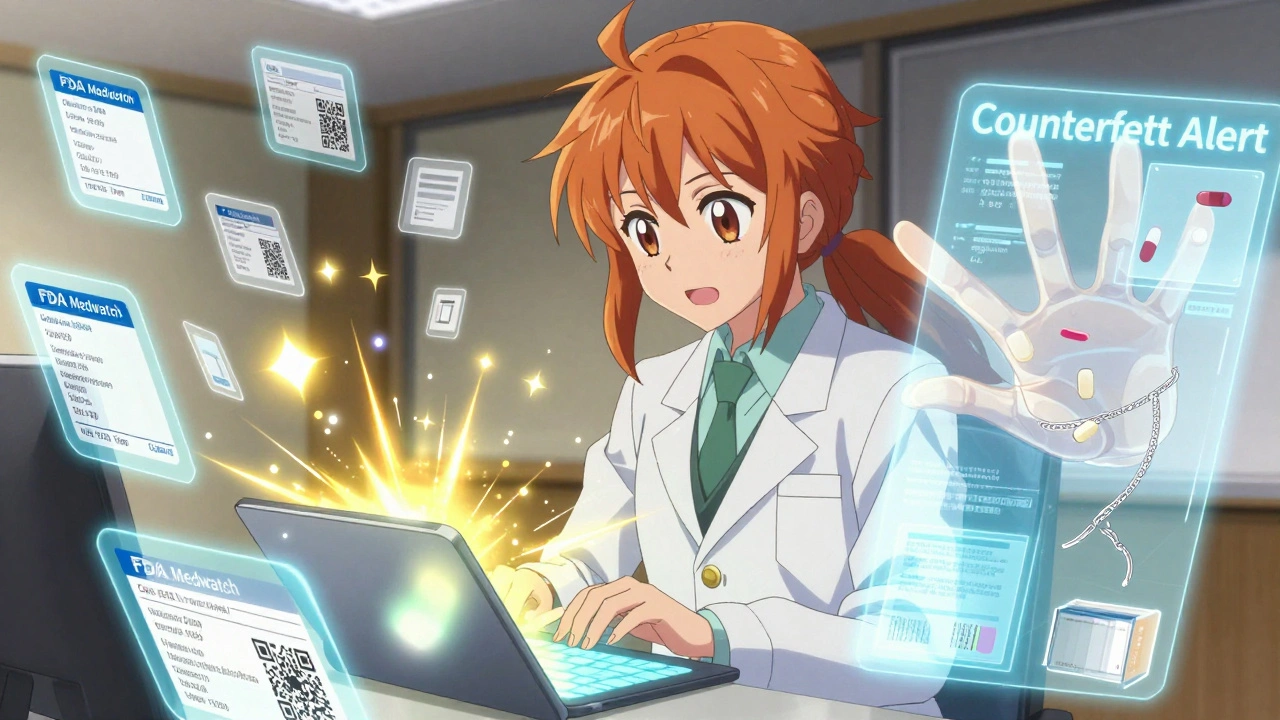
What Happens After You Report?
You might not hear back right away. That doesn’t mean nothing’s happening. The FDA received over 100,000 adverse event reports in 2022. Your report is one piece of a much larger puzzle. If you provided good details - especially photos and lot numbers - your report could help them:- Block a shipment at the border
- Shut down a fake website
- Issue a public warning
- Trace the supply chain to a distributor or manufacturer
Common Mistakes People Make When Reporting
Even with clear systems in place, many people mess up. Here’s what not to do:- Don’t wait - the longer you wait, the harder it is to trace the drug. Reports filed within 7 days are 3x more likely to lead to an investigation.
- Don’t throw away the packaging - it’s the only thing that can prove it’s fake.
- Don’t report to the wrong place - calling your local police won’t help unless it’s a local street dealer. Most counterfeit drugs come from overseas.
- Don’t assume someone else already reported it - in a 2022 Consumer Reports survey, 41% of people reported contacting the wrong agency first.
- Don’t skip the photos - reports with images are processed 89% faster than text-only ones.
What’s Changing in 2025?
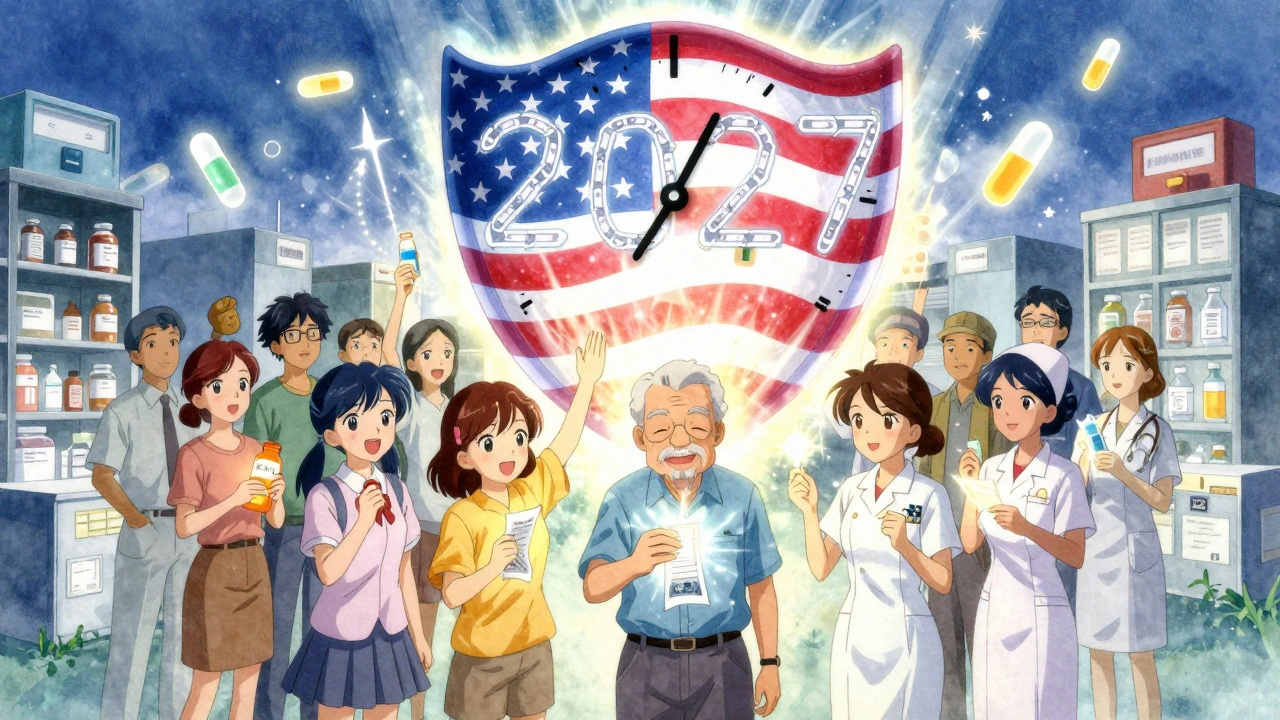
The fight against fake drugs is getting smarter. In 2023, the FDA started using AI to verify counterfeit reports - cutting confirmation time from 72 hours to just 4.5 hours. The WHO is launching a mobile app in mid-2025 so you can snap a photo of a suspicious pill and get an instant alert. The U.S. Drug Supply Chain Security Act (DSCSA) now requires every prescription drug to have a digital trace from manufacturer to pharmacy. By 2027, blockchain tracking will be standard. That means fake drugs will be harder to hide. But none of this matters if no one reports.Your Report Matters
In 2022, a pharmacist in Ohio reported a batch of fake insulin. She kept the box, took photos, and filed a report with the FDA. Within 12 hours, investigators traced it back to a warehouse in China. That one report led to the seizure of over 40,000 counterfeit vials. You don’t need to be a hero. You just need to act. If you see something that doesn’t look right, report it. It might save your life - or someone you love.What should I do if I think I took a counterfeit drug?
Stop taking the drug immediately. Contact your doctor or go to the emergency room if you feel unwell. Tell them you suspect a counterfeit. Then report it to the FDA through MedWatch. Keep the packaging and pills - do not throw them away. They are critical evidence.
Can I report a fake drug I bought online?
Yes. Online pharmacies are the #1 source of counterfeit drugs. Report the website to the FDA’s MedWatch system and also to the FDA’s Office of Criminal Investigations if you believe it’s a large-scale operation. Include the URL, screenshots of the site, and any communication with the seller.
Do I need a prescription to report a fake drug?
No. You don’t need a prescription to report. Anyone can report a suspicious drug - patients, family members, pharmacists, or even bystanders. The FDA encourages reports from the public. Your report helps protect others.
How long does it take to get a response after reporting?
For MedWatch reports, you’ll usually get an email acknowledgment within 72 hours if you submit online. Paper reports can take up to 14 days. If you’re reporting criminal activity to the FDA’s Office of Criminal Investigations, high-priority cases are investigated within 48 hours. If you haven’t heard back after 10 business days, call 1-800-FDA-1088 to follow up.
What if I don’t know the lot number or NDC code?
Still report it. The FDA can often identify the drug by its appearance, packaging, or brand name. Photos of the pill and packaging are extremely helpful. If you’re unsure, call the FDA’s Drug Information Line at 855-543-3784 - they can help you figure out what information you need.
Are there international ways to report counterfeit drugs?
Yes. The World Health Organization has a global reporting system for substandard and falsified medicines. You can report through their portal or email [email protected] to the Pharmaceutical Security Institute, which supports reports in 27 languages. If you’re outside the U.S., contact your country’s national drug regulatory agency - most have reporting systems similar to the FDA’s.

Shawna B
December 4, 2025 AT 13:43Just saw a pill that looked off. Didn't know what to do. This post saved me. Thanks.
Precious Angel
December 6, 2025 AT 01:37Oh my GOD. I can't believe how many people just throw these away like trash. I had a friend die from a fake Xanax that looked exactly like the real thing-same color, same imprint, same bottle. She thought she was fine because it 'worked' at first. Then her heart just... stopped. No warning. No second chance. And the worst part? She bought it from a pharmacy she'd trusted for years. The label was perfect. The pharmacist didn't even blink. That's the horror here. It's not some shady website-it's your local CVS. The system is broken. And no one's talking about it. The FDA? They're slow. They're bureaucratic. They're scared of lawsuits. Meanwhile, people are dying in their living rooms while their families cry over a bottle they thought was safe. I'm not just reporting fake drugs anymore. I'm screaming into the void. And if you're not doing the same, you're part of the problem.
Bethany Hosier
December 6, 2025 AT 19:44Dear Madam or Sir, I am writing to formally express my profound concern regarding the systemic vulnerabilities exposed in this post. While I commend the intent, I must emphasize that the FDA’s MedWatch system, though ostensibly accessible, is predicated upon an outdated infrastructure that fails to account for the digital illiteracy of elderly populations, the linguistic barriers faced by non-native English speakers, and the logistical impossibility of preserving packaging in cases of accidental ingestion. Furthermore, the reliance upon photographic evidence presupposes the availability of smartphones, which are not universally owned. In light of these structural inequities, I propose a national hotline with multilingual operators, dispatched via landline, and integrated with Medicare billing codes to ensure compliance. Thank you for your attention to this matter.
Lyn James
December 8, 2025 AT 15:53Let me be perfectly clear: this isn’t about pills. It’s about trust. We live in a world where the very things meant to heal us are weaponized by faceless corporations and shadowy cartels who see our vulnerability as a profit margin. We’ve been conditioned to believe that if it’s in a bottle with a label, it’s safe. But safety is a myth sold to us by people who don’t care if you live or die. The real crime isn’t the counterfeit drug-it’s the silence that allows it to exist. We’ve normalized taking medicine like it’s candy. We don’t question. We don’t inspect. We don’t demand accountability. We just swallow. And that’s the real poison. If you think reporting a pill is enough, you’re missing the point. The point is: wake up. Look at your bottle. Touch it. Smell it. Question it. Because if you don’t, someone else’s child will. And then you’ll be the one asking, ‘How did this happen?’
Craig Ballantyne
December 10, 2025 AT 03:22While the regulatory pathways outlined are broadly accurate, there’s a critical gap in the operational taxonomy: the lack of standardized interoperability between national pharmacovigilance systems. The WHO’s global reporting portal, while commendable, operates on a voluntary compliance model with inconsistent data fields across jurisdictions. In the UK, we leverage the Yellow Card system with structured adverse event coding (MedDRA), which allows for automated clustering of counterfeit signals. The FDA’s reliance on free-text submissions in MedWatch introduces significant noise into the signal-to-noise ratio. I’d recommend integrating structured data entry templates and API-level integration with pharmacy dispensing systems to enable real-time batch validation. Without this, we’re essentially chasing ghosts with paper trails.
Robert Altmannshofer
December 11, 2025 AT 22:02Man, I used to just grab pills like they were candy. Didn’t even check the bottle. Then one day I noticed my Adderall looked… off. Not just a little. Like, the color was too pale, the imprint was smudged, and the bottle felt like it was made of plastic wrap. I didn’t panic. I didn’t freak out. I just took a pic, saved the box, and hit up MedWatch. Took five minutes. Didn’t even need a prescription. Two weeks later, the FDA sent me a note saying they’d pulled 12,000 fake ones from a warehouse in Texas. I didn’t do anything heroic. I just didn’t ignore it. That’s all it takes. You don’t have to be a detective. Just be the person who says, ‘Wait… that doesn’t look right.’ That’s how the system works. One person. One photo. One report. It adds up.
Kathleen Koopman
December 12, 2025 AT 20:17OMG I JUST HAD THIS HAPPEN 😱 I bought generic metformin from a ‘discount pharmacy’ online and the pills were bright yellow with no imprint? I thought it was a new version! Then I saw this post and checked the lot number… it didn’t exist. I reported it with pics and now I’m terrified to take anything. 😭💊 #StayAlert #FakeDrugsAreKillingUs
Nancy M
December 13, 2025 AT 08:14In my home country of the Philippines, counterfeit medicines are a daily reality. We’ve seen children given fake malaria drugs that contained nothing but sugar. The government has a reporting portal, but few know about it. Many people rely on street vendors because they can’t afford the real thing. This isn’t just an American problem-it’s a global one. The same cartels that flood the U.S. with fentanyl-laced pills are selling fake insulin in Nigeria and counterfeit antibiotics in Vietnam. The solution isn’t just better reporting-it’s affordable access. If people could get real medicine at a price they can afford, they wouldn’t risk their lives for a bargain. Education matters. But so does equity.
gladys morante
December 14, 2025 AT 05:06I’ve been taking my blood pressure meds for 12 years. I never checked the bottle. I never thought about it. Now I’m paralyzed with fear. I don’t know what I’ve been swallowing. I don’t know if I’m alive because of the medicine or in spite of it. I’m not angry. I’m just… empty. I keep the bottle on my nightstand now. I stare at it. I don’t take another pill until I know it’s real. And I still haven’t reported it. I’m too scared to find out what I’ve been doing to myself.
Melania Dellavega
December 14, 2025 AT 22:11There’s something sacred about medicine. It’s not just chemistry-it’s hope. When you take a pill, you’re trusting someone you’ve never met to have your best interest at heart. That’s a profound act of faith. And when that trust is broken, it doesn’t just hurt your body-it breaks your spirit. I used to think reporting fake drugs was someone else’s job. But now I see: it’s mine. Every time I look at a bottle, I ask: ‘Does this feel right?’ If it doesn’t, I report it. Not because I want to be a hero. But because I refuse to let fear silence me. And if we all did that-just one person, one bottle, one moment of courage-we wouldn’t just stop counterfeit drugs. We’d restore something deeper. Trust.
Krys Freeman
December 15, 2025 AT 01:13Why are we even talking about this? The government’s been lying to us since 2008. The FDA’s in bed with Big Pharma. Fake pills? Probably all of them. They let it happen so they can sell you more expensive ‘real’ ones. Just stop taking pills. Eat turmeric. Drink lemon water. Your body knows how to heal itself. You don’t need some corporate pill to live.
Jerry Ray
December 15, 2025 AT 14:13Wait-so you’re telling me if I buy a pill from a website that doesn’t require a prescription, it’s automatically fake? What about countries where you don’t need a script for anything? I’ve bought insulin in Mexico for $10. The bottle looked fine. The pills tasted the same. Are you saying I’m a criminal for saving money? Or is this just another way to make people afraid of the internet? I’m not buying into the fear campaign. Not yet.
David Ross
December 16, 2025 AT 18:48It’s beyond unacceptable. The fact that this problem persists-despite the FDA’s 100,000+ annual reports-is a national disgrace. We have the technology. We have the data. We have the resources. And yet, we allow criminals to profit from our suffering. This isn’t negligence-it’s complicity. The FDA’s response time is a joke. The DEA’s 63% investigation rate? Pathetic. And don’t get me started on the pharmaceutical companies who bury adverse events under NDAs. Someone needs to be held accountable. Not just the counterfeiters. The regulators. The bureaucrats. The CEOs. And if you’re not outraged, you’re part of the problem.
Sophia Lyateva
December 18, 2025 AT 02:52i think the whole fake pill thing is a distraction… like, what if the real drugs are worse? i mean, think about it-what if the FDA is the one making the pills toxic? they’re the ones who approve everything… maybe the fake ones are actually safer? i read this one blog that said fentanyl in real pills is put there on purpose to create addicts so they keep buying… idk. just saying. i stopped taking my meds. now i just do yoga.