
The Basics: Where to Find Strength and Quantity
When you first look at your bottle, the most important information is usually clustered together. Most pharmacies place the medication strength right next to the drug name. If you're using a big chain like CVS, you'll likely see the strength directly below the name of the drug. If you're at Walgreens, it might be tucked inside parentheses right after the name.Strength tells you how much active ingredient is in each dose. This is typically measured in milligrams (mg), micrograms (mcg), or International Units (IU). For example, if your label says "Amoxicillin 500 mg," that means every single capsule contains 500 milligrams of the medicine. If you see a percentage, like "Hydrocortisone 1%," that's common for creams and ointments.
Quantity, on the other hand, refers to the total amount of medicine in the bottle. This isn't how much you take per day, but how much the pharmacy gave you in total. It might say "30 tablets," "120 mL," or "30 grams." Confusing the total quantity with your daily dose is a common mistake, so always look for the word "Quantity" or "Dispense" to differentiate it from the "Directions" section.
Breaking Down Different Medication Types
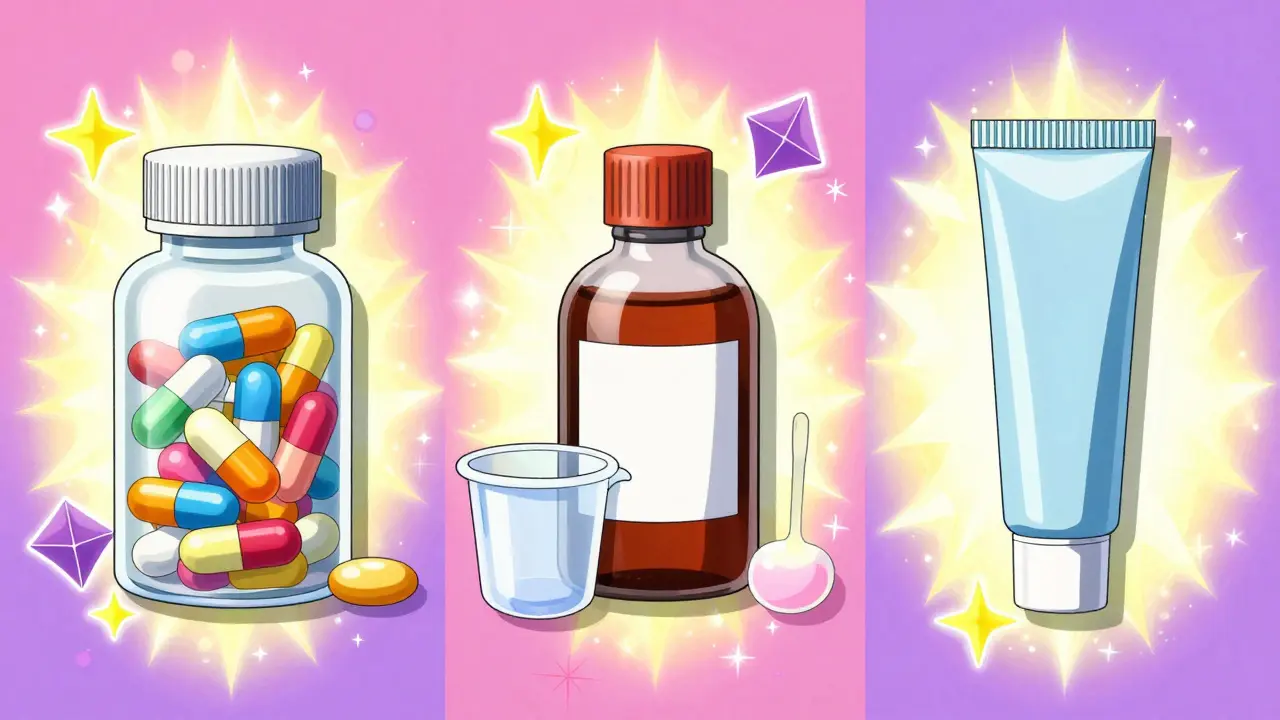
Not all labels are created equal. Depending on whether you're taking a pill, a syrup, or a cream, the way strength is displayed changes. This is where most people get tripped up, especially with liquid medications.- Tablets and Capsules: These are the most straightforward. The strength is listed per unit (e.g., "Lisinopril 10 mg").
- Liquid Medications: These use a concentration ratio. You'll see something like "250 mg / 5 mL." This means there are 250 milligrams of medicine in every 5 milliliters of liquid. If you only take 2.5 mL, you're only getting 125 mg.
- Topical Preparations: Creams and gels usually list strength as a percentage (e.g., "1% cream").
| Formulation | Typical Strength Format | Quantity Unit | Example |
|---|---|---|---|
| Solid (Pill/Cap) | Per unit (mg, mcg) | Count (Tablets/Caps) | 500 mg / 30 Tabs |
| Liquid | Ratio (mg/mL) | Volume (mL) | 250 mg per 5 mL / 120 mL |
| Topical | Percentage (%) | Weight (g) | 1% / 30 g |
The 4-Step Verification Process
To make sure you aren't making a mistake, don't just glance at the label. Use a systematic approach. The Agency for Healthcare Research and Quality suggests a specific sequence to catch errors before they reach your system.- Locate the Strength: Find the drug name and look immediately adjacent to it. It should be within half an inch of the name. If it's missing or unclear, call your pharmacist immediately.
- Verify the Units: This is critical. Check if it says "mg" or "mcg." A microgram (mcg) is 1,000 times smaller than a milligram (mg). Mistaking one for the other can lead to a massive underdose or overdose.
- Double-Check Liquids: If you have a syrup or suspension, verify the concentration (how much medicine is in the liquid) and then check the total volume (how much liquid is in the bottle).
- Cross-Reference the Rx Number: Your prescription number (Rx#) is the unique ID for that fill. Match this number against your pharmacy receipt or your digital health record to ensure the label matches what the doctor actually ordered.
Common Traps and How to Avoid Them
Even people who are careful can get fooled by a few common labeling quirks. One of the biggest dangers is the "decimal point error." Reading "0.5 mg" as "5 mg" might seem like a small slip, but it's a ten-fold difference in dosage. This is a leading cause of pediatric dosing mistakes.Another issue is "look-alike, sound-alike" medications. Some drugs have names that look nearly identical but have completely different strengths and purposes. If the pill looks different than it did last month-different color, shape, or imprint-stop and check the label. Even if the label says it's the same drug, a change in the pill's physical appearance could mean the strength has changed or the pharmacy switched manufacturers.
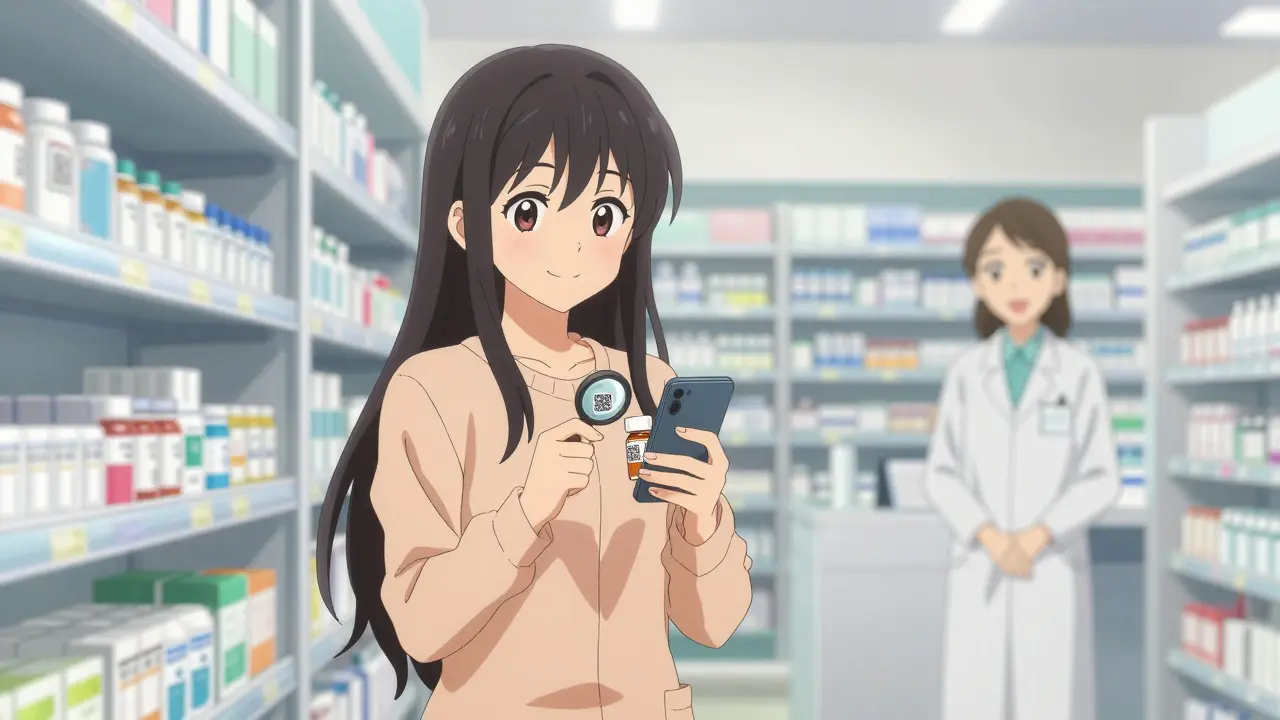
For those who struggle with tiny print, don't guess. Use a magnifying app on your smartphone to zoom in on the text. Most major pharmacies also offer high-contrast or large-print labels if you request them. If you're managing multiple medications (polypharmacy), it's helpful to create a personal medication list that includes the drug name, the strength, and what it's for, then check this list against every new bottle you receive.
Digital Tools for Extra Safety
We're moving away from relying solely on a sticker on a plastic bottle. Many pharmacies now use technology to bridge the gap between the label and the patient. Keep an eye out for QR codes on your labels. These often link to FDA-approved Medication Guides that explain the drug in a more readable format.Some pharmacy apps now allow you to scan the barcode on your prescription. This instantly pulls up the pharmacy's internal record, allowing you to verify that the strength printed on the bottle matches what is in the computer system. This reduces the chance of a printing error leading to a dosing error. If your pharmacy doesn't offer this, ask if they can send you a digital summary of your medications.
What should I do if the strength on my label is different from what my doctor told me?
Do not take the medication. Contact your pharmacist or doctor immediately to verify the correct dose. It could be a pharmacy dispensing error or a change in your prescription that the doctor forgot to mention. It is always safer to delay a dose by an hour to verify it than to take the wrong strength.
Is "mg" the same as "mcg"?
No. "mg" stands for milligram and "mcg" stands for microgram. One milligram is equal to 1,000 micrograms. Taking a milligram dose when you were prescribed a microgram dose would be a 1,000-fold overdose.
Why does my liquid medication have two different numbers (e.g., 250mg/5mL)?
The first number (250mg) is the amount of medicine, and the second number (5mL) is the amount of liquid that contains that medicine. This is the concentration. You use this information to determine exactly how many milliliters to pour into your dosing cup to get the right amount of medicine.
What does "Quantity" mean on the label?
Quantity is the total amount of medication dispensed by the pharmacy for that specific fill. For example, if it says "Quantity: 30," you have 30 pills in the bottle. This is different from your dose, which tells you how many pills to take each time.
What should I do if the label is hard to read or the font is too small?
You can request "large-print labels" or "high-contrast labels" from your pharmacist. Most pharmacies are required to provide these accessibility options. You can also use a smartphone magnifying app or ask the pharmacist to write the strength in larger letters on the side of the box.