Imagine buying a life-saving medication, only to find out it's filled with chalk or, worse, a toxic chemical. It sounds like a nightmare, but for millions, it's a daily risk. The World Health Organization estimates that 1 in 10 medical products in low- and middle-income countries is either substandard or completely fake. This isn't just a logistics problem; it's a global health emergency. To fight back, the industry is moving beyond simple stickers and seals toward high-tech digital shields. Anti-counterfeit technologies are evolving from basic visual checks to invisible molecular markers and encrypted digital handshakes that make it nearly impossible for fraudsters to keep up.
| Technology | Security Level | Cost per Unit | Verification Speed |
|---|---|---|---|
| Serialization | Medium | $0.02 - $0.05 | Moderate |
| NFC Tags | High | Medium | Very Fast (< 2s) |
| Blockchain | Very High | High (Setup) | Instant (Digital) |
| DNA Markers | Extreme | $0.15 - $0.25 | Slow (Lab based) |
The Shift to Mass Serialization
For years, we relied on "tamper-evident" seals-those little plastic wraps you tear off a bottle. But professional counterfeiters can replicate those easily. Now, the gold standard is Mass Serialization is the process of assigning a unique, non-repeatable identifier to every single unit of medication . Think of it as a digital fingerprint for every pill bottle in the world. By 2025, this became the dominant force in the market, holding about 34% of the share.
This isn't just about a fancy number on a box. These IDs integrate with Warehouse Management Systems (WMS) and Enterprise Resource Planning (ERP) software. Why does this matter to you? Because if a batch of medicine is found to be contaminated, companies can now execute recalls nearly 60% faster. Instead of pulling every bottle of a specific drug off every shelf in the country, they can pinpoint exactly which pharmacies received the tainted units.
Moving Beyond the QR Code
You've probably seen QR codes on medicine packaging. They seem convenient-scan it with your phone, and you're done. But here's the catch: standard QR codes are incredibly easy to copy. A counterfeiter can simply photocopy a genuine QR code onto a fake box, and your phone will lead you to the real manufacturer's website, even though the drug inside is fake. In fact, research from ForgeStop suggests that 78% of pharmaceutical QR implementations fail security audits because they lack cryptographic protection.
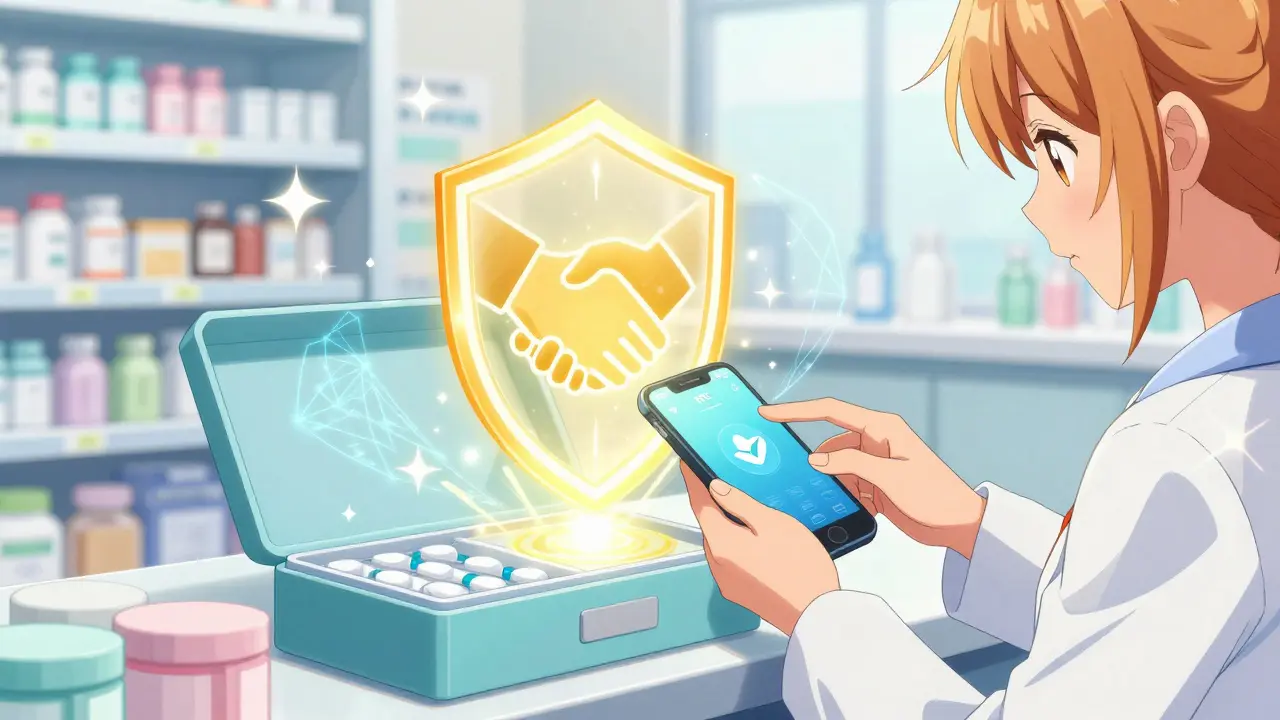
This is where NFC (Near Field Communication) is a short-range wireless connectivity technology that allows a smartphone to communicate with a secure chip embedded in packaging takes over. Unlike a QR code, an NFC chip can be cryptographically secured. When you tap your phone against the box, the chip performs a "handshake" with a secure server. This process takes under two seconds and has an accuracy rate of 99.98%. In Latin American pharmacy chains, this switch has led to a 98% drop in counterfeit incidents within just six months.
Invisible Security: Covert and Forensic Markers
While NFC and serialization handle the digital side, the physical packaging is getting a massive upgrade. Experts divide these into three layers: overt, covert, and forensic.
- Overt Features: These are the things you can see with your eyes, like holographic foils or color-shifting inks.
- Covert Features: These require a tool. For example, UV inks that only appear under a blacklight or thermochromic inks that change color when you touch the bottle.
- Forensic Features: These are the "nuclear option." DNA-based Authentication is the use of unique biological markers embedded into the ink or the medicine itself that can only be verified in a lab . While it's the most secure method, it's expensive-costing up to $0.25 per unit-meaning it's usually reserved for high-value biologics or rare specialty drugs.
Blockchain and the Immutable Supply Chain
The biggest weakness in the drug supply chain is the "hand-off." When a shipment moves from a factory in India to a distributor in Germany and then to a pharmacy in Sydney, there are plenty of opportunities for fake drugs to be swapped in. Blockchain is a distributed ledger technology that creates an unchangeable record of a product's journey .
By combining blockchain with IoT (Internet of Things) sensors, companies can track more than just location. They can record temperature and humidity in real-time. If a shipment of insulin gets too hot during transit, the blockchain records the spike. The medication is then flagged as "compromised," and the pharmacist knows not to sell it. This creates a tamper-proof cold chain that prevents both counterfeiting and accidental spoilage.
The Human and Political Hurdle
Technology is great, but it doesn't exist in a vacuum. The rollout of these systems is often bumpy. For instance, some European distributors reported that implementing the EU Falsified Medicines Directive (FMD) took 14 months and cost millions of euros, initially slowing down their shipping speeds by 37%. There's also a steep learning curve; blockchain systems typically require 14-16 weeks of specialized staff training compared to just 6-8 weeks for basic serialization.
Global politics also play a role. Recent tariffs on pharmaceutical products and APIs (Active Pharmaceutical Ingredients) coming from China and India have spiked production costs by 12-18%. This makes it harder for smaller manufacturers to afford the high cost of NFC chips or DNA markers, creating a security gap where cheaper, generic drugs remain more vulnerable to counterfeiting than expensive brand-name ones.
What to Expect in the Next Few Years
We are moving toward a "multi-layered" approach. No single technology is a silver bullet. The future looks like a combination: a box with a tamper-evident seal, a cryptographically secured NFC chip for the patient, and a blockchain record for the regulator. We're also seeing the rise of AI-driven visual inspection. These systems use high-speed cameras to spot microscopic defects in packaging that a human eye would miss, with current accuracy rates hitting around 94.3%.
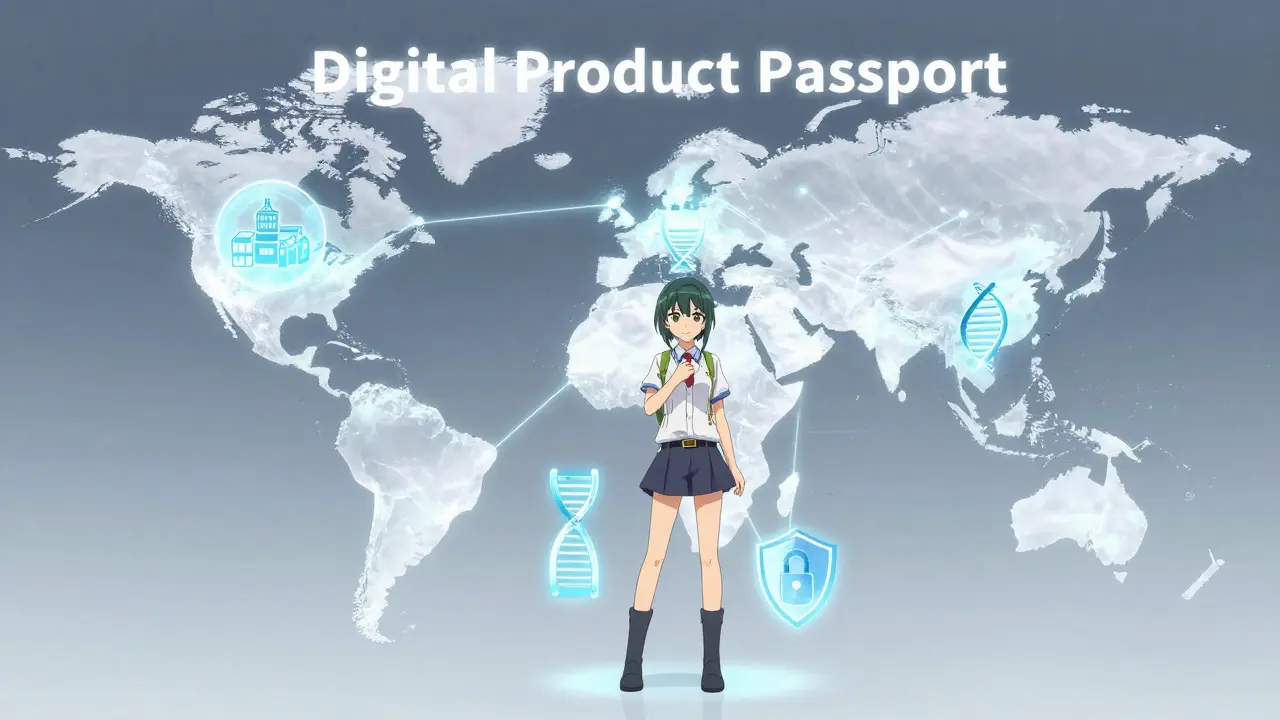
By 2027, we will likely see the widespread adoption of Digital Product Passports. This means every medication will have a digital twin that stores its entire history-from the raw chemical ingredients to the exact pharmacy shelf it sat on. This level of transparency doesn't just stop fakes; it builds trust in the entire healthcare system.
Are QR codes on my medicine safe?
Standard QR codes are useful for finding information, but they aren't a security feature. Because they can be easily copied, they can't prove a drug is genuine. Look for medications that use NFC (where you tap your phone) or have holographic seals to be more certain of authenticity.
How does a pharmacist actually verify a fake drug?
Most now use handheld scanners to check the unique serial number against a national or global database. If the number has already been scanned elsewhere or doesn't exist in the system, it's flagged as a potential counterfeit immediately.
Why can't all drugs use DNA markers if they are the most secure?
Cost and practicality. DNA markers can cost up to $0.25 per unit, which is far too expensive for a cheap generic medication. Additionally, they require lab equipment to verify, meaning a patient can't check them at home; only a regulator or a specialized lab can.
Does blockchain actually stop fakes or just track them?
Blockchain is a tracking tool. It doesn't physically stop a fake from being made, but it makes it nearly impossible to "inject" a fake product into the legal supply chain without being noticed, because there would be no valid digital history for that specific unit.
Will these technologies make medicine more expensive?
In the short term, implementation costs (like software and hardware) can be high. However, by reducing the massive financial losses from recalls and the legal costs associated with fake drugs, these technologies may actually stabilize prices in the long run.
Next Steps for Patients and Providers
If you're a consumer, the best defense is to buy from reputable, licensed pharmacies and avoid "too good to be true" deals from unverified online sources. If you see a package that looks slightly off-wrong colors, spelling errors, or a seal that was already broken-do not use it. Report it to your local health authority.
For pharmacy owners and distributors, the priority is upgrading to cryptographically secured systems. Moving from basic barcodes to NFC or integrated serialization not only ensures regulatory compliance with laws like the DSCSA or EU FMD but also protects your business from the liability of dispensing a counterfeit product.