
Every year, millions of people in the U.S. rely on prescription drugs to manage chronic conditions, treat infections, or survive serious illnesses. But behind the safety of your pill bottle lies a hidden risk: counterfeit drugs. These fake medications can contain too little active ingredient, the wrong one, or even toxic substances like rat poison or floor cleaner. The FDA doesn’t just hope to stop this - it built a whole system to catch it. And you don’t need to be a pharmacist to use it.
What the FDA Actually Tracks
The U.S. Food and Drug Administration doesn’t just approve drugs - it tracks them from factory to pharmacy. The backbone of this system is the National Drug Code (NDC) Directory. Every legal prescription drug sold in the U.S. has a unique 10- or 11-digit NDC number. Think of it like a barcode for medicine. It’s broken into three parts: the labeler code (who made it), the product code (what it is), and the package code (how it’s packaged). This system has been around since the 1970s, but it got a major upgrade in 2013 with the Drug Supply Chain Security Act (DSCSA).The DSCSA didn’t just add more rules - it forced the entire supply chain to talk to each other electronically. Before 2023, manufacturers, distributors, and pharmacies could verify drugs with basic checks. Now, they must exchange full transaction data - who sent it, when, and where it’s going - using standardized digital formats. This isn’t optional. By November 27, 2023, every company in the chain had to have systems ready to catch fake drugs before they reached your medicine cabinet.
How to Check if a Drug Is Real
You won’t find a public app that lets you scan a pill and get an instant verdict. But you can still verify drugs yourself - if you know where to look. The FDA’s public databases are free, updated daily, and open to anyone.- NDC Directory: Search by drug name, NDC number, or manufacturer. If the drug doesn’t appear here, it’s either not approved, not legally sold, or the number is wrong. You can find it at the FDA’s website under “Drug Registration and Listing System.”
- Drug Establishments Current Registration Site: This lists every facility legally allowed to make or distribute drugs in the U.S. If a pharmacy claims to source from a company that doesn’t appear here, that’s a red flag.
- Orange Book: Lists FDA-approved drugs with therapeutic equivalence ratings. If a generic drug says it’s equivalent to a brand-name drug but doesn’t show up here, it might not be real.
For example, if you buy metformin - a common diabetes drug - and the bottle says the NDC is 0002-0123-45, you can plug that number into the NDC Directory. If it returns “Not Found,” the drug is either counterfeit or mislabeled. If it shows up as “Active,” you’re likely safe. But don’t stop there. Check the manufacturer’s name. If it says “PharmaCorp LLC” but the Orange Book says it’s made by “Apotex Corp,” something’s off.
Why Counterfeits Keep Slipping Through
You’d think this system would stop all fake drugs. But it doesn’t. Why? Because not everyone plays by the rules.Here’s the truth: 98% of U.S. manufacturers and 95% of wholesale distributors have implemented DSCSA systems. But what about the 2-5% that didn’t? Or the foreign suppliers who never had to comply? The FDA found in 2022 that only 35% of foreign manufacturers fully meet U.S. verification standards. That’s where most counterfeits come from - shipments from India, China, or Eastern Europe that slip through customs.
Compounded drugs are another weak spot. These are custom-mixed medications made by pharmacies for individual patients. They’re not required to have NDCs, and they’re not tracked in the same system. That’s why fake versions of compounded insulin or hormone therapies are rising.
And here’s the kicker: the NDC system doesn’t track individual pills. It tracks product lots. So if a batch of 10,000 pills is fake, the system flags the whole lot - but doesn’t tell you which bottle in your pharmacy is the bad one. That’s why the FDA pushed for full product identifier tracking by 2023 - to move from lot-level to unit-level verification. But adoption is still patchy, especially in small pharmacies.
What the Industry Says
Pharmacies and distributors aren’t just following rules - they’re spending real money to stay compliant. According to a 2022 survey by the National Association of Chain Drug Stores, the average cost to implement DSCSA systems was $287,500 per organization. That’s not a typo. Small independent pharmacies? Many can’t afford it. That’s why 65% of them still lack full verification systems, according to FDA field data from late 2022.But the payoff is clear. Companies with full systems saw 78% fewer counterfeit incidents than those with partial setups. One pharmacy chain in Ohio reported a 90% drop in customer complaints about ineffective diabetes meds after installing real-time verification software. They now scan every box before it hits the shelf.
On the flip side, 43% of distributors say inconsistent NDC formatting makes searches unreliable. One NDC might be listed as 0002-0123-45, another as 0002-012-345. The FDA is fixing this - a proposed rule in 2022 will require all NDCs to be 12 digits by 2026. That’ll make searches cleaner and reduce human error.
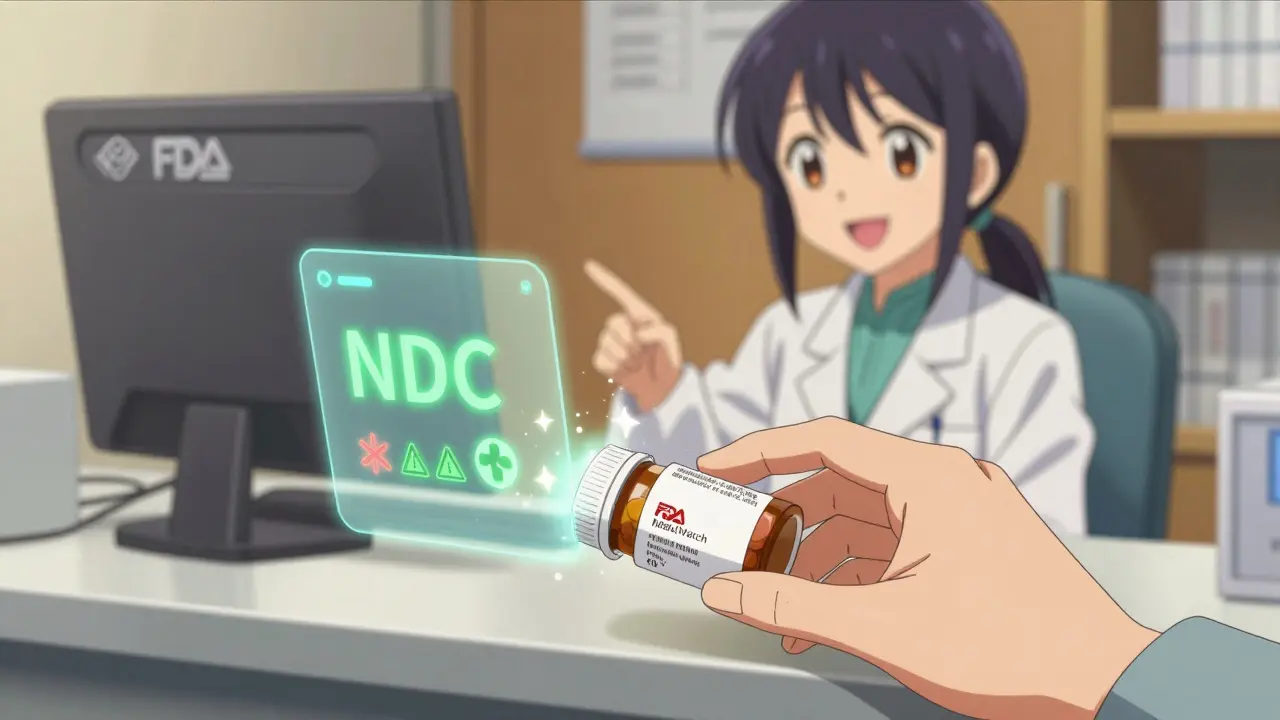
What You Can Do Right Now
You’re not powerless. Here’s what to do:- Check the NDC: Look at the packaging. If it’s printed on a sticker or looks smudged, be suspicious. Write down the NDC and search it in the FDA’s NDC Directory.
- Verify the manufacturer: Cross-check the name with the Orange Book. If it’s not there, ask your pharmacist why.
- Ask about sourcing: If a pharmacy is selling a drug at 70% off, ask where it came from. Legitimate pharmacies don’t source from random overseas websites.
- Report suspicious drugs: The FDA’s MedWatch program lets you report fake or unusual drugs. You don’t need proof - just suspicion. Visit fda.gov/medwatch.
Real-world example: A patient in Florida bought a bottle of losartan from an online pharmacy. The price was $15 - half the normal cost. The NDC number didn’t exist in the FDA database. She reported it. The FDA traced it to a lab in India that was repackaging expired pills. They shut it down.
The Future: AI, Blockchain, and Faster Checks
The FDA isn’t resting. By 2024, the NDC Directory will include product images and security features - so you can compare the real pill to the fake one visually. AI tools from IBM and Google are being tested to spot anomalies in supply chain data. One pilot program using blockchain showed 99.2% accuracy in catching counterfeits - compared to 87% with today’s systems.But technology alone won’t fix this. The real solution is transparency. Every drug should have a traceable path from factory to you. The FDA’s system is the best we have - but it only works if everyone uses it. And if you’re paying attention, you can help make sure it does.
Can I look up my medication in the FDA database?
Yes. Go to the FDA’s NDC Directory and search by drug name, manufacturer, or NDC number. If the drug appears as "Active," it’s approved and legally marketed in the U.S. If it doesn’t show up, it may be counterfeit, unapproved, or mislabeled. Always double-check the NDC on your bottle against the database.
How do I know if a pharmacy is legitimate?
Check if the pharmacy is listed in the FDA’s Drug Establishments Current Registration Site. Legitimate U.S. pharmacies must be registered. Avoid online pharmacies that don’t require a prescription, offer drugs at prices that seem too good to be true, or ship from outside the U.S. without clear labeling. If you’re unsure, call your local pharmacist - they can verify sources.
Are generic drugs more likely to be counterfeit?
Not inherently. But generics are often cheaper and more widely distributed, making them a target for counterfeiters. Always verify the NDC and manufacturer. The FDA’s Orange Book lists all approved generics and their brand-name equivalents. If a generic isn’t listed there, it’s not legally approved - regardless of the price.
What should I do if I think I’ve taken a fake drug?
Stop taking it immediately. Contact your doctor or pharmacist. Report it to the FDA’s MedWatch program at fda.gov/medwatch. Provide the drug name, NDC, lot number, and where you bought it. Even if you feel fine, fake drugs can cause delayed harm. The FDA uses these reports to track outbreaks and shut down illegal suppliers.
Why do some drugs still get through even with the FDA system?
The system works well for U.S.-based supply chains, but gaps exist. Foreign manufacturers often bypass FDA requirements. Compounded drugs and specialty biologics aren’t fully tracked. Small pharmacies may lack the tech to verify every batch. And counterfeiters are getting smarter - they now replicate NDC labels, packaging, and even FDA logos. That’s why verification must be ongoing, not one-time.

rebecca klady
March 23, 2026 AT 23:04I never thought to check the NDC on my meds until my mom got sick from a fake generic. Now I always look it up before I take anything. Simple habit, huge peace of mind.
Thanks for laying this out so clearly.
Namrata Goyal
March 24, 2026 AT 18:07lol the FDA thinks they’re the only ones who can track drugs? My cousin works in a pharma lab in Mumbai and they’ve been doing this since 2010 with QR codes. USA is so behind.
Also, NDC? More like NDC (No Data Correct).
Alex Arcilla
March 26, 2026 AT 10:02Y’all act like the FDA’s database is some magic bullet. Nah. I work in a small pharmacy in rural Ohio. We got 3 employees and a printer that jams every Tuesday.
Our ‘verification system’? We Google the NDC and hope it matches the bottle.
And yeah, 65% of us are still flying blind. The FDA didn’t give us a damn grant. Just a memo. 😅
Brandon Shatley
March 28, 2026 AT 00:11so i just checked my blood pressure med and the ndc was there but the company name was weird. i called my pharmacist and they said it was a new distributor. they showed me the paperwork. phew.
but like… why do i have to do this? shouldn’t the system just work? why am i the one checking?
Blessing Ogboso
March 29, 2026 AT 17:07As someone from Nigeria who’s seen counterfeit drugs kill people back home, this post gave me chills. In Lagos, you buy meds from roadside stalls and pray. Here in the U.S., you have tools to protect yourself - and yet so many don’t use them.
It’s not just about knowing the NDC directory. It’s about valuing your life enough to take 30 seconds to look it up. I’ve lost friends to fake artemisinin. Don’t let that be you. Check. Always. Even if you think it’s fine. Because fake drugs don’t announce themselves. They just… stop working. Or worse.
And yes - compounded drugs are a nightmare. My aunt got a fake thyroid med that turned her into a ghost. She’s fine now, but it took three hospital visits. Please. Check. Your. Pills.
Jefferson Moratin
March 31, 2026 AT 14:16The NDC system is a brilliant artifact of regulatory pragmatism - a compromise between traceability and scalability. But its Achilles’ heel is not technological, but epistemological: it assumes that all actors in the supply chain are rational actors operating under shared norms.
When that assumption collapses - as it does with foreign manufacturers, underground labs, or underfunded pharmacies - the system becomes a mirror, reflecting institutional fragility rather than solving it.
Transparency is not a feature. It’s a cultural practice. And we have not yet cultivated it.
Zola Parker
March 31, 2026 AT 23:02so like… the FDA has a database… but you still have to *type* stuff in? 😭
my phone can scan my coffee cup and tell me the calories… but it can’t scan my pill bottle? this is 2024. we have ai. we have blockchain. we have cats on tiktok. why am i still copy-pasting numbers? 🤦♀️
florence matthews
April 2, 2026 AT 16:12Thank you for this!! 🙏
I just checked my insulin and it was listed as active - but the manufacturer name was different than what was on the bottle. I called the pharmacy and they said it was a new batch from a different facility. They showed me the paperwork. I cried. Not because I was scared - because I felt seen.
We shouldn’t have to be detectives just to stay alive. But for now… this is how we protect each other. 💛
Kenneth Jones
April 3, 2026 AT 16:07Stop making this about personal responsibility. The system is broken. You shouldn’t have to Google your medicine. The FDA should be blocking shipments before they hit shelves. Not asking you to be a volunteer drug cop.
Fix the damn system. Not the people.
Mihir Patel
April 5, 2026 AT 07:42OMG I JUST FOUND OUT MY ANTI-DEPRESSANT WASN’T IN THE ORANGE BOOK 😭
WENT TO PHARMACY AND THEY SAID ‘OH THAT’S A NEW GENERIC FROM INDIA’
AND I WAS LIKE… BUT I’M A HUMAN BEING NOT A LAB RAT??
THEY GAVE ME A NEW BOTTLE AND A STICKER THAT SAID ‘VERIFIED’
LIKE… THANKS? I GUESS?
Kevin Y.
April 6, 2026 AT 05:12Thank you for the comprehensive overview. This is precisely the kind of public health literacy that empowers individuals while holding institutions accountable. The integration of blockchain and AI, as mentioned, represents a promising evolution - provided it is implemented equitably and with transparency. I encourage all stakeholders - patients, pharmacists, regulators - to collaborate in fostering a culture of verification. Knowledge, in this context, is not merely power - it is protection.
winnipeg whitegloves
April 7, 2026 AT 02:58Man, I’ve been calling my meds ‘little chemical ghosts’ since I started on the long-term stuff. They show up. They vanish. They change names. They taste weird sometimes. And now I’ve got a whole digital treasure hunt just to make sure they’re not trying to kill me.
It’s like playing ‘Where’s Waldo?’ but Waldo’s a rat poison packet and the stakes are my kidneys.
Still… better than Nigeria. Still better than 2008. Still not good enough.
Grace Kusta Nasralla
April 7, 2026 AT 09:01I’ve been on the same med for 12 years. I used to trust it. Now I stare at the bottle like it’s a stranger. What if it’s not really me? What if the pills I swallow are just… echoes of the real thing?
They say ‘active’ means safe. But what does ‘active’ even mean? Active in the body? Or active in the database?
…I think I’ll just stop taking them.
Korn Deno
April 7, 2026 AT 11:10There’s a deeper truth here: we’ve outsourced trust. We used to rely on local pharmacists who knew us. Now we rely on databases we don’t understand.
Technology didn’t fail us. We did. We stopped asking questions. We stopped demanding accountability. We became consumers, not patients.
Fixing the NDC system won’t fix that. Only awareness will.